Bad News: Facebook Ending Paid Video Program

Facebook currently pays about 300 different content creators, including celebrities and other popular web-shows, to create videos for people’s news feed. These can be either pre-recorded, or more commonly, Facebook live options. This program, however, will be ending by the end of the year or sometime in early 2018.

These have been popular on the social network, but given that so much video is being created organically now, it seems that Facebook no longer sees this incentive as necessary.

Another reason they are likely moving away from this program is because many of the publishers are stopping the production on their own.

Facebook’s program doesn’t pay as much as they could likely make just putting it all out on their own pages, at least for many of the most popular creators.

Facebook is also looking to move resources into the Facebook Watch program, which will focus on longer length videos and ‘tv’ like programs.

While this is a fairly small program, it does show that Facebook now believes that video, and especially live video, is popular enough on its own to no longer require the paid production of these services.

Effective Tips for Ranking Your YouTube Videos High

If you use videos to promote your business (and you absolutely should be), YouTube is going to be your #1 place for uploading them (though it shouldn’t be the only place). Just tossing your video up on this site, however, isn’t enough to get it seen. Just like SEO can help you to rank your websites well in search engines, it must be considered when posting videos as well.

Recent case studies were reviewed to look at how to best rank YouTube videos and get the most possible views. You can click HERE to get all the detailed information that was used, but here is a quick overview of what the studies found, and how you can put it to work right away.

  • Keep Them Short – Unless there is a compelling reason to make a long video, marketing videos should be kept at three minutes or less.
  • Quality Over Quantity – It is better to make one very high quality video than ten low quality options. Not only will they rank better, but potential customers will actually want to come back to view what you provide in the future.
  • Name Your Video Right – Put a lot of thought into the headline of your video. This will be used to determine what searches you rank for, and will also help encourage people to click to watch your video.
  • Proper Descriptions – Like the title of the video, the description needs to be accurate and include the right phrases. This will help ‘tell’ YouTube what to rank you for.
  • Thumbnail – Letting YouTube auto-select the thumbnail of the video is a big mistake. Take some time and find a good, high-res image for your thumbnail to help it get more clicks, and rank better.
  • Consider Paid Promotion – If you really want to push views to your video, consider using paid advertisements. Not only will this get you immediate views, but it can also result in additional sharing, which can boost where the video shows up in the YouTube search results.

These are just some of the great tips provided on how to improve rankings and views on your videos. When done properly, you can generate a significant amount of traffic to your site and build a loyal customer base.

New Facebook Algorithm Update Penalizes Fake Videos

The deceptive practice that some marketers are using where they post a static linked image that appears to be a video is finally getting the punishment it deserves. The latest Facebook News Feed algorithm update specifically penalizes these types of images because of the fact that they are deceptive, and that they often take (or attempt to take) people off of the Facebook page.

The concept is pretty basic. A marketer puts an image that will draw people’s curiosity, and then places the ‘play’ triangle over it so people think that clicking it will start the video.

They may add in a headline or other content to further entice the click. Once the consumer makes the click, however, they are brought to another page where there may or may not be a video at all.

While it can be effective, it is not the type of honest marketing that Facebook wants to encourage.

On a blog post from Facebook about this update, it was said, “During the coming weeks we will begin demoting stories that feature fake video play buttons and static images disguised as videos in News Feed.”

It is actually somewhat surprising that it has taken them so long to implement this change since this practice has been going on for so long. Regardless of that, any marketers still using this deceptive practice will want to reevaluate their strategies going forward.

LinkedIn Now Allowing People to Upload Native Auto-Play Videos

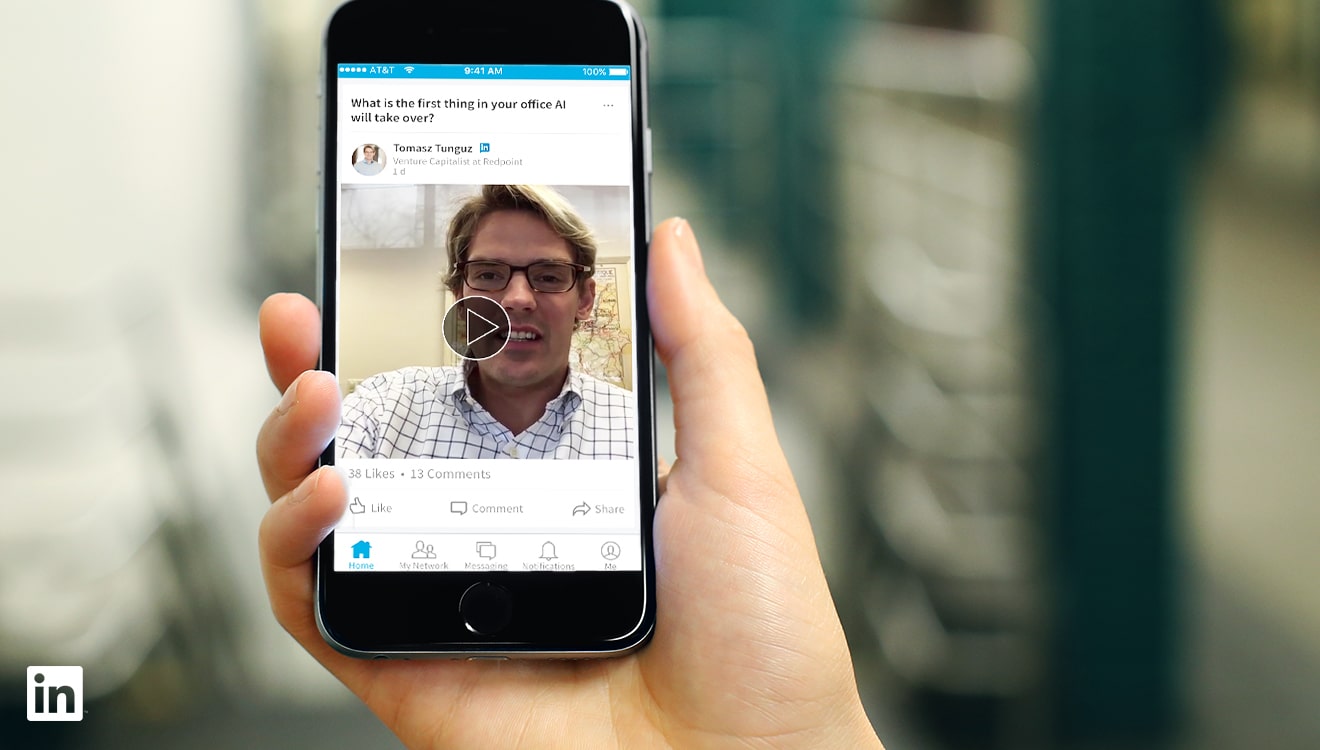
LinkedIn is taking a step, which almost all other social media sites have taken long ago, to improve the video experience of its users (at least, that is the hope). They are starting to let some of their users upload videos that will auto-play when on the screen of visitors. In addition, they are going to be providing users new information about the people who view the videos.

Allowing native uploads will create some huge opportunities for many marketers who want to get their products or services in front of the business-focused audience. LinkedIn is not like any of the other social networks, however, so it is important to choose what videos are uploaded wisely. The average ‘click here for more cat videos’ type of thing isn’t going to be successful like it might on Facebook, for example.

The mobile LinkedIn app will also have a new video camera icon available so people can record original videos, or upload existing ones, quickly and easily.

Videos being uploaded are limited to 10 minutes in length, though LinkedIn recommends they range from 30 seconds to 5 minutes for best results. The videos can also be uploaded either in horizontal or vertical orientation.

When someone views a video you upload, LinkedIn will share quite a bit of information about that person, including what companies they work for, their job titles, and more. This could be a very powerful way to gather new insights into what type of people are looking at videos.

While not confirmed yet, many people also predict that LinkedIn will soon be allowing video ads to be purchased, which would naturally make it so marketers could just ‘sponsor’ an ad they uploaded natively to get it more views.

LinkedIn has always done a pretty good job of balancing their need to generate revenue with the desire of their userbase to keep the environment more professional. It appears they are walking that same path here with their new auto-play video roll out.

New Tools for Marketers Released from Vimeo

Vimeo is a very popular online video platform, similar to YouTube. They have been seeing a lot of success lately, but haven’t been able to use that to draw marketers to the site. To hopefully help solve that issue, Vimeo is launching a new set of tools that will provide solutions to a lot of the issues that marketers may have had on the site.

Business members will be able to add in fields to entice viewers to provide their email address, for example. This will be done either during or after a video has been viewed. Having the ability to capture emails through video is a big perk, and will be integrated with many of the top email marketing platforms such as MailChimp and Constant Contact.

This and other tools are being made available to those with a business membership, which allows up to 5TB of video storage on their site. The business membership costs $599 per year.

In addition to these changes, they are making adjustments to the overall formatting of their site to be more mobile friendly. This includes adding in eight new display options, the ability to add clickable background images, and customizable thumbnails.

Given the incredible growth of video, and these great tools, marketers should take the time to look at this growing site to see how it can be worked into their overall efforts.

More Ads for Facebook…Mid-Roll Spots to Come on Live Broadcasts

Facebook is once again looking to boost revenue by adding additional ad spots to their already crowded lineup of ad options. This new spot will only apply to live broadcasters, and even then only those who are getting 300 or more concurrent viewers.

At this point this is still in testing and applies to only non-live videos (replays). After four minutes of the video, the ad will break in for 20 seconds, before it continues to complete the replay. The testing is being conducted with just a few publishers at this point, but assuming everything goes according to plan, it will likely roll out to a broader audience later this year.

This type of ad spot really makes a lot of sense given that other video publishers (YouTube) are already running mid-video ads with a lot of success. In addition, people are used to this type of interruption because that is how television ads have always been.

For now at least, Facebook is limiting how much control advertisers will have on what videos their ads are playing on. It is likely that this will change if this type of ad spot gets a wider roll out. For now, however, only larger scale videos are eligible for this type of ad anyway so it is unlikely that there will be too much in terms of conflict or questionable content.

YouTube killing Must Watch 30 Seconds Ads Soon

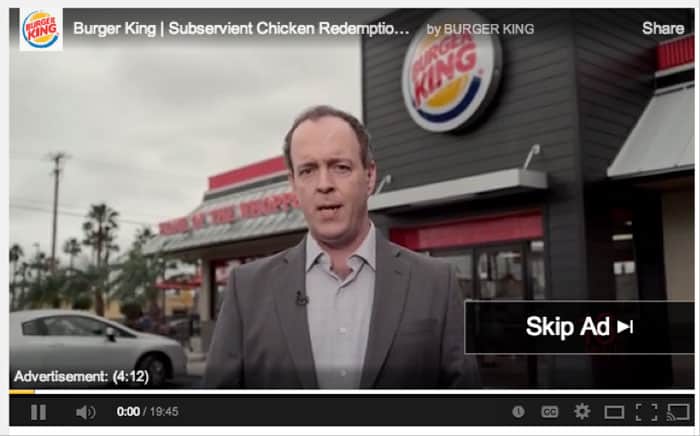
YouTube has decided that it is time to make a change to their offerings available to advertisers.  Starting in 2018, the 30 second video ads that users are unable to skip will no longer be supported by the YouTube platform. Instead, YouTube will continue to focus on the success of the six-second bumper ads that have been available for roughly a year now

Originally, the 30 second ads were aimed at budgets set aside for television advertising, however, other platforms such as Snapchat and Facebook, are seeing more success with shorter, less traditional types of ads.

This change will only affect the 30 second videos, which means that advertisers will still be able to set their 20 second videos so that users will not be able to skip them.

One media agency said the move reflected the difference between online video and linear television services.

“The 30-second ad is a legacy from TV times,” said Will Smyth, head of media at the Agenda21 agency.

“It’s a standard TV unit which has been put online, but it’s not the most effective way to advertise.

“This will encourage advertisers to be more creative about the way they use the platform.”

A statement issued by a YouTube spokesperson stated, “We’re committed to providing a better ads experience for users online. As part of that, we’ve decided to stop supporting 30-second unskippable ads as of 2018 and focus instead on formats that work well for both users and advertisers.”

Facebook Autoplay with Now Include Audio

Facebook videos have been auto-playing for quite some time now, and with a lot of success. Both user generated or shared videos and advertisement videos are seen millions of times per day. These videos begin playing with no sound at this point, but that is about to change. Facebook has announced that they are going to be rolling out the change to make it so auto-play videos have sound by default. Users will then be able to change the settings manually to disable if they would like.

Dan Rose, a VP at Facebook, said in the announcement, “We think people are comfortable with it now.” Whether that is true or not, we’ll have to see.

“After testing sound on News Feed and hearing positive feedback, we’re slowly bringing it to more people. With this update, sound fades in and out as you scroll through videos in News Feed, bringing those videos to life,” Facebook said. However, if the phone is on silent mode, videos will not play with sound. Users can also disable the feature of autoplay in Settings.

They are also looking to expand the areas where users will be able to watch these videos. Facebook is pushing out and promoting apps on things like Apple TV, Amazon Fire TV, Samsung smart TVs, and more.

Mr. Rose commented on this saying, “A lot of people when they’re watching video in the News Feed during the day will save it for later because they don’t have time to watch. Now it’s easy to watch on your TV if you want to do that.”

Another change that they are rolling out is to the formatting of the videos. Rather than cropping the videos that are made using vertical orientation, they will simply show it in that format. This is primarily going to be helpful for people watching on mobile phones.

Pandora to Utilize Muted Video Ads

The highly popular music streaming service, Pandora, will begin rolling out it new advertising format beginning January 19, 2017. The new format, Responsive Mobile Display ads and Muted Video ads have produced positive results for the few brands, including Google, Express, and Denny’s, that have been involved in the company’s beta testing.

Pandora’s new mobile video offerings present the user with a video ad in the square that is usually displaying the album art for the song that is currently being played.  Using this type of space allows the ad to easily adjust to any size of phone screen.

According to Pandora’s chief revenue officer John Trimble, “We applied the same expertise that makes us the leader in audio advertising to our new visual ads to deliver strong, measurable results.” John continued, “We are reinventing our mobile display ads to take full advantage of screen real estate and features native to our platform. And because our display ads are served only when a listener is looking at their phone and we have one of the largest logged-in user bases, we are uniquely positioned to deliver listener attention to advertisers at scale.”

The beta testing showed that there was an average increase of 50% when considering the amount of time spent with the new Responsive Mobile Display ads when compared to the old format. In addition, there was also an increase of more than 9% in brand awareness and favorability.

The new muted video ads created a 32% increase in the number of Pandora listeners that spent a minimum of 5 seconds watching the video, in addition to a high rate of users that watched the complete muted video advertisement.

Denny’s restaurant chief marketing officer John Dillon stated, “At Denny’s, we understand the importance of continuing to find new and innovative ways to connect with our fans on their terms and in their terms, especially in the digital world.” Dillon continued, “Our recent beta partnership with Pandora offered us an opportunity to showcase the launch of our new Buttermilk Pancakes in a way that was highly engaging, while also being cohesive—rather than intrusive—to our target audience’s online experience.”

Pandora states that 3 out of 4 survey respondents indicated their preference for the new ad formats. 74% of the survey respondents indicated that engagement with the new formats would be likely as well. If Pandora is able to achieve this type of acceptance to their new advertising format from the rest of their users, it is likely that others will soon follow in their footsteps.


Adobe Ups The Ante With Acquisition Of TubeMogul

Last week, Adobe came to an agreement to purchase TubeMogul, which offers a DSP (Demand Side Platform) that allows advertisers to purchase and plan video advertising across all platforms, including the fast growing mobile ad market.

Adobe’s announcement stated that the acquisition “will create the first end-to-end independent advertising and data management solution that spans TV and digital format, simplifying what has been a complex and fragmented process for the world’s biggest brands.”  This means that Adobe can now offer a “one-stop shop” for ads across all media platforms, according to Brad Rencher, Adobe EVP and GM of Digital Marketing Business Unit.

Andrew Frank, Vice President of Gartner states that the acquisition “puts them ahead of other marketing platforms in their ability to distribute video ads programmatically.” He also commented that it confirms “the story Adobe has been telling, [that it is] bringing together the content side of marketing with data,” which Adobe now has the ability to extend to video advertising platforms.

Adobe currently has in its portfolio several different ad management tools that include Adobe Media Optimizer that focuses on search, display and social ads, Primetime which is aimed at linear and on-demand video programming, and Audience Manager which is a platform that deals with data management. The addition of TubeMogul which should strengthen Adobe’s position in the advertising realm.

Facebook’s New Average Watch Times Metrics Provide Great Information

Facebook’s calculations concerning how much time people spend watching a particular video that you post have always been rather confusing.  They often over calculated the watch time, and it really wasn’t as helpful as it could have been.  The social network has recently launched a new time metric called ‘average watch time’ that will hopefully straighten most of this out.

The new average watch time metric is provided to Page owner’s organic videos as well as their video ads.   This metric takes the total amount of time that all the combined users watch a given video, and divides it by the number of viewers.  The important thing to keep in mind with this is that Facebook calculates watch time only counts view time once per ‘session’.

For example, if someone is scrolling through their News Feed and they stop to read a post, but a video is playing on the screen (though not actually being watched) it will count that time.  If, however, half way through the video they actually start being interested in the video, they will likely restart it from the beginning.  They then watch the full video all the way through, still in the same Facebook session.  If the full video was 30 seconds, and the video played for 20 seconds before the person restarted it, Facebook would count the full 20 seconds that it played originally, plus the 30 seconds it played upon restart.

This means that the stats can actually show that a 30 second video was watched for 50 seconds, but only by one view.  This can make things a little confusing, but overall the overall statistics are still quite useful and do reflect how much time people are watching the videos.

Facebook is, apparently, working on some additional metrics to provide clear data concerning how much time users are actually spending on the video. For now, however, this metric should be helpful as long as marketers know what they are looking at.

Periscope Launching VIP Program for Active Broadcasters

Are you a loyal periscope broadcaster?  In addition to building an audience, you may now qualify for their VIP program, which offers a variety of additional benefits and recognition. While it seems that qualifying for these levels won’t be easy, it can help to further build an audience since potential viewers will see that they are popular.

To start with, those who qualify will get either a gold, silver or bronze badge based on the size of their audience.  They will also get a variety of collaboration tools for interacting with other users of the platform, which will help to further grow an audience.

Those at the bronze level will need to have at least 10,000 followers.  They also need to have at least 200 live views per broadcast, on average.  This level is supposed to have 2 broadcasts per week.  The benefits at this level include options to help the user look ‘on point’ during the broadcast, improved visibility in the search results, access to improved best practice guides from Periscope.

To reach the silver level, it is necessary to have at least 30,000 followers and an average of 300 or more live views per broadcast.  The benefits here include everything that bronze gets, plus improved support options, private broadcasts from the team at Periscope, and a ‘Slack’ channel to help with collaboration.

The gold badge is a big jump up, and requires 100,000+ followers with an average of 500+ live views per broadcast.  This level will get everything from silver, plus the option to collaborate with the Periscope team through an ‘elevated access’ level.

These are some pretty significant perks that broadcasters will find very useful.  Of course, it will take some effort to meet the requirements, but it looks like it will be well worth the effort.

Wow: Facebook Native Videos Generate 268% More Shares than Articles!

As someone who writes articles for a living, maybe I shouldn’t be sharing this statistic, but according to a new study of Facebook data, native videos are getting 268% more shares than article posts.

When publishers create and share videos, their users are far more likely to watch and share them than they would a normal text post or even a link to an article off of Facebook.

When looking at the most shared posts from the top publishers on Facebook, well over half of them were native videos, with other options coming in way behind.

This is partly due to the fact that people like watching videos more than reading full articles, and partly due to the fact that Facebook has been updating their News Feed algorithm to show more videos. Since these videos then get shared more often, Facebook continues to push them up the News Feed.

It helps boost up these views, especially if you have a fairly large following who will be interested in watching and sharing the type of content you are creating.

Of course, to get the best results you will want to create engaging videos that people find funny, interesting, helpful or otherwise enjoyable.

Video Capitalizing on Global Increase in Internet Speeds

It seems like just about every day there is a new report or study that looks on how video is being used more and more online.  Whether that is for services like Netflix or YouTube, or it is used for marketing with video ads, all of this burns up a lot of bandwidth.   Fortunately, according to a recent report published by Akamai, the global average internet speed has gone up by 23% year-over-year. This puts the global average connection speed at 6.3Mbps.  Keep in mind that this includes many parts of the world that are barely getting dial up, so 6.3Mbps is really quite good.

The majority of the report focused on Europe, though they did provide a significant amount of information that will be useful to all marketers.  The global average peak connection speed went up by 14% year-over-year to 34.7Mbps.

It is interesting to see that even throughout largely modern countries, the average connection speed varies greatly.  Norway, which has the fastest average speeds at 21.3Mbps is significantly higher than the UK, for example, which is only running at 14.9Mbps.  There are many reasons for the varying connection speeds including local geography, public investment and more.

South Korea is the fastest country in the world in terms of average connection speed, coming in at 29Mbps, followed by Norway (21.3), Sweden (20.6), and Hong Kong (19.9).  As the average connection speeds continues to raise, it is becoming easier and easier for people around the world to reliability get sufficient speeds for quality video connections.  This will, of course, help marketers who are looking to target a global audience.

You can see the report HERE.