
FTC Sends COPPA Warning Letters to Foreign Companies

The Federal Trade Commission has announced that it has sent letters to two foreign companies that market electronic devices and apps that appear to collect geolocation data from children, warning that the companies may be in violation of the Children’s Online Privacy Protection Act (COPPA) Rule.

The letters were sent to China-based Gator Group Co., Ltd., and Sweden-based Tinitell, Inc., which both provide online services.

Gator Group advertises an app and a device called the Kids GPS Gator Watch, which it markets as a “child’s first cell phone.”  Tinitell has also marketed an app that works with a mobile phone worn like a watch, which is also designed for children.  Although Tinitell has stopped selling the devices, they will continue to operate through September 2018.

Copies of the letters were also sent to the Apple App Store and the Google Play Store, which make the apps available to consumers in their stores.

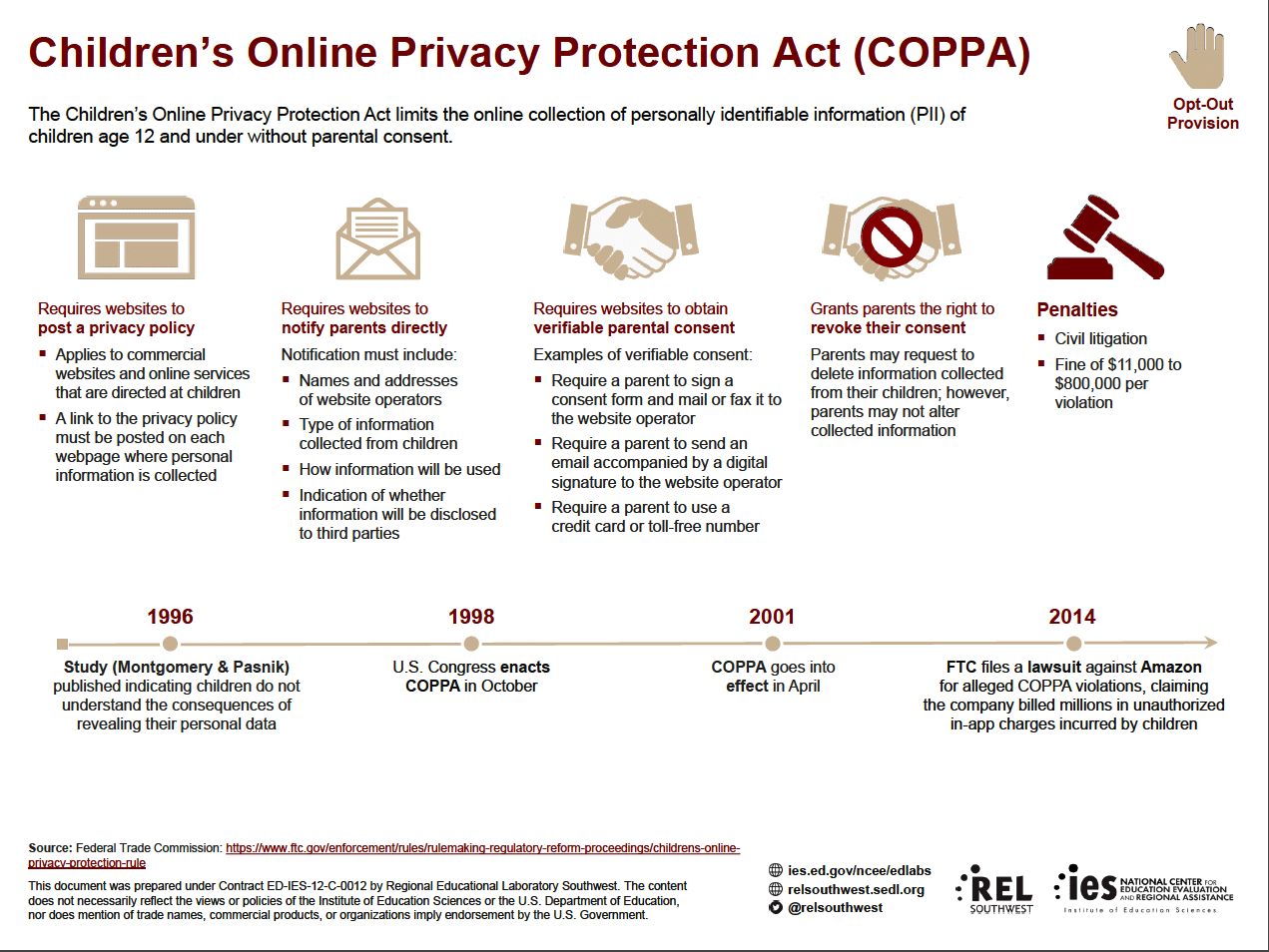
The FTC’s COPPA Rule requires companies collecting personal information from children under the age of 13 to post clear privacy policies and to notify parents and get their consent before collecting, using or sharing personal information from a child.

In its letters to the two companies, the FTC noted that even though they are based outside the United States, foreign companies are required to comply with COPPA when their services are directed to children in the United States or they knowingly collect information from U.S.-based children.

The online services offered by both companies appear to be directed to children and to collect precise geolocation information from children.  The letters note that a review of both companies’ services reveal that they do not appear to provide direct notice of their collection practices and do not seek verifiable parental consent before collecting, using or disclosing personal information as required by COPPA.

The letters encourage the companies to review their online services, policies and procedures to ensure they are in compliance with COPPA.

Experienced FTC compliance and defense lawyers can provide guidance regarding the application of COPPA.  You can follow the author on Twitter at FTC Defense Lawyers.

Richard B. Newman is an Internet marketing compliance and regulatory defense attorney at Hinch Newman LLP focusing on advertising and digital media matters. His practice includes conducting legal compliance reviews of advertising campaigns, representing clients in investigations and enforcement actions brought by the Federal Trade Commission and state Attorneys General, commercial litigation, advising clients on promotional marketing programs, and negotiating and drafting legal agreements.
 

FTC Provides Guidance on COPPA and Voice Recordings

The Federal Trade Commission is providing additional guidance on how the Children’s Online Privacy Protection Rule applies to the collection of audio voice recordings by organizations covered by the law, which requires certain operators of commercial websites or online services to obtain parental consent before collecting personal information from children under 13.

The FTC updated the COPPA Rule in 2013, adding several new types of data to the definition of personal information, including a photograph, video or audio file that contains a child’s image or voice, to data already covered, such as a name, address or Social Security number.  Naturally, questions have arisen about the application of this requirement when a child’s voice is collected for the sole purpose of instructing a command or request.

In a new policy enforcement statement, the FTC noted that the COPPA rule requires websites and online services directed at children to obtain verifiable parental consent before collecting an audio recording.  The Commission, however, recognizes the value of using voice as a replacement for written words in performing search and other functions on Internet-connected devices.

The FTC has stated that it will not take an enforcement action against an operator for not obtaining parental consent before collecting the audio file with a child’s voice when it is collected solely as a replacement of written words, such as to perform a search or to fulfill a verbal instruction or request – as long as it is held for a brief time and only for that purpose.

The Commission has noted that there are important limitations to this policy.

The policy does not apply when the operator requests information via voice that would otherwise be considered personal information, such as a name.

In addition, an operator must still provide clear notice of its collection and use of audio files and its deletion policy in its privacy policy.

Also, the operator may not make any other use of the audio file before it is destroyed and the policy does not affect the operator’s COPPA compliance requirements in any other respect.

The FTC continues to actively enforce the COPPA Rule, including a settlement reached with a mobile advertiser that was alleged to have deceptively tracked the locations of children without parental consent, and a settlement with two app developers that allegedly allowed third-party advertisers to collect information about children without parental consent.

Consult with an experienced FTC compliance lawyer to avoid becoming the target of a privacy-related investigation or enforcement action.  Follow the author on Twitter @FTCLawDefense.

ADVERTISING MATERIAL. These materials are provided for informational purposes only and are not to be considered legal advice, nor do they create a lawyer-client relationship. No person should act or rely on any information in this article without seeking the advice of an attorney. Information on previous case results does not guarantee a similar future result. Hinch Newman LLP | 40 Wall St., 35thFloor, New York, NY 10005 | (212) 756-8777.