Yelp is Good, and They Have Proof

When small businesses think of Yelp, they think of reputation management on the web. Furthermore, they often tend to think about all the ways in which Yelp could ruin their businesses, or at least hurt them substantially. Essentially, Yelp has become a cause for worry with many small business owners, as most consumers only care to review a business if they have a particularly bad experience with it. And when they do, it is posted for the world to see.

Well, yes Yelp can potentially hurt a business’s reputation with online consumers, but there are ways that the company helps small businesses, according to a recent study from the Boston Consulting Group that polled 4,800 small businesses, which Yelp funded.

While economists have long studied the positive impact Yelp has on small businesses, the BCG study is particularly noteworthy because it’s the first to survey business owners directly across a wide range of categories.

Contrary to the relatively common belief that Yelp more often hurts businesses than it does help them, the study found that on average, Yelp rakes in upwards of $8,000 in business to those companies that have profiles on the site. Also, businesses that advertise on the site gained $23,000 in business. Compared to how much these companies spent on average for advertising, that is an average $18,800 in ROI.

While the study reports that there is somewhere around 23 million small businesses in the U.S. alone, it seems that most small businesses have not even started adopting the more popular digital forms of marketing that are sweeping the nation. In fact, for all the small businesses surveyed, only about 3 percent of their marketing budgets were put into digital marketing campaigns. This is shown quite clearly through Yelp, for example. Although there are all of these small businesses being run in the U.S. and Yelp is bringing quite impressive benefits to small businesses using it for bringing in business, only 11 percent of the businesses polled in the study have created and used profiles on the social review website.

Now for those businesses that do benefit from Yelp, these benefits come in a few shapes and sizes, depending on the type of small business at hand. Small businesses in the category of say Arts and Entertainment will see a majority of their business gain from advertising on the site, while as we have seen in the past, small businesses that fall into the Food category will gain more business from the actual use of a Yelp account and profile. While most small businesses tend to take their digital advertising dollars elsewhere, like to search marketing platforms, the benefits seen from Yelp can be quite impressive.

Earlier in the month, I reported Yelp’s new mobile offerings which came in the form of display ads in the company’s mobile app. With these numbers, Yelp’s own reputation as an advertising destination may be improving soon.

Bottom line: there’s a lot of upside here for small businesses who claim their free account, and even more for those who advertise.

7thingsmedia buys stake in platform Fashion Traffic

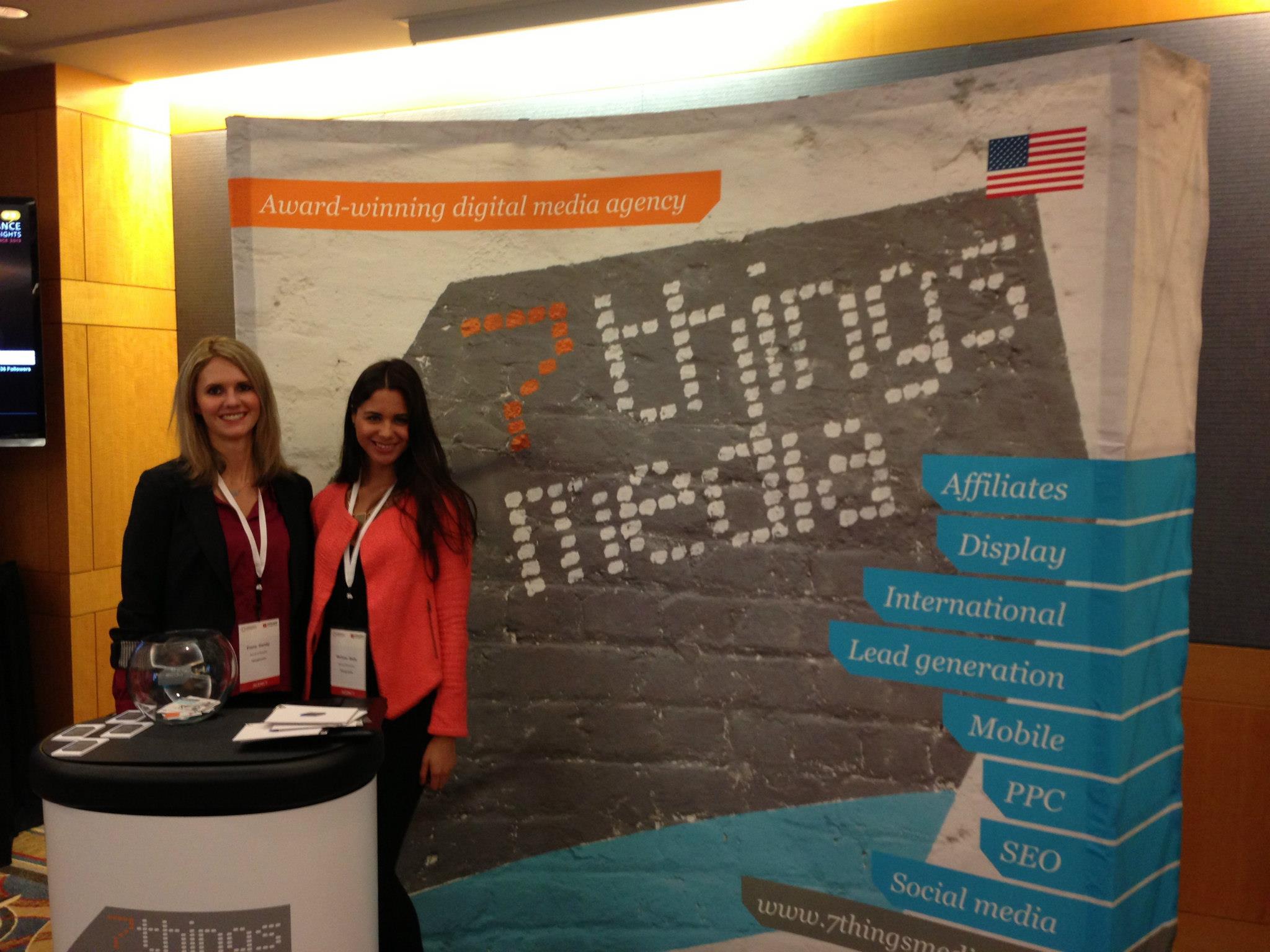
London, UK – 18th March 2013 – London and New York-based digital media agency, 7thingsmedia announced today that it has bought an equity stake into Tel Aviv-based Fashion Traffic, a fashion media marketplace. Fashion Traffic is a technology platform that enables Ecommerce-based brands and retailers to sell through fashion-focused publishers on websites, blogs and social media platforms such as Facebook and Twitter. Independently owned 7thingsmedia has bought a stake in the platform and Founder & CEO, Chris Bishop will lead the board. Fashion Traffic will continue as a standalone company, but with the strategic investment and direction from 7thingsmedia; re-position as a digital media platform working across affiliates, display, lead generation, mobile, PPC, SEO and social media. Chris Bishop, Founder & CEO of 7thingsmedia said: “An agency that sits and serves is an agency going nowhere. This is the first strategic investment for 7thingsmedia to extend our portfolio of marketing services. We will lead Fashion Traffic to offer a unique fashion marketplace enabling media convergence across the various digital channels in an efficient and transparent way – synergetic to 7thingsmedia’s media viewpoint.

Hanan Maayan, CEO of Fashion Traffic commented: “We are delighted to have 7thingsmedia’s strategic involvement, as this deal will accelerate the expansion of Fashion Traffic in the UK, US and Worldwide. We are looking forward to transitioning from purely an affiliate-side proposition to a fully integrated digital media platform.”

About 7thingsmedia 7thingsmedia is a global digital media agency with a proven track record of delivering hugely impressive returns for clients such as Agent Provocateur, boohoo.com, Liberty London, and Ted Baker. With offices in both London and New York; 7thingsmedia’s services span the digital marketing mix; affiliates, display, lead generation, mobile, PPC, SEO and social media. Client list includes: Agent Provocateur, boohoo.com, James Villa Holidays, Liberty London, MARS, Ted Baker & USC. 7thingsmedia – http://www.7thingsmedia.com Twitter – @7thingsmedia About Fashion Traffic Fashion Traffic is a fashion media marketplace, designed specifically for those in the Online Fashion business. Fashion Traffic connects fashion brands and retailers with publishers and influencers through websites, blogs and social media platforms such as Facebook and Twitter.

Client list includes: ASOS, Farfetch.com, Forever21, ModCloth, Neiman Marcus & Yoox.com Fashion Traffic – http://www.fashiontraffic.com Twitter – @fashiontraffic Contact: Rhi Davies, Marketing & PR Assistant, 7thingsmedia, rhi.davies@7thingsmedia.com , +44207 017 3190

LeadsCon Rocks Las Vegas to Tune of $200M

LeadsCon just ended a minute ago as I am writing this having left the hall, and all I can say is “Wow!”  The convention, the biggest ever by far, according to about everyone, was perhaps the best collection of the top people in online lead generation ever collected. Ever single exhibitor told me the same thing: that they easily made back their investment price many times over, and several even told me they found AGAIN their biggest deals ever at LeadsCon.

We will have full coverage over the next week of the convention, including interviews from most of the exhibitors. You can see more photos from the event on Murray Newslands page on Facebook

lead4 lead5 lead6 lead3 lead2 lead1


Bad Reactions When Google Removes Ad Blocking Apps

Google is now taking steps to ensure that advertisements meant for mobile devices will be seen, without anything getting in between the mobile user and the marketing content. However, there is reason to believe that in doing so, Google has shown the world a glimpse of its priority list. In this list, it may begin to seem that bringing in the most possible revenue is more important that allowing users to make their own decisions about what they do and do not see on their phones. The issue of consumer choice is what makes Google’s recent actions questionable. Google has now effectively removed applications like AdBlock Plus, AdBlocker, AdAway and AdFree from the Google Play store. In doing so, Google has given users no other option than to be hit with every ad that is headed their way.

Although it is a bit too early to see just how mobile users feel about this change, the people at AdBlock Plus are none too excited about being kicked out of Google Play. In a press release, the company makes known their feelings about Google since this decision.

“Google has crossed a red line by removing the app” and “is placing business interests ahead of user interests.”

“Isn’t Android an open system?” he asked. “We are not interfering with any other apps. We are providing choice. The user should be in charge of what services may access their device – not Google.”

On a deeper, more political level, Till Faida who is co-founder of AdBlock Plus says that users should be very concerned that Google is essentially making decisions for them.

I realize that advertising revenue is important to Google, but understand that Adblock Plus does not automatically block all ads; we simply allow users the choice whether to block ads or whitelist them. We even encourage advertising that is done appropriately and conforms to an Acceptable Ads policy, which is debated and decided in an open public forum. By unilaterally removing these apps, Google is stepping all over the checks and balances that make the Internet democratic. People should be really alarmed by this move.

Of course, Google had a reason for taking away these ad blocking applications that can be used as add-ons for most mobile browsers. However, what is up in the air is if, what Google claims as their reasoning, is entirely truthful. Either way, Faida explains what Google claimed to be their motivation for taking away these apps.

Google’s rationale behind removing Adblock Plus is that it violates Section 4.4 of their Developer Distribution Agreement. But today’s action is the third in a string of actions that Google has taken against Adblock Plus: in late February Google began forcing Android users to manually configure a proxy server in order to run Adblock Plus; in December 2012 Google re-categorized Adblock Plus in the Chrome Web store and stopped showing it in search results when users specifically looked for the extension; and when Adblock Plus re-listed as an app on December 12th, Google took it down again 12 hours later.

Other than this, Google has not given any further explanation for their actions, which does in fact seem like something that users and companies like AdBlock Plus deserve. Either way, it seems that this debate, or rather battle, is nowhere near finished. AdBlock Plus has over 200 million downloads on mobile phones, meaning that millions of mobile users will be affected by this decision from Google. And you have to assume that not all of them will accept it very easily.

The Elephant in the Pocket – Pay Per Call

You’ve probably read dozens of articles in the past year forecasting the growth of mobile. There is a lot of hype and buzz around mobile, with good reason – this year, mobile search is predicted to surpass desktop search for the first time ever. The question is are you capitalizing on the growth of mobile? Do you even know how?

The answer lies in phone calls. While many think of phone calls as an outdated way of doing business, the most natural action for a consumer to take while on a mobile device is to place a call, not fill out some lead form or dig around a website. Businesses want phone calls, and for high ticket, consultative sales, consumers want to speak with someone. Yet publishers have avoided pushing consumers offline because of the issue of tracking. Well, that’s not a problem anymore, and it hasn’t been for a while. Savvy publishers and agencies are seeing huge incremental growth streams by adding phone numbers and mobile promotions to their mix, getting paid on a pay-per-call model. With the help of RingRevenue’s patented call performance marketing platform, it’s possible to track calls like clicks and also take things a step further, with campaign optimization and tools specifically built to optimize mobile campaigns. RingRevenue’s Julia Stead chatted with pay-per-call veteran and co-founder of 31 Media Don Batsford Jr, to discuss how he got started with pay-per-call, and why it’s an integral part of his company’s strategy.

Tell us a bit about 31 Media.

31 Media is an online performance marketing agency – in other words, we’re media buyers. With a focus on maximizing ROI, we find the right media placements for our advertisers, and help them get new customers. We’ve been around for over 7 years, and were one of the first companies to implement pay-per-call programs with performance marketing networks, back in 2009.

What got you interested in pay-per-call?

About 10 years ago, while working at Commission Junction, one of the conversations we had a lot was about affiliates being compensated for phone calls. There wasn’t any kind of effective system in place to determine where sales from phone calls were coming from. So this was an issue that had been on my mind for a while. As mobile became mainstream, I’ve been consistently reminding people that the computer in your pocket is actually a telephone. Speaking is by far the most effective form of communication between two people. Subtleties in tone of voice and nuances of intent can mean that one sentence can have 7 different meanings. (Think about “I never said she stole my money” “I never said she stole my money”, “I never said she stole my money” etc). When we heard that Linkshare was using RingRevenue’s technology to track phone calls and offer pay-per-call campaigns back in 2009, we saw the opportunity and jumped on it.

Which verticals and promotional types have you been most successful with?

Phone calls work really well for companies that have big margins. It needs to not be a visually based product – you don’t want to rely on having that visual part to the shopping experience. Services and commodities work well, with lead-based concepts like insurance. Companies that have traditionally had call centers, and have professionals that can vet what a person is looking for quickly are a good fit.

Anything on mobile is going to be effective, because there’s a telephone built directly in there. Placing numbers online on web pages also works well, when people are looking for more information or are pursuing a consultative sale.

We’re also looking to try TV and radio. We haven’t gone into those areas much yet, but we know there is a big opportunity and plan to explore it more.

What is the revenue opportunity in pay-per-call and how do you measure success?
In lead generation in general, people fail to take into account that generating leads is really expensive. Phone calls especially, because you have a human on the other end. So we always avoid commissions that are low – if someone is offering a $2 or $3 payout, it’s a non-starter for cost-per-call (aside from some outlier exceptions). We have traditionally stayed away from niche and low payouts.

The equation for success is pretty simple: your profit is going to be the payout times conversion rate. If you increase payout or the conversion rate, it will exponentially affect the success rate of the program. So we always ask people to go as aggressive as possible on both them. This involves lots of testing and refining the process – testing the IVR (interactive voice response, that filters and routes how calls are handled), changing the payout, different factors. Taking an aggressive approach to finding the best possible way means you can really increase the net revenue.

Without a doubt, pay-per-call is going to deliver a higher conversion rate [than online], it is also more expensive to drive the traffic. Human beings talking to other humans, when that happens, people are serious about it. They are ready to buy. The phone has a lot of advantages. It’s not old-fashioned when it comes down to what you can accomplish through communication.

A lot of people will highlight the ability to increase overall conversions by up to 10%, by simply adding a phone number to a landing page. And once those calls happen, they convert at least 2 or 3 times higher than web traffic. Some people complain that 10% of their traffic is going away, going offline, but that 10% is not created equal. Every person you engage in a conversation is highly likely to convert. Having a phone number on there is almost like catching sales – it’s not like catching traffic and directing it around. It’s equivalent to being able to skim off just the cream from a sales perspective.

If you knew that 30% of your best, premium traffic was being thrown away, you’d be upset. If you know that calls convert at 30%, why would you let them just drift off and leave your website unengaged? Even though they are not the majority of your traffic, they are the important traffic.

Convinced yet that you should be doing pay-per-call? If you’re a publisher, the best way to get started is to check with the performance networks you partner with to see what pay-per-call platforms they offer. If you’re interested in learning more about pay-per-call technology and setting up your own platform, visit RingRevenue.

Erin Cigich of Clickbooth wins Award

SARASOTA, Florida (March 7, 2013) – Leading performance-based marketing network, Clickbooth, congratulates President and Manager, Erin Cigich, who has been selected as a Glass Ceiling Award winner by the Florida Diversity Council. Erin, along with the 12 other female executives, was formally recognized for her excellence in leadership during an award ceremony at the 3rd Annual Florida Women’s Conference on March 1st.

“I am beyond honored to be named among this distinguished and impressive group of professional women,” Erin said. “These are the women who are changing the business world. I want my daughter to grow up in a world where the glass ceiling has been shattered, so to be recognized as someone who is leading the way for others to break through as I have is extraordinarily humbling.”

As a respected member of the performance marketing industry Erin is no stranger to success. For 6 years Erin has demonstrated her leadership abilities time and again, quickly rising up the ladder from Affiliate Strategist to company President. In her current role as President and Manager of Clickbooth, Erin provides leadership to a team of nearly 100 members, seeks out opportunities for the company to better serve its client base, and cultivates relationships with top industry partners to create collaborative efforts that will improve the industry as a whole. Her involvement with Clickbooth thus far has directly contributed to numerous recognitions including being named the #1 Fastest Growing Company for Marketing and Advertising by Inc. 500 as well as this year’s recognition as the #1 CPA Network in the World by Revenue Performance Magazine.

Each year, the Florida Diversity Council recognizes only a handful of women from a variety of industries and backgrounds to receive The Glass Ceiling Award. Other 2013 award winners include U.S. Department of Labor’s Southeast Regional Representative for the U.S. Secretary of Labor, Millie Herrera, Starbuck’s Director-Corporate Counsel, Donise Brown and Walmart’s VP of HR East Coast U.S. Business Unit, Lina George. As an award recipient, Erin joins this elite group of other influential women who have not only achieved personal success, but have also paved the way for future professionals. In addition to serving as a Glass Ceiling Award recipient, Erin also spoke on the Tools for Maximizing your Leadership Potential panel at the Florida Women’s Conference, sharing tips and guidelines that have helped her achieve her goals and overall success.

About the Florida Diversity Council
The Florida Diversity Council, part of the National Diversity Council, strives to enhance appreciation for and understanding of the value of diversity and inclusion. We will achieve success through the efforts and activities which:
▪    Advance corporate leadership education/awareness of the varied dimensions of diversity
▪    Commit leaders to discuss issues and challenge attitudes, and promote organizational changes that support diversity
▪    Promote outreach efforts to our youth that inspire mutual respect and understanding

For more information, visit http://www.floridadiversitycouncil.org/

About Clickbooth

Clickbooth, The Exclusive CPA & CPC Network, is a world renowned performance-based online marketing company creating powerful partnerships for Advertisers, Affiliates and Publishers. Clickbooth provides advanced technologies complete with durable, exclusive channels, firm control on distribution and adherence to quality in terms of both publishers and advertisers. Clickbooth gives advertisers access to thousands of exclusive publishers and an extensive zero-risk environment with maximized ROIs. Additionally, publishers are guaranteed maximum returns and quality performance, as well as the guaranteed highest payouts. With a focus on quality since its beginning, Clickbooth has been providing the advanced CPA (Cost per Acquisition) technology that has been leading the new phase in media buying for more than ten years. For more information, visit www.clickbooth.com.


Eradicating LeadGen Fraud, Increasing Lead Quality: We’re On It

Two LeadsCouncil 2013 ‘Most Innovative Company’ LEADER Award Winners partner to provide most comprehensive solution for restoring integrity (and ROI) in the lead generation market.

CPA Detective will be the first lead fraud detection application integrated into the LeadiD Marketplace, a single platform for best-in-class marketing solutions.  This partnership comes in the wake of both companies’ selection as winners of the 2013 Leads Council LEADER Award for Most Innovative Company.

“The purpose of the LeadiD Marketplace is to present LeadiD customers with a curated suite of applications for the most effective lead generation platform in the space,” according to Rob Rokoff, Vice President, Business Development at LeadiD.  “We evaluated many options and we are confident that these partners represent best-in-class solutions.  CPA Detective is a clear pioneer in the lead fraud detection category.”

Lead fraud is a serious problem. In the lead generation industry, reports suggest that fraud represents up to 30% of affiliate traffic.  Advertisers often pay for leads that are stolen, recycled, or from unwanted sources, which have been form-filled using fake online identities.

CPA Detective’s powerful tools are available to LeadiD customers with simple setup and include adaptive device fingerprinting, proxy unmasking, and “big data” analysis to eradicate fraud from their digital campaigns.

“Everyone wants to use their marketing budget effectively, and eradicating fraud is the fastest way to cut costs and boost ROI immediately,” says David Sendroff, President of CPA Detective. “We catch more and more fraud every day.  Now that we are integrated into the LeadiD Marketplace, marketers can easily implement our platform and immediately identify and disqualify fraudulent leads.”

The Performance Marketing Industry’s smartest partnership is revealed just before LeadsCon Las Vegas (March 18-20). Visit CPA Detective at Booth 430 and LeadiD at Booth 416.  P.S. keep an eye out for #OrangeKicks.

About LeadiD
Founded in January 2011 by Ross Shanken, LeadiD is the only independent, neutral, open technology platform, which tracks the origin and history of every lead event that utilizes the LeadiD system. No supplier-proprietary data is exposed, but rather, LeadiD allows Lead Sellers and Lead Buyers to make real-time decisions based upon definitive origin and history flags that are predetermined. LeadiD fosters an environment of trust in the transaction, one where both Lead Sellers and Lead Buyers alike derive top-line value. With unmatched data, LeadiD is the industry standard for authenticating lead origin and history and the authentication platform of choice for firms of all sizes. For more information, visit leadid.com.

About CPA Detective 
CPA Detective is the premier fraud detection solution for the performance marketing industry. Proven to increase marketing ROI and maximize campaign efficiency, CPA Detective is used across all verticals providing greater transparency into the quality of each conversion and the overall traffic source, allowing companies to make intelligent media buying decisions by leveraging predictive scoring algorithms, smart device fingerprinting, and an industry-wide Fraud Intelligence Database. Learn more athttp://www.cpadetective.com or call 877‑449‑1854.

Facebook Getting Rid of Unlike?

Proven through the constant attempts at bringing in more Likes for Pages, which can go as far as paying for fake likes just to bring the number up; Facebook marketers see their Pages’ fan counts as a very important measure of their Facebook campaigns’ success. There have been many features added to Facebook’s list of marketing offerings, and many of them have been primarily beneficial to those who run Pages on the network. Also, most of these marketing features are aimed at bringing in Likes for these Pages, and ultimately getting more followers.

With Facebook’s new redesign have come countless concerns from those who advertise with the company. There is a lot that marketers know about the new design, but there is still a lot that is up in the air. However there is one feature, as it has been reported by InsideFacebook, which will allow marketers to feel a bit more secure about the ways in which they bring in Likes on their Facebook Pages.

Now, there has not been much complaint regarding the loss of fans of Facebook Pages, but with Facebook’s old design these users have had the option to both Like a page and to Unlike a page. Hoping to help marketers keep up their fan counts, Facebook has gotten rid of the Unlike Page option when hiding a story from a Page in their new redesign.

When clicking the small dropdown menu in the corner of a Page post in the old Facebook News Feed, users were given the option to hide the story, and then given the option to hide all stories from said Page or even Unlike the Page completely. Now, users will have the same options when hiding a post, with the exclusion of Unlike a Page. This means that users will have a much more extensive process to go through in order to Unlike a Page, which will hopefully lead to fewer users doing so.

For marketers, maintaining fan numbers is great. On the other hand, Inside Facebook mentions that there is the issue of a loss of reach on the network. With users now having the ability to hide posts from pages, but not to Unlike them, the percentage of reach goes down while the number of Likes stays the same.

But, if there has not been much complaint regarding the amount of people that Unlike pages, why has Facebook made the effort to include this change in their redesign? Well, Facebook wants people to continue liking Pages, even if that is the very furthest that their interaction with said Page goes. Here are some of the reasons that this is important for Facebook;

  • Easier collection of information for ad targeting and recommending other Pages
  • Giving Page owners more detailed information on demographics
  • Giving marketers a better idea of their audiences as a whole, allowing them to create, “hyper-relevant creative for a responsive audience, and gain insights that they can apply to their other marketing efforts.”

This small part of the redesign of Facebook’s News Feed has a lot behind it, and hopefully it will work out just the way Facebook hopes it will.

Important: FTC Updates Advertising Disclosure Guidelines

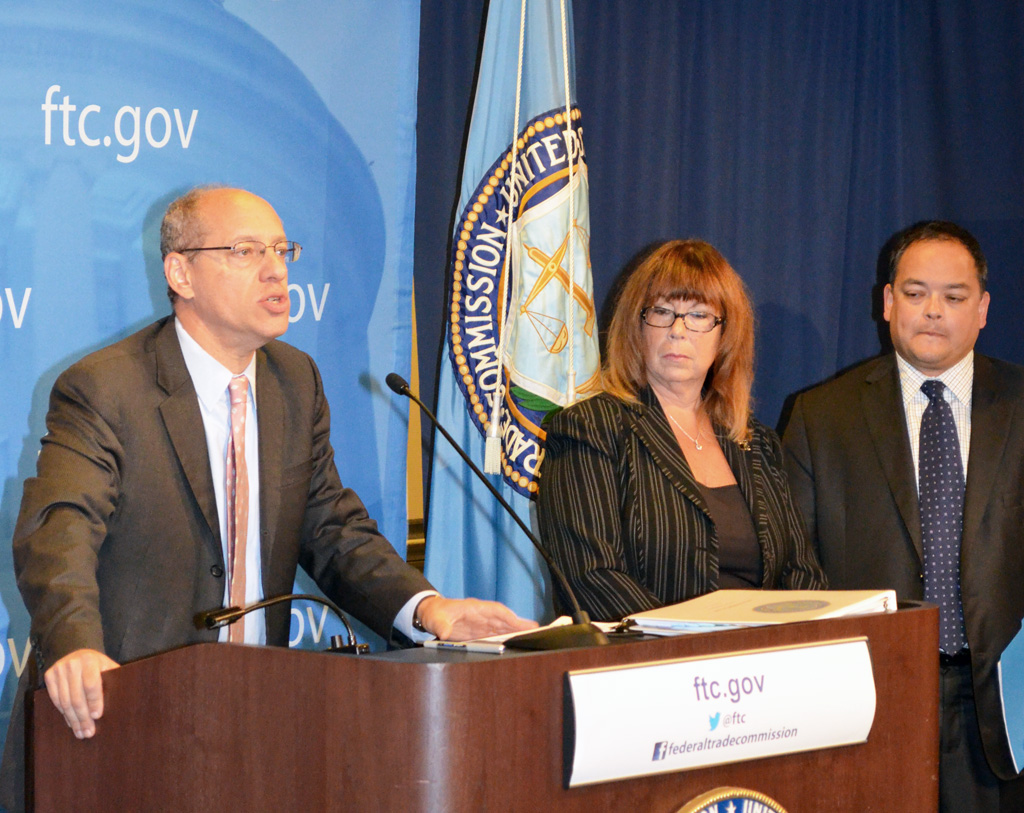
Updates to the Federal Trade Commission’s guidance document, Dot Com Disclosures, have been anticipated for almost two years.  After receiving substantial written feedback and in response to the increasing use of both social media-based marketing and smartphones with smaller screens,  the Commission has now issued updated guidelines entitled .Com Disclosures: How to Make Effective Disclosures in Digital Advertising.

The evolution of online advertising and the digital marketplace necessitated the need for the revised guidelines – aimed at overall compliance with the §5 of the FTC Act – which prohibits unfair or deceptive advertising, marketing and sales practices.  According to the Commission’s release, the updated guidelines seek to describe “the information businesses should consider as they develop ads for online media to ensure that they comply with the law.”

The guidelines also contain mock advertisements that illustrate the updated principles.  For example, FTC staff advised marketers in 2000 to consider the placement of disclosures and their proximity to the ad claims they explained or elaborated on.  The old guidelines defined “proximity” as “near, and when possible, on the same screen.”

The new advice?  Disclosures should be “as close as possible” to the relevant claim.  Another design consideration from the 2000 document was the advice to avoid buried or generically labeled hyperlinks.  It also warned against using hyperlinks for disclosures involving key categories of information, such as how much a product costs or certain health or safety information.

The updated guidelines build on that, calling on advertisers to label hyperlinks as specifically as possible.  You must also consider how hyperlinks will function across the broad range of programs and devices consumers are likely to use.

Perhaps the most important thing about the new .com Disclosures is, actually, what has not been changed.   Regardless of how or where you market, truth-in-advertising principles continue to apply to print, radio, TV, and online advertising.

Nothing really new here, either.  Well, not exactly.  It has always been the law that if the disclosure of information is necessary to prevent an online advertising claim from being deceptive or unfair, it has to be made clearly and conspicuously.  However, according to the updated guidelines, advertisers should make sure their disclosures are clear and conspicuous on all devices and platforms that consumers may use to view their ads.

In other words, if an advertisement could potentially be deceptive without a disclosure but the disclosure cannot be made clearly and conspicuously on a particular device or platform, then you should not run that advertisement on that device or platform.

One of the more interesting considerations for the Commission has been real estate limitations on various social media platforms.  The updated guidelines acknowledge this marketing challenge, although, companies will not be relieved of the obligation to ensure that all disclosures are made clearly and conspicuously.

Pop-ups are potentially problematic given that so many technologies exist for blocking them.  You will want to consult with advertising compliance counsel early on in the creative compliance process in order to assess advertising campaigns and the need for disclosures.

Something to consider – the need for a disclosure may oftentimes be an indication that the underlying representation may possess a deceptive element.  A skilled advertising law attorney will be able to assist with the design or reformulation of cleaner advertising claims that incorporate relevant limitations into the underlying representation, rather than having numerous separate disclosures qualifying the claim.

Learn more about these guidelines at the FTC.gov website.

Information conveyed in this article is provided for informational purposes only and does not constitute, nor should it be relied upon as legal advice. No person should act or rely on any information in this article without seeking the advice of an advertising law attorney.

Worried About the FTC? Feds and State Regulators in High Gear

There are many conceivable ways to avoid a federal or state regulator’s spotlight.  What is somewhat confounding is that so many seem utterly disinterested in employing any of them.

Deliberate compliance-monitoring is one way to avoid undesired attention from regulators.  Actually, it is THE way.

Each word in your creative content, in context, and the net-effect it has upon the average consumer must be considered.  There is nothing wrong with aggressive marketing.  But there is a line.

For those who may not be paying attention, the Federal Trade Commission and various state Attorneys’ General have started the new year with some pretty agro investigative actions aimed at unfair and deceptive business practices.

Text spam, online lending, data collection and privacy are in the spotlight.  Advertisers are pointing down.  Publishers are pointing up.  Run smart.  Be prepared to demonstrate your good faith compliance efforts to adhere to lawful online advertising regulations.

Banal as it sounds, careless mavericks are attracting unnecessary attention to an industry that is already the focus of legislative reform efforts.  If you want to avoid the receipt of a regulatory love letter in the future, take proactive measures, now.

The good news is that if you run your campaigns the right way, under the watchful eye of advertising compliance counsel, you can maintain healthy margins without spending your hard earned money dealing with over-zealous regulators.

For those who just will not stop blatantly waiving red flags, do not say you were not warned.

Performance Marketing Insights NYC Huge Success

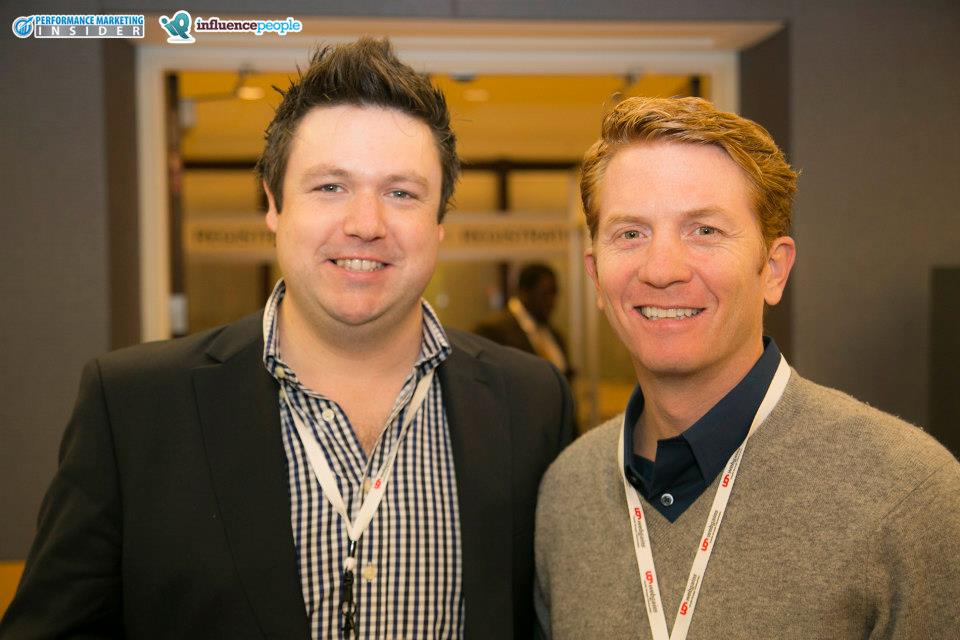
The first high-level Performance Marketing Summit of sorts, “Performance Marketing Insights” was launched this week, and from all the attendees feedback, it was a huge success.  While it was limited to only a few hundred people on purpose, it managed to bring all the “who’s who” of the performance marketing industry and focus completely on high-level topics that will affect the industry. Produced by A4Uexpo out of the UK and the Performance Marketing Association,  it showed that our industry has matured way beyond the “affiliate make money” crowd that sometimes dominates the industry discussions. While the exact amount of money at the event was not know, it was estimated by one attendee that at least $2-3 Billion of producers attended the event, from major ad networks to brand buyers who were getting their companies involved in this part of the industry.

Here are a few highlights of the event.

Lisa Chalkin of Affiliate Window talks about Case Studies for Affiliate Marketers


Greg Shepard of Affiliate Traction on Issues on Attribution and Brand Oversight.


Steven Brown of Lindex on Quality Content for SEO, and how this has changed Google.

I Will Help Your Affiliate Business Get Started

Dan Cohen of TradeDoubler talks with Murray about their Zoo Project. The Zoo Project supports aspiring entrepreneurs to transform their business ideas into reality. With hands-on mentoring from TradeDoubler’s experts, the fundamental goal is to develop the needs of entrepreneurs in the start-up phase. In addition to a solid infrastructure, marketing reach and business development support, The Zoo Project offers invaluable access to the wider online industry. If you are looking for a way to get your affiliate business started, here is an excellent opportunity.

Want to know more? Signup for the Zoo Project


WhatRunsWhere Launches First In-App Ad Tracking Service

 San Diego – Giving advertisers and agencies the ability to track competitors’ use of in-app advertising for the first time, WhatRunsWhere (www.whatrunswhere.com), the service that already enables tracking of online and mobile ad campaigns, today launched a data gathering tool for the Android platform.

Using WhatRunsWhere’s new in-app capability, advertisers can now collect data from more than 20,000 Android apps. The data will provide crucial intelligence about where competitors’ ads are running, which specific ads are running there, who is selling those ads, and other information to help advertisers develop their own cost-effective mobile advertising campaigns.

“This is a significant development, not only for WhatRunsWhere, but the entire Android app market,” said Max Teitelbaum, co-founder and COO of WhatRunsWhere.  “Until now, apps have been an informational black hole for marketers seeking to implement effective campaigns. Advertisers and agencies were buying ads blind, with no real performance history data showing what types of ads had worked in what apps. Now, with the introduction of WhatRunsWhere’s in-app tool, advertisers can develop intelligent strategies for deploying their mobile ad dollars, leading to a greater return on investment.”

“The universe of Android-based devices continues to grow at an astounding rate,” Teitelbaum added.  “The ability to effectively reach audiences across Android phones, tablets and other devices represents an enormous opportunity for advertisers.”

In September 2012, Google announced that it had activated more than 500 million Android devices globally, with 1.3 new devices activated daily.  And Opera Mediaworks reported in February 2013 that Android had “emerged late in the year as the leading mobile phone OS as measured by impression volume.”

The in-app launch follows WhatRunsWhere’s August 2012 entry into the mobile ad space with its acquisition of the UK startup Mobile Ad Spy, a company specializing in global mobile ad intelligence gathering technology.

About WhatRunsWhere

WhatRunsWhere, a competitive intelligence service for online media buying, allows users to look up what advertisers are doing online: where they are running ads, from who they are buying inventory, and what exact ads they are using. WhatRunsWhere also allows users to see what is happening on any online publisher: who is advertising there, who is selling the inventory, and what ads are running. With data from multiple countries and actionable insights from the data, WhatRunsWhere allows users to quickly dissect competitive online advertising campaigns, resulting in reduced risk and a higher ROI.

YouTube OneChannel: A Better Look and More Options for Users

Recently, Facebook gave Facebook users and Facebook marketers something to wonder about, announcing their new big News Feed redesign. For some time this redesign has had the social media world buzzing, but other marketers really could not care less about it. Now, video marketers have a similar announcement that they should pay attention to. This is especially true considering that most video marketers look to YouTube for effective video ad placement options. Much like Facebook, YouTube has a new redesign underway, to which the company has given the name, “YouTube One Channel.” However, YouTube’s redesign is both a matter of visual appearance or effectiveness, as well as functionality of user channels.

The introduction came in the form of a video from the YouTube Creators, in which a few of the most famous YouTubers made appearances to give their opinions and thoughts on the new channel design options. From the video we learn about what YouTube will be offering to its users.

The New Look

With YouTube One Channel, a new option is available that can help those who run popular channels, as well as marketers, in making YouTube viewers more aware of a channel. The new option, called Channel Art, will allow those people using YouTube to include a large header on their channel page, much like what we see with Facebook’s Timeline cover photos. The difference is that YouTube users will have the option of making the header area a functional image, including links to merchandise or prompts to become a fan on social media sites.

There is also the option to include a channel trailer, appearing only to those users that are not yet fans of a page. In their OneChannel overview, YouTube writes;

Win new subscribers with a trailer video that only appears to non-subscribed viewers. They’re all your fans; they just don’t know it yet.

The company has also made a change that will optimize all channels for any given device. YouTube, answering to the immense mobile growth lately, wanted to make it so that no matter where a user accesses a channel, it will appear as the channel owner planned for it to, including the new headers.

The New Functionality

YouTube states that, “Your content is a unique snowflake,” upon using their OneChannel. Users now have better and more control over their content, with the ability to organize their videos on their channels. YouTube users can now decide what they want viewers to see first and foremost upon visiting their channel.

Take greater control over how you present your videos and playlists on your channel. You can now curate content — your own or others’ — into highly visible sections for your fans to discover what to watch. With multiple layouts for videos and playlists, you can arrange your channel to best highlight your content.

Now, when your subscribers click on your channel from the guide, your full channel appears instead of just your activity feed. Your fans see exactly what you want them to when they click on your channel.

If you would like to view the video from YouTube Creators, explaining a bit more about the new design, visit their channel. Also, visit the OneChannel overview page. From there, you can get started with the new design. As of now, the feature is only available in a limited beta, but the good news is that it is available to all users.