Why is Snapchat Becoming essential for Mobile Marketing on iOS?

In a recent ROI report from Singular, Snapchat has shown some very significant growth in terms of their importance for mobile marketing. This is especially true when it comes to the iOS platform where it has become the 15th best ROI option around, and the 6th best in terms of non-gaming ROI.

Oddly, it did not play on any of the top charts when it comes to Android devices. Marketers will want to keep this in mind when deciding where to put their marketing dollars. Whether it is because Android users don’t use Snapchat as much, marketers don’t buy Snapchat ads as much for Android, or some other reason, it is good information to have when making plans.

Not surprisingly, Google Ads, Facebook, and Unity remain the top three for ROI regardless of platform.

Snapchat is also extremely popular with younger generations, which is quickly becoming a key demographic for many businesses. Putting marketing efforts toward this system will help to establish relationships with this generation, which have the potential for long term returns.

Overall, the report was very positive for mobile marketing in general, with it continuing to have significant growth. iOS games were providing a 1.2x higher return than Android games though, which has been the case for many years now.

New Marketing Features from Snapchat Being Launched

Snapchat has just announced that they are rolling out some new features, some of which will be very helpful to marketers. The main addition will allow marketers to link any type of content they want to their snaps using a new ‘paperclip’ option.

Paperclips allow users to link up websites, or other things, by just tapping the new button, which is located in the Vertical Toolkit. When a user visits the Snap, they will be able to swipe up to open up the website within the custom Snapchat web browser.

There has been this option for paid advertisers for quite some time now, but with it expanding to all users, it will create a lot of great options. Marketers will be able to create more natural traffic, which can save a lot of money compared to advertisements. In addition, many consumers prefer clicking on links that aren’t from ads since they view them to be more trustworthy.

Snapchat has implemented some safety standards regarding where the links go to help protect users. Objectionable links can be reported by the users of the app as well to help keep everything working well for everyone involved.

Bad News For SnapChat: Instagram Stories More Popular

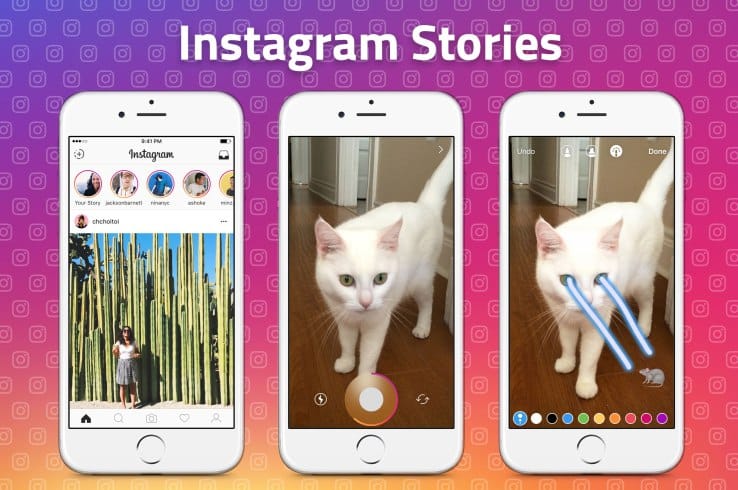
Just eight months ago Instagram copied a Snapchat feature, and made the ‘Stories’ option to help people get more out of their image & video social network. As of the most recent numbers, Instagram is now boasting more than 200 million daily users, compared to about 158 million that Snapchat is getting.

Since Instagram is owned by Facebook, it might not be a real surprise that they were able to overtake the original pioneers of the feature.

With about half of all Instagram’s daily users taking part in the Stories feature, this is obviously one of their most successful options ever.  This is why they have been pushing so much effort into continuing to expand the options, often by tossing in features that, once again, Snapchat came up with.

One fairly new feature is that those making stories will be able to add emoji, stickers, text or other things onto the videos that they make. This adds a whole new fun dimension to the story since you are essentially editing the video in any way you want it. This is, not surprisingly, a feature that has been on Snapchat for a while now.

Stickers have long been a popular option on Instagram and Snapchat. To expand their use, Instagram is copying another Snapchat feature, which is allowing users to make their own stickers. This can be a selfie, or anything else that is desired. The stickers can then be edited to look exactly as desired.

While the majority of all these features are used just for fun, they also have a lot of great marketing uses. The more unique and enjoyable a marketer can make their story, the more it is likely to get seen. Keeping up on the latest features of Instagram, especially now that it is larger than Snapchat for stories, is going to be more important than ever.

New Search Options for Stories on Snapchat

In an obvious effort to keep people on their platform longer, Snapchat has recently updated their search function to help people discover more stories based on their searches.  The updated function will allow keyword searches for finding collections of Snaps that took place over a day (stories).

For the moment, this new feature is only being rolled out to certain cities, which they have not yet named, as a test. Assuming everything goes smoothly, Snapchat will roll out the option to the rest of their users.

In addition to helping people find the stories that they may be interested in, Snapchat will hope that this encourages more people to make and publish stories on their platform.

The social network has been doing great on the stock market, and growing in popularity in general, so it is good to see that they are not letting their success cause them to get lazy in releasing new features.

Snapchat Will Put your Ads on Adult Snaps (Yes Porn!)

Snapchat has been all over the news lately thanks to their hugely successful IPO. This coverage is undoubtedly attracting a lot of new advertisers to the platform, but they might be surprised to see where their ads are showing up.

Snapchat really got its start as a place where young people could engage in sexting activities and other ‘mature’ things. While the app is now used for many other things, there are still many porn stars and perverts that use it on a regular basis.

Since the algorithms match up the ads with the user and not necessarily with the content that is most recently displayed, the results can be very questionable. There are reports of users getting advertisements for Denny’s restaurant while viewing pornographic snaps.

Most companies try to avoid having ads viewed on these types of pages due to the potentially negative feedback or associations that will come with it.

There is a ‘brand safe’ option available from Shapchat so companies won’t be matched up with the publicly available pornographic chats, however, that still leaves them open to being displayed after a chat that occurs on a personal video under Stories, which is a private area with no real restrictions.

While there are some efforts being made to do a better job at regulating the content on Snapchat, and making sure that ads aren’t shown where they aren’t wanted, the reality is there is currently no effective way to ensure your ads aren’t being matched up with porn. For some companies this isn’t going to be a huge deal. For others, it will mean avoiding Snapchat for advertising, at least for now.

Snapchat Starting Precise Ad Targeting using Oracle Data Cloud

Selling digital advertising has been a profitable venture for companies like Facebook, Google, and Twitter. Snapchat is now trying to cash in on the digital advertising cash cow as well. Soon, Snapchat will be using purchasing data provided by Datalogix, which is owned by Oracle Data cloud, to measure and target ads towards it users.

Regardless of where brands are buying their advertising from, if directly from Snapchat or from one of the third party options that utilize the Ad API of Snapchat, users purchase data will be available for all ad formats that are found on Snapchat.

By using Oracle Data Clould’s syndicated audience groups, which consists of approximately 100 different generic segmented categories, offline and online purchase information is separated into the general categories. Snapchat is then uses its own “hashing” process, which will match up the Snapchat accounts with the generic information from the segmented categories, by using email account information, along with unique advertising specific identifiers that Snapchat has associated with individual accounts.

Encryption and anonymity will remain with all data between the two companies, to ensure that neither Snapchat nor Oracle will be able to see specifically how individual users data ties to the other companies data.

If a Snapchat user is concerned about having advertising activity information gathered outside of Snapchat, there is an option in the App settings where they can choose to opt out.

The benefit of using this type of data is that it will allow a more precise way of applying advertising, as it will make it possible to focus ads on users that are likely to purchase the product, rather than focusing on a metric such as age, gender, or geographical location. In addition, this will give Snapchat the ability to measure whether the ads on its platform resulted in actual sales or not.

This is just another step by Snapchat to remain relevant in the game where such big players have already implemented these tools. And with Snapchat likely going public sometime in the near future, steps like this will only add value to the company.

Snapchat Spectacles Becoming Popular & Present Interesting Marketing Opportunities

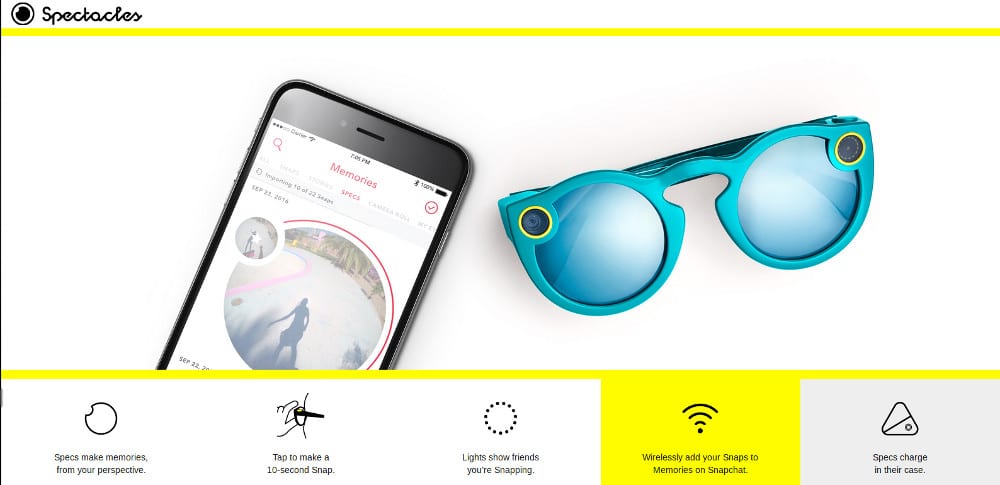
Spectacles, the name of the sunglasses introduced by Snapchat last week, is capable of recording short, 10 second videos, from a first person perspective. The video can then be uploaded to Snapchat, and can be viewed both vertically and horizontally. If the video gets uploaded to a different platform, the video will be displayed in a new circular format

Ben Benrubi, associate director of global partnerships at the marketing agency VaynerMedia, said of the Snapchat product, “It’s an extremely engaging experience to watch circular video on your phone as you can view different parts of the video vertically versus horizontally…Not only are Spectacles fun, but they are functional — they give us the opportunity to tell stories in a completely new and unique format, especially in first-person point of view.”

How well the videos from the Spectacles sunglasses will translate into revenue by using the videos in advertisements is unknown. Stephen Boidock, the director of social media at Drumroll, seems to think that the advertising value of the new sunglasses is not as significant as it could be. He states, “If the goal is to make it easier for people to take snaps and use the platform more often, then it would definitely raise the daily audience size to help attract advertisers,” he said. “But because the spectacles don’t add any additional layer of filtering or lens yet, there doesn’t appear to be an immediate opportunity for brands to integrate with user content.”

Another obstacle that the Spectacles sunglasses will have to overcome is the fact that the video cannot be uploaded directly to Snapchat from the glasses. In order to get the video uploaded to the Snapchat platform, your phone will need to be used.

Like all new technology gadgets, the new Snapchat Spectacles has its positives and negatives. If Snapchat is able to add make some improvements, such as being able to upload video directly from the sunglasses, and also see the popularity of the new glasses increase, then the success of Snapchat might reach new levels.

Instagram’s Stories May Kill Snapchat? Has 100 Million Daily Now

Instagram launched their ‘Stories’ system just a couple months ago, and they have been working hard to encourage people to view these videos.  This includes giving stories a very prominent position at the top of the screen for all users. These efforts have really been paying off.  According to the latest reports, Instagram Stories are getting 100 million people to view them each day.

Having 100 million active users is a huge accomplishment.  This is out of the roughly 300 million active Instagram users.  Some people seem to be downplaying the accomplishment because it is still a minority of the total number of users.  While that is true, it is hard to say that Instagram Stories hasn’t been a big success.

As soon as Snapchat users saw the new Instagram stories update they immediately started questioning if Instagram had copied Snapchat and a plethora of copycat memes and rants began appearing on Twitter. Surprisingly, though, Instagram has been pretty open about the fact that they did indeed copy Snapchat’s ideas in their Instagram Stories update. In an interview with TechCrunch, Instagram CEO Kevin Systrom readily admitted that Snapchat deserved “all the credit” for the idea behind the Stories update.

While Instagram undoubtedly still needs to try to gain the interest of the other 2/3’s of their users, they are off to a good start.  The announcement confirming that in just two months they have passed the 100 million active viewers on this type of video is a big deal.  In addition to showing that Stories is a success, it will definitely catch the attention of marketers who are looking for places to put their advertisements and other marketing efforts.

First Snapchat Speed-Filter Related Criminal Charges Filed

Filed under “really dumb stuff to do,” a teenage driver in George is facing criminal charges for causing a collision while using the Snapchat “speed filter.”

News outlets report a Clayton County judge signed arrest warrants Wednesday for 19-year-old Christal McGee, charging her with felony serious injury by vehicle, among other charges, following the conclusion of a police investigation.

Clayton County Solicitor Tasha Mosley says McGee was speeding on a rainy road in September, when she crashed into driver Wentworth Maynard, who spent weeks in a coma and suffered brain damage.

Maynard and his wife filed a lawsuit in April against McGee and Snapchat, saying the app’s filter tempted McGee to speed.

The suit filed by attorney Michael Lawson Neff alleges, McGee wanted to post an image of herself going fast, so she “pushed the speed of her Mercedes to above 80 miles per hour. McGee then pushed the speed of her Mercedes to above 90 miles per hour. And McGee continued to push the speed of her Mercedes to above 100 miles per hour.”

Two other people, including a pregnant woman was in the car with McGee during the crash.

“The issue really is about distracted teenage drivers. It’s about Snapchat encouraging teenagers to drive at fast speed for social status,” Neff told NBC News

Takes Some Kahunas To Turns Down $3 Billion

Last week I wrote about why it made sense for Facebook to make a bid for SnapChat and overwhelmingly many wanted to see a counterpoint to that piece on why it did or didn’t make sense for them to turn it down. Well here it is – after an initial wtf moment on why these kids turned it down – it began to make more sense.

Developed by a group of Stanford University students, Snapchat is a mobile photo messaging app which allows users to record, send, receive, and write and draw on photos and videos. Known as “Snaps,” these messages all self-destruct one to ten seconds after reading. Since launching two years ago, the application has exploded in popularity, with over 350 million Snaps sent each day. It has, in the process, attracted approximately $75 million in venture capital funding.

SnapChat’s success has been such that it’s attracted the attention of none other than Facebook, which earlier this month approached the company with a buyout offer.

SnapChat is Not Ready to Relinquish Control

Unfortunately for Facebook, CEO Evan Spiegel isn’t interested in selling. According to the Wall Street Journal, he turned down a $3 billion acquisition offer from the social network. It wasn’t just Facebook, either: he also rejected a $4 billion offer from Google and a $3 billion offer from Tencent. Reportedly, the 23-year-old executive is planning to wait until next year at the earliest, in the hopes that SnapChat’s numbers grow enough by then to justify a higher valuation.

Some have called this a foolish move. SnapChat is currently still in its pre-revenue stages, and no one’s entirely certain how Spiegel is to monetize the application. Worse, though there are hundreds of millions of Snaps sent every day, the application’s user-base is still too small to support any financial gain more significant than the $3 billion payout that’s already been placed on the table.

SnapChat Following in the Footsteps of Facebook

SnapChat’s rejection of Facebook somewhat ironically echoes Facebook’s own 2006 rejection of both Yahoo! and Microsoft, when CEO Mark Zuckerberg went against his entire board of directors and turned down two separate buyout offers, the second of which was over $1 billion. There were doubtless a few dissenters who called Zuckerberg foolish then, just as some say Spiegel should have taken the money now.

Facebook is today the largest social network in the world, valued at over $118 billion. Zuckerberg and his executives have enough money in the bank that neither they nor their descendants will ever have to work again. Had he caved to the buyout, he likely would never have reached this point. Although SnapChat isn’t currently monetized, that doesn’t mean it never will be. The start-up is very much still in its nascent stages, with a staggering growth rate that shows no signs of slowing.

What the Future Holds for SnapChat

There’s also no question that Spiegel and his co-founder Bobby Murphy have big ideas in mind for Snapchat. Were they to sell, creative control over the application – and thus their ability to implement new ideas –would be in the hands of the buyer. They’d more than likely be unable to grow the company as they desired.

Last, but certainly not least, selling one’s organization isn’t the path to true success – for that, one needs to be willing to take risks. Spiegel and Murphy are willing: they recognize that what they have in SnapChat is a potential legacy, a chance to etch their names into history (not to mention the chance to make considerably more than $3 billion). What possible reason could they have for letting that chance at greatness pass into the hands of men and women who’ve already achieved it?