
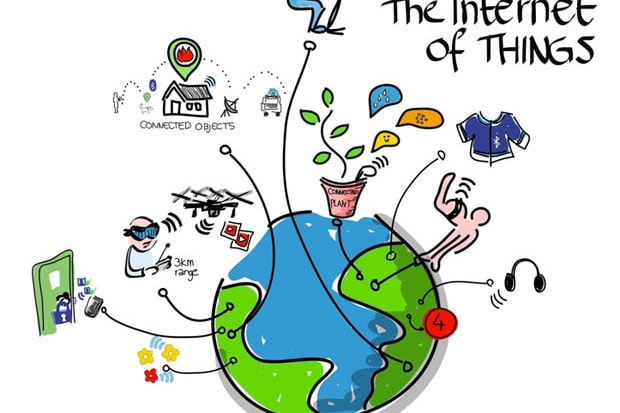
The number of internet connected devices is growing at an extremely rapid pace, and continuing to accelerate thanks to the ‘Internet of Things’ (IoT) devices. IoT includes things like web-enabled security cameras, cars, televisions, and even coffee makers. While these devices are sure to give us great conveniences, experts are learning that they are also causing huge security concerns.
Since these are typically single purpose devices, security isn’t always the top priority. This leaves them susceptible to hackers. While having a hacker break into a coffee maker and brew an extra pot might be a funny prank, it isn’t all that serious. There are, however, some very serious problems that this type of weak security can cause.
The security focused blog, Krebs on Security, was hit big a significant DDoS attack that was flooding his servers with almost 700 gigs of data per second. While DDoS attacks are not necessarily uncommon, this one was found to have come, in part, from IoT devices including nearly a million web-enabled security cameras and other similar devices.
DDoS attacks rely on the ability to infect devices and then ‘instruct’ them to flood data to a specific address. The more devices that are infected with the malware, the stronger the attack can be. Infecting PCs and servers is great because they have a significant amount of processing power, these smaller devices can add a lot of data just from sheer numbers.
Another thing that makes this particularly dangerous is that most people won’t really notice (or care?) if their IoT devices are infected, as long as they still operate. Well-written DDoS code won’t cause major problems on the infected devices, so their performance won’t be noticeably different. Infecting a million IoT devices that will remain infected for long periods of time is going to be very attractive for those who perform these types of attacks.
This type of threat is something that can seriously impact just about everyone on the web, which can have a very negative impact on marketers. DDoS attacks can (and do) hit any type of site, and a powerful one can take down a page for days at a time without trouble. While DDoS attacks don’t get the same press as ad blocking and normal malware for marketers, it is something that we should all be very aware of as the problem is going to get much worse before it gets better.