
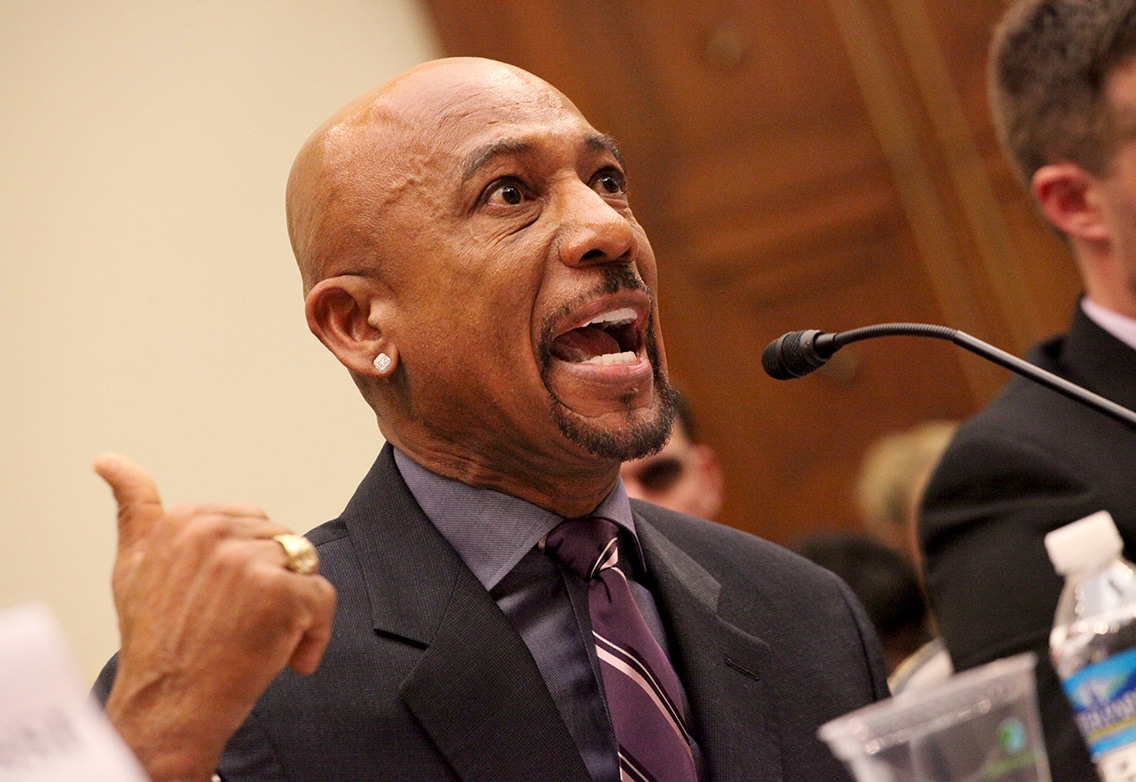
Montel Initiates CBD Marketing Lawsuit

In 2000, Montel Williams was diagnosed with multiple sclerosis. Finding medical cannabis to be effective at treating his symptoms, he began advocating for medical cannabis law reform.

He subsequently founded a company called LenitivLabs by Lenitiv. LenitivLabs is a self-characterized “line of innovative, high quality medical cannabis products for patients.”

In October 2017, Mr. Williams initiated legal action in the United States District Court for the Southern District of Florida against numerous entities purportedly involved in an online marketing scheme related to CBD oil. Specifically, a number of companies that serve as “sellers, suppliers, importers, and/or marketers of cannabis products” that Mr. Williams claims are unlawfully utilizing his name and likeness, as well as allegedly deceiving consumers.

According to Mr. Williams, the advertisements, images and fabricated quotes post to content designed to appear to be independent media outlets. He contends that they also utilize bogus testimonials purporting to be from Bill Gates, Dr. Dre, Whoopi Goldberg, Morgan Freeman, Lady Gaga and others.

Mr. Williams also alleges that the many of defendants’ offers are in fact credit card scams or other fraudulent schemes by which defendants: (i) charge customers despite advertising that the infringing products are available for a “free trial” and often refuse to adequately disclose any mechanism for customers to cancel the ongoing charges; (ii) fail to fulfill orders despite charging consumers; or (iii) charge consumers for monthly subscriptions of infringing products without the consumers having signed up for any such subscription.

The complaint charges the defendants with selling products that may not actually contain cannabidoil. The suit alleges that products were marketed as, without limitation, Revive CBD Oil, Pure Isolate CBD, Pure Natural CBD Oil, TrueMed Hemp oil, Hemptif CBD, Assured CBD Oil and Sky CBD.

Mr. Williams alleges that defendants’ conduct raises serious public health and safety concerns because many, if not all, of the defendants are marketing the infringing products as a means to cure, mitigate, treat or prevent diseases, illnesses, or serious conditions. Such marketing messages are, as set forth in the complaint, untrue health claims, which defendants falsely attribute to Mr. Williams. According to Mr. Williams, many of the consumers are purchasing the products based on the alleged untrue health claims in order to treat symptoms associated with serious medical conditions such as leukemia, Alzheimer’s and fibromyalgia.

Additionally, Mr. Williams maintains that customer complaints were pouring in to Lenitiv, “reflecting … actual confusion and damage to plaintiffs’ reputation due to defendants’ conduct.”

Mr. Williams’ claims include false advertising, false endorsement and sponsorship, false designation of origin and unfair competition under the Lanham Act, as well as violations of the right of publicity and right of privacy under Florida law and common law. He seeks to bar the defendants from using his name and likeness.

Celebrities are becoming more and more aggressive when it comes to pursuing action against marketers that exploit their names and likenesses to falsely endorse products.

The alleged conduct involves all the “favorites” of the Federal Trade Commission and state Attorneys General, particularly the Florida Attorney General.

Contact the author to discuss FTC advertising compliance strategies. You can also follow the author in LinkedIn.

ADVERTISING MATERIAL. These materials are provided for informational purposes only and are not to be considered legal advice, nor do they create a lawyer-client relationship. No person should act or rely on any information in this article without seeking the advice of an attorney. Information on previous case results does not guarantee a similar future result. Hinch Newman LLP | 40 Wall St., 35thFloor, New York, NY 10005 | (212) 756-8777.

 

Trump’s FDA Goes After Marijuana CBD Oil Distributors

The U.S. Food and Drug Administration is issuing warning letters to four manufacturers of products containing marijuana component cannabidiol (CBD).

The companies are, in the FDA’s view, “illegally selling products online that claim to prevent, diagnose, treat or cure cancer without evidence to support these outcomes.”

The move, announced Wednesday, comes less than a month after FDA Commissioner Scott Gottlieb said in a Congressional hearing that the agency would soon begin to proactively examine health claims that marijuana providers are making about their products.

“Substances that contain components of marijuana will be treated like any other products that make unproven claims to shrink cancer tumors,” Gottlieb said in a press release about the new letters. “We don’t let companies market products that deliberately prey on sick people with baseless claims that their substance can shrink or cure cancer and we’re not going to look the other way on enforcing these principles when it comes to marijuana-containing products.”

Medical marijuana is legal in 29 states, as well as in Guam and Puerto Rico. Studies have shown that it can have some benefits in reducing anxiety, counteracting some types of nausea, and that it may relieve some symptoms of glaucoma and multiple sclerosis.

A cannabis derivative called cannabidiol or CBD for short has been shown to help kids with a severe form of epilepsy called Dravet syndrome and perhaps it can help treat Parkinson’s disease.

The companies targeted by FDA are Stanley Brothers Social Enterprises LLC, Greenroads Health, Natural Alchemist and That’s Natural! Marketing and Consulting.

“We recognize that there’s interest in developing therapies from marijuana and its components, but the safest way for this to occur is through the drug approval process – not through unsubstantiated claims made on a website,” Gottlieb said. “We support sound, scientifically-based research using components derived from marijuana, and we’ll continue to work with product developers who are interested in bringing safe, effective, and quality products to market.”

Get High Revenue with CBD Hemp Affiliate Program but Is it Legal?

Medical Marijuana, Inc. (MJNA), apublicly traded cannabis company in the United States, announced today that its subsidiary HempMeds® is announcing a new affiliate program showcasing customer loyalty by allowing them to earn a commission by referring customers to the company.

HempMeds is a CBD Oil company, which is causing quite a buzz among medical scientists and patients. The past year has seen a surge of interest in cannabidiol (CBD), a non-intoxicating cannabis compound with significant therapeutic properties. Numerous commercial start-ups and internet retailers have jumped on the CBD bandwagon, touting CBD derived from industrial hemp as the next big thing, a miracle oil that can shrink tumors, quell seizures, and ease chronic pain—without making people feel “stoned.”

A current customer who is signed up under the new affiliate program, now has the opportunity to receive a 15% commission on any sales made to the customers they have referred to the company.

“We are excited to have this new program up and running, showing our appreciation to our dedicated customer base,” said Medical Marijuana, Inc. CEO Dr. Stuart Titus. “One of the most effective ways for people to learn about HempMeds® products is through online social media and word of mouth. With this new affiliate program, we have given even more of an incentive to our current customer base to share the benefits of our products.”

Purveyors of imported, CBD-infused hemp oil claim it’s legal to market their wares anywhere in the United States as long as the oil contains less than 0.3 percent THC. Actually, it’s not so simple. Federal law prohibits U.S. farmers from growing hemp as a commercial crop, but the sale of imported, low-THC, industrial hemp products is permitted in the United States as long as these products are derived from the seed or stalk of the plant, not from the leaves and flowers.

Here’s the catch: Cannabidiol can’t be pressed or extracted from hempseed. CBD can be extracted from the flower, leaves, and, only to a very minor extent, from the stalk of the hemp plant. Hemp oil start-ups lack credibility when they say their CBD comes from hempseed and stalk. Congress may soon vote to exempt industrial hemp and CBD from the definition of marijuana under the Controlled Substances Act. Such legislation would not be necessary if CBD derived from foreign-grown hemp was already legal throughout the United States.

Fifteen U.S. state legislatures have passed “CBD only” (or, more accurately, “low THC”) laws, and other states are poised to follow suit. Some states restrict the sources of CBD-rich products and specify the diseases for which CBD can be accessed; others do not. Ostensibly these laws allow the use of CBD-infused oil derived from hemp or cannabis that measures less than 0.3 percent THC. But a CBD-rich remedy with little THC doesn’t work for everyone.

Parents of epileptic children have found that adding some THC (or THCA, the raw unheated version of THC) helps with seizure control in many instances. For some epileptics, THC-dominant strains are more effective than CBD-rich products.

The vast majority of patients are not well served by CBD-only laws. They need access to a broad spectrum of whole plant cannabis remedies, not just the low THC medicine. One size doesn’t fit all with respect to cannabis therapeutics, and neither does one compound or one product or one strain.

Some states are taking action against CBD products.  The Alaska Alcohol and Marijuana Control Office (AMCO) has raided some of the state’s weed stores and confiscated a number of CBD products. The oils, salves, lotions and other CBD concentrates, were taken because the imported products did not meet state regulations.

“The Marijuana Control Board and AMCO staff will be managing this developing situation with the utmost care and concern,” a press release from Sara Chambers, the acting director of the Alcohol and Marijuana Control Office said. “Specific details cannot be released at this time because of the ongoing investigation. Further details will be released as they become available to ensure that licensees and the public are fully educated and informed as to what the law requires concerning sale of marijuana products.”

The problem is that, despite other claims, the DEA considers CBD product to be illegal under the Controlled Substances Act along with other illicit cannabis products. It also means that they are enhancing their ability to track CBD and enforce its interpretation of the law.In truth, CBD merchants were probably always on the wrong side of the gray area in DEA’s eyes because CBD extracts almost necessarily contain other cannabinoids.

As DEA stated in its justification: “Although it might be theoretically possible to produce a CBD extract that contains absolutely no amounts of other cannabinoids, the DEA is not aware of any industrially-utilized methods that have achieved this result.” The difference now is that the DEA is officially putting CBD sellers on notice that their businesses are subject to enforcement action.