Twitter to Allow More Intrusive Ads, Updates Privacy Policy to Allow Targeting

Companies update their privacy policies all the time, and in most cases, it isn’t really even worth reading about. With Twitter’s latest changes, however, there are some important adjustments that marketers should be aware of.  The key adjustment is that they will be holding on to data gathered from off-Twitter sources for 30 days now, rather than just 10.

Anytime someone visits a site with a ‘share on Twitter’ button, Twitter is able to track this about the user. This data is then used to improve ad targeting on Twitter itself.

With Twitter ad revenue continuing to drop, they are obviously looking to improve their targeting so they can attract new advertisers. For advertisers, this will make the ads on Twitter more valuable.

In addition to simply extending the length of time that they will be able to keep and use this data, they are also giving users new options to customize how this data can be used. This isn’t just the ‘opt out’ options that almost all major sites have though. Instead, Twitter is telling users about what their personal information says about them in terms of what types of advertisements they should see.

Users can then deselect specific categories that they aren’t actually interested in. While it is unlikely that very many users will actually take advantage of this option, it is a helpful approach. Many people visit sites that they don’t actually care about for work, research, or even just on accident. Allowing users to opt out of certain categories may provide an even more accurate advertising profile.

It will take some time to see whether these changes make any lasting improvements for Twitter’s ad revenue. The company has been struggling for some time, and it will likely take more than just better information gathering to turn that around.

BAD NEWS: Funny Ads Make You Laugh but Don’t Actually Work?

Advertisers often use humor to grab customers’ attention, but they should do so with caution, according to a recently published study in the Journal of Marketing Behavior.

Ads that make people laugh are not always in the best interest of brands, researchers found. To borrow from Goldilocks, humor may only work to advertisers’ benefit when it is “just right.”

Caleb Warren, assistant professor of marketing in the University of Arizona’s Eller College of Management and lead author of the research, conducted a series of experiments that found different ads can be equally humorous to consumers but have very different effects on brand attitudes, depending on the type of humor used.

The research is based on the concept that people find humor in “benign violations” — that is, material that somehow threatens their sense of well-being, personal identity or beliefs, but in a harmless or inconsequential way. For example, a comical Reebok ad featuring an “office linebacker” tackling other office workers represents a benign violation, because viewers know the violence is staged and no one is actually being hurt.

But even benign violations can cross a line, according to the research, which explored the effects of “mild” versus “severe” benign violations on brand attitudes. According to Warren, advertisers should stay away from ads that feature highly inappropriate humor, humor with a specific target or “butt of the joke,” and humor that prompts avoidance by eliciting feelings such as disgust in addition to laughter.

In one study, Warren and his collaborator, Peter McGraw of the University of Colorado, showed participants ads for three T-shirts designed for a young girl. One ad featured a plain, non-humorous, red T-shirt. One featured the same shirt with a comical face on it — considered a “mild violation.” And one featured a red T-shirt with two tassels on the chest — a “severe violation.” When surveyed, study participants said they found the smiley-face shirt and the tasseled shirt equally funny, but they had more negative feelings toward the ad featuring the inappropriate, tasseled shirt.

“When there’s a more severe violation, even though people find it funny, they like the brand or the retailer selling it less,” Warren said.

In another study, participants saw three versions of an ad for lime-flavored cola. One version showed a cartoon lime decapitating another cartoon lime, with the juice squirting into the cola — an example of what is known as a “harm violation.” Another ad showed a cartoon lime urinating into the drink — an example of a “purity violation.” A third, control, version showed a cartoon lime simply standing on top of a soda can.

Again, participants found the two humorous ads to be similarly funny, but they felt more negatively toward the ad with the urinating lime.

“When one lime is chopping another lime in two, people find that funny, and it doesn’t hurt the brand — if anything, it helps, relative to the not-humorous one,” Warren said. “We show here that harm violations are less likely to hurt a brand than purity violations, which evoke disgust and prompt avoidance.”

The researchers also looked at the effects of humor targeting a single person or group of people. They created two versions of an insurance company ad showing a car crashed into the side of a house. One had the caption “Everyone drives like an idiot sometimes,” while the other had the caption “Everyone drives like a woman sometimes.” A control ad merely showed a truck with a smashed front end and the words “Accidents happen sometimes.”

This series of ads was shown only to male participants because researchers believed that women, as “the butt of the joke,” would not find humor in the ad singling out female drivers.

The “inclusive” ad, which mocked bad drivers in general, improved brand attitudes relative to the control ad, while the “exclusive” ad, mocking only women drivers, did not.

“What we show in this paper is that advertisements that are equally funny can have opposite effects on brand attitudes,” Warren said. “One can be persuasive and help the brand, and another can be counterproductive and hurt the brand, and you can usually predict the response based on the type of violation used in the ad and whether it’s going to trigger negative feelings in addition to humor.”

So, how do you strike the right balance?

Warren and McGraw suggest advertisers ask themselves a series of key questions before attempting humor. The first, and perhaps most obvious: Is the humor attempt funny?

“If you try to be funny and fail, it almost always hurts the brand,” Warren said, adding that audience testing before launching an ad is a good idea to gauge whether something will be perceived as funny.

Other questions to consider: Does the ad create humor in a way that seems too threatening? Does the ad create humor by threatening a specific person or group? Will the ad create humor in a way that also motivates avoidance? What is the context for the humor attempt?

“Marketers are always thinking asking themselves, ‘Should I use humor?’ and really they need to be thinking about how to create the humor — because different jokes can have very different effects on whether an advertisement is persuasive or it hurts a brand,” Warren said.

People’s attitudes toward brands are, of course, important, as they ultimately influence purchasing decisions.

“In general,” Warren said, “the more a consumer likes a brand and the more positive their attitude is toward it, the more likely they are to purchase it or use it.”


French Affair Lingerie Insults Women with Heroin Chic “Body Image”

It’s amazing the keywords and absolute bullshit people use in advertising to try to hit the right audience. For whatever reason I was targeted on Facebook by new lingerie company “French Affair,” which had a message to me about how their lingerie promotes “body positive and identity affirming.”

Promoting “positive body image” is an important topic, especially for those who have negative images of themselves that can often lead to eating disorders.  It’s not really a secret that the fashion industry is partially responsible for this, hiring models as young as 12 to “represent” the average woman.

Add in the heavy photo-shopping that occurs in the industry to create impossible and fake body images, many people can’t help but think that they are way too fat when looking at model’s photos.

editied
Looks like they edited the arms to look “fake” thin.

And the good news is that things are actually starting to change. This year, plus-size models were seen taking over the runways of Fashion Week, diversity in fashion became more prevalent (although much work remains to be done), and the word “fat” began to lose its status as a “bad” or “insulting” term.

Well, French Affair Lingerie is attempting to claim that these models, including one that has been photoshopped to look anorexic. The model, foreign born Juliana Kadina is a professional model signed with Red Model Management out of New York. While her age isn’t mentioned, it’s clear they are trying to give her an underage, heroin “chic” look that is far from a positive body image. In face, it’s downright misleading.

What do you think?


Apple Search Ads Show To Be A Good Investment

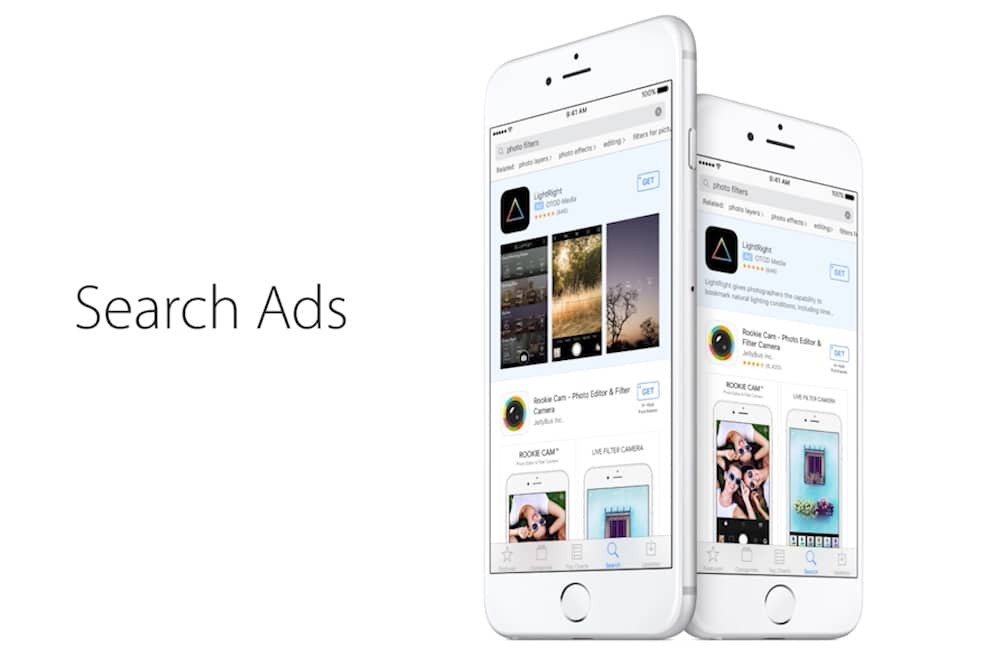
With mobile ad growth predicted to exceed 47% this year, Apple is looking to tap into its user base when it comes to search ads. Although Apple Search Ads launched publicly in the beginning of October of this year, with their cost-per-ad quite a bit lower than the other major players, they are proving to be a viable option that can produce a good return on investment.  This quick ROI may allow them to overcome the “new to the marketplace” obstacle. Currently, Apple Search Ads account for only 3% of the capital spent on social ad channels.

Gadi Eliashiv, Singular CEO, states, “It’s exciting to see Apple beginning to level the playing field between them and Google Play in terms of capabilities offered to marketers. We see lots of new marketing platforms and advertising channels come online all the time, but it’s not very often that we witness such a dramatic change that impacts both marketers and users in such a profound way.”

Now it is possible for companies to have their app in the spotlight at the top of the search results in the Apple App Store. Thus far, this prominent paid ad space is only allowed for apps available via the US Apple App Store with content related to the app’s description, to ensure that ads are, in fact, related to products that are available via the portal.

The idea of the format is to make it possible for developers and marketers to expose their apps to more potential customers. The ads will be sold via an auction system with no minimums and no exclusives, so that the smaller apps can also seize this opportunity. You can read more basic info on Apple’s site here.

Only time will tell how successful Apple will be with this new strategy. As an affiliate marketer, this is just one more new door that is opened to be a possible revenue source.


Reddit To Start Using Tracking Software To Customize Ads

Reddit users will be seeing a change on the horizon. The CEO of Reddit, Steve Huffman, announced that they are about to change how advsertisers on the popular website, are handled. Reddit will now support, in addition to the current subreddit ad targeting that is in place, interest targeting based advertisements. CEO Huffman says that the ads will target “audiences based on a handful of predefined interests (e.g., sports, gaming, music and more) which will be informed by which communities they frequent.” This new strategy can turn out to be a win-win, giving the user a better experience by seeing ads that are more relevant, and also giving the advertisers better tools to target the right audience for its products.

Huffman understands that the users of Reddit are predominately against ads, so Reddit will allow its users to opt out of the new advertising product. Those who do opt out will be missing out on seeing ads that would be more in line with their interests, which as stated earlier, is aimed at improving user experience.

Whether or not the Reddit community is willing to accept these changes is yet to be seen, however it is unlikely that every single user will opt-out of the new advertising product. As long as the user experience doesn’t suffer and users are able to perceive some value to the change, it is likely that this change will be a positive move for not only the users and advertisers, but for Reddit as well.

Yep: Interstitial Ads Aren’t User Friendly

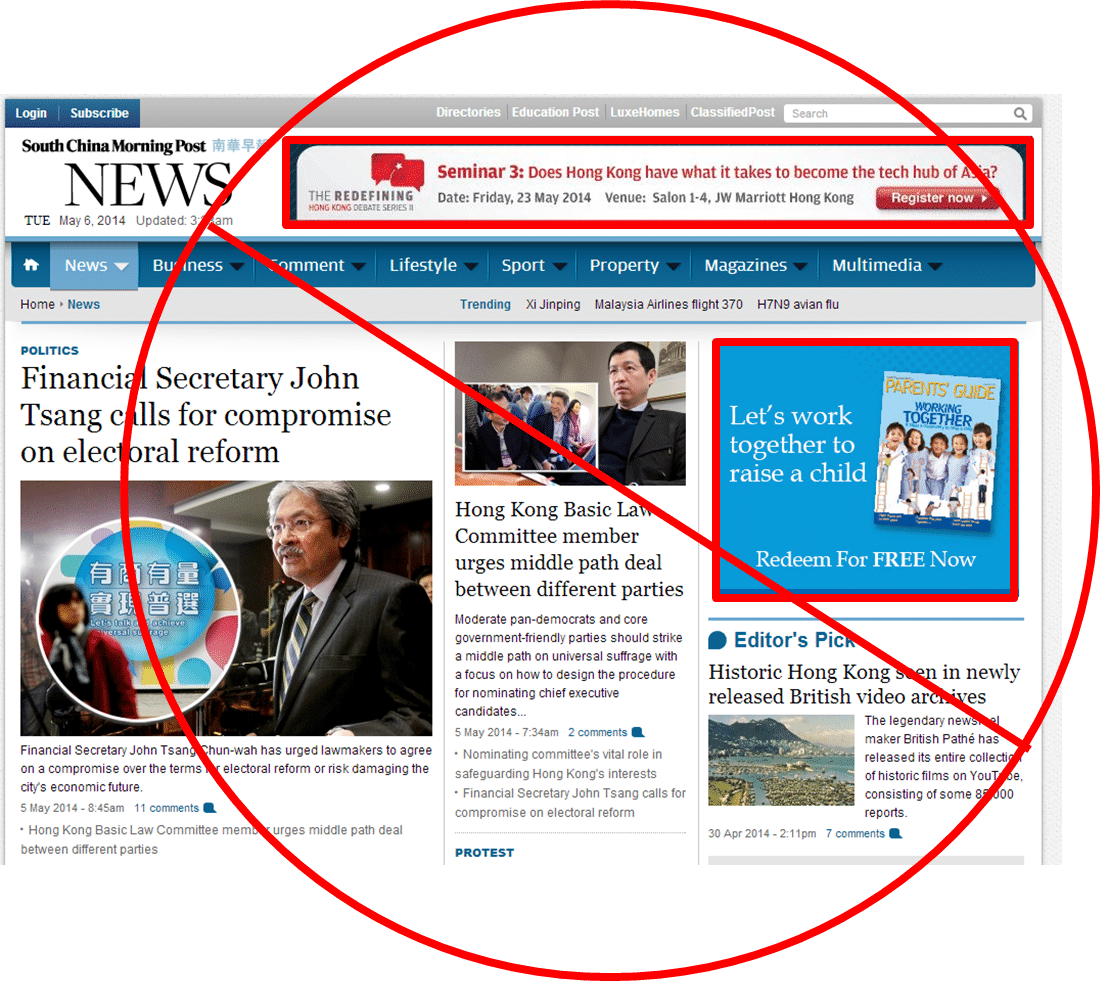
MediaBrix and Neurons Inc. recently performed a “neuroscience” study that indicates that interstitial ads lead to a negative user experience.  In addition, Google has reported plans of banning many different types of interstitial ads that are initiated by following a search click.

MediaBrix and Neurons Inc. used sophisticated equipment that that utilized eye tracking and several other biometric techniques to test user response and engagement when exposed to different types of in-app mobile video advertisements. Their findings show that full screen interstitial ads prompted user response to immediately search for the “X” to close the ad. The research also found that in-app mobile video ads that related to the content that was being viewed, were generally better received by the users than the other tested, full-page interstitial ads.

The MediaBrix study shows that the full-page interstitials elicited what Mediabrix calls “fight-or-flight responses” at double the rate of the embedded opt-in advertisements. The study shows that “close to 90 percent of viewers watched the full 30-second video, compared to only 25 percent when exposed to an interstitial.”

The study reports that Opt-in ad viewers spent “three times as much time fixated on the brand creative watching the embedded, opt-in ad, and they’re eight times more cognitively engaged with said ad.” The viewer’s recollection and receptiveness of the ad content was higher than that of the full-page interstitial ads. The study report “Those who experienced the opt-in, contextual ad unit had four times [the] feeling of positive motivation regarding the brands in question.”

Ultimately, marketers will need to figure out the perfect mix of non-intrusive ads that are well integrated into the content. The difficulty is making sure the ads are not too integrated into the content that the ads are easily overlooked, nor too intrusive that the viewer will feel negatively towards the brand in the advertisement. it is a balancing act that if done successfully, has the potential to reap huge rewards.

Ads Need to be On Screen 14 Seconds to Be Effective

The rule of thumb put out by the Internet Advertising Bureau says that an ad is considered viewed if at least half of the total pixels are on the screen for one full second (or longer).  While just about everyone knows that this isn’t a very accurate way to gauge whether or not an ad us seen, it at least gives people something to go by when it comes to buying ads, positioning them, and things of that nature.

According to a new study that used eye-tracking technology, however, this rule of thumb is not even close.  The research was performed by InSkin Media and Research Now Group and determined that most people don’t even glance at the ad until it has been on the screen for 14 seconds to even get noticed for one second.

To get people to look at an ad for two full seconds, it will typically need to be on the screen for 33 seconds, and it needs to be on the screen for 37 seconds to get 3 seconds of attention.

Naturally, the longer someone’s eyes are looking at an ad, the more likely they are going to be to click it.  In addition, they are more likely to remember the ad or at least the brand in the ad if they are looking at it longer.

The bottom line here is that if you want your ads to be effective, you need to do everything possible to ensure they are visible on the screen for as long as they can be.  This means that ‘above the fold’ ads are really more important than ever.  Also, things like having an ad scroll down along with the users reading can be very helpful in getting people to view and remember the ads.

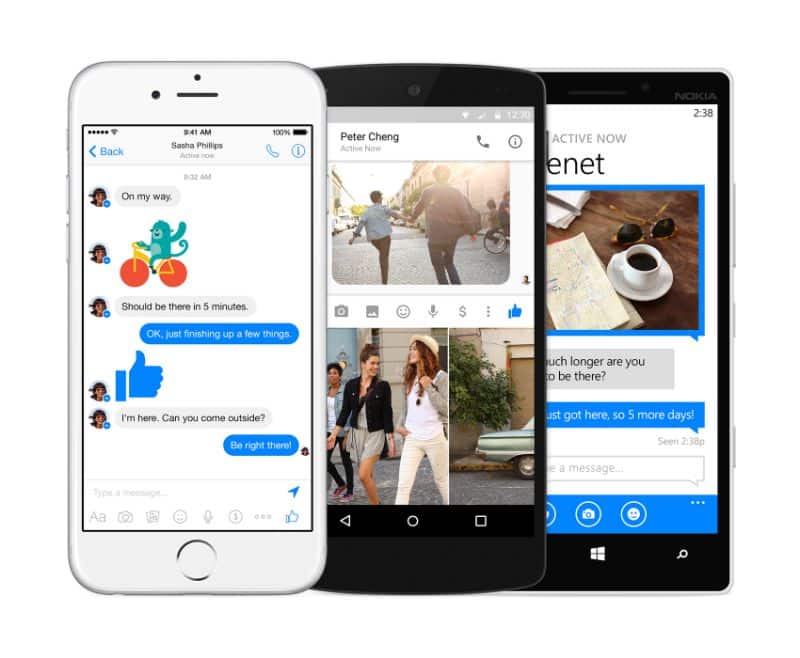
Facebook Planning to Spam Messenger with Ads

Facebook owns two of the biggest mobile messenger services, Facebook Messenger and WhatsApp.  For the later, they paid $4.59 billion to get it, so it is not surprising that they are looking for ways to monetize them more effectively.

Andrew Bosworth, Facebook’s vice president of engineering for ads and pages, said, “Consumers are naturally behaving with businesses [on Facebook Messenger]. Marketers can take greater advantage of that.”

The idea of working in ads and service bots to messenger services like this isn’t new, but Facebook hasn’t fully capitalized on it so far.  With their position as a leader in the mobile messenger app industry, it looks like they are ready to focus on this area.

As Facebook itself starts to reach market saturation (maybe?  People have been predicting this for years) it really makes sense for them to start turning to some of their other properties to increase their ad revenue.  With millions of daily users, WhatsApp and Facebook Messenger are obvious choices.

Sheryl Sandberg, Chief Operating Officer of Facebook said, “Our goal as a company is to make your Newsfeed experience great… If we can make advertising work because it is great content for people, that’s where the win is.”

She was referring to Facebook’s ability to turn advertisements from a disruption on a website to a part of the overall content on Facebook’s NewsFeed. Of course, some of the ads are still a little annoying, but overall most people agree that they aren’t a significant problem.  The challenge of integrating advertisements into a mobile messenger service will be similar, and if any company can do it, it is Facebook.

Get a Cheap Mobile Phone in Exchange for Ads?

Multiple companies in the past have attempted to offer smart phone users the option to view ads on their phones in exchange for a lower monthly bill, and they have failed. Virgin Mobile, for example, offered this as an option quite some time ago, though it was not met with much adoption, so they canceled the service.

Unlockd, an Australian company, however, seems to have figured out the right way to make this successful. More than the right way, it is the right time according to some experts.  The company has passed a half million active users with their agreements with a couple of mobile carriers.

Customers get money off their monthly bill by having an advertisement displayed on their unlock screen rather than a picture or whatever they want.  This is a fairly unobtrusive ad, but it is almost certainly going to be looked at by the users regularly, which makes it an attractive option for marketers and brands looking to build brand recognition.

One big investor in the company, Sol Trujillo, the former CEO of Telstra Corp, said, “Consumers have been looking for ways to get what they want, sellers have been looking for ways to reach consumers, all enabled by wireless and bandwidth.  The carriers have been looking for new revenue streams.  There’s a great triangle here where they can generate new revenue off of services their customers choose to take or not.”

Getting advertisments in front of people on their mobile phones is a great opportunity for many marketers, especially if given the option for geo targeting, which should be quite simple on these devices.  Another benefit to this is that the advertisers can target users based on a lot of information that can be gathered by the phone itself.

It really is a win-win situation for everyone involved, as long as customers continue to use this feature, it is something that will undoubtedly spread to many other mobile providers.

Plenty of Fish Sued for Photo of Dead Soldier

Last month Plenty of Fish, POF was sued for using a dead soldiers photo in ads for “Military Man Searching for Love.   Army Lt. Peter Burks parents have sued PoF and True.com for using the photo without permission.

“The implication is that, if you click here, this is one of our members. This is somebody you’ll meet — and people like him — when this fallen hero has been dead three or four years,” said their attorney.

After reading the case, it looks like some affiliate actually stole the photo, put an advertisement on PoF for True.com. In fact, this is what they told the media – and yet, their name has been smeared because of this stupid affiliate.

This of course raises tons of questions about using people’s photos from the web in advertisements that you make. Honestly, I think most of the industry can say that at one time if they’ve tested anything with those platforms, they have “stolen” an image or two.

A few months ago I published the very popular article about A Married Woman who Sued Match for Photos. It seems that some affiliate used her likeness to promote Match.com on Facebook.  Following that story it seems there are tons of similar articles that have come on, raising the question about the ethics of stealing photos from the web and using them.

What is the problem here right? While its most likely illegal to use people’s photos without permission, there raises a total other issue: that people lives can be destroyed when their likeness shows up.  It seems that this issue happens most when it comes to dating websites, that people are finding their photos in advertisements every where, often by affiliates, implying that they are single.

In the case of the killed soldier, the photo was just offensive.

The site Lovely-Bones.com, which no longer works, actually early this year decided to scrape over 250k profiles without their knowledge and then add them to a dating site. Of course, people were amazed to find out that many of them were looking for love, even through they were actually married.

Over at Mike Young Law, he mentions where a well-known super model had her photo used by a dating service (Escort Service?) DNA Diamonds. She of course sued.

As Mike Young put it,

It should remind you and other Internet marketers not to use photos or images on your websites unless you have the legal right to do so. When in doubt, either get written permission or don’t use the photo. There’s plenty of stock photography and public domain pics available for you to use without risking a lawsuit. If you really want to use a photo but can’t pin down ownership, have your Web lawyer do it for you.

Don’t steal photos from the web, no matter how much you might think it makes your life easier.  Not only can it be in bad taste, but if you are caught, you might not get paid for the campaign, or worse be sued and humiliated on the web for being the idiot who used a dead soldiers likeness for a an advertisement.

—–
Sponsored by LeapLap: Unique Offers.