ThinkPad to Think Big: Rabin’s No-Nonsense Path to Lenovo’s Future

David Rabin, Lenovo’s CMO for the Solutions and Services Group (SSG), is like the guy in a high-stakes poker game who looks at everyone else frantically tossing chips around and says, “Let’s not lose our heads here, folks.” He’s seen more martech trends come and go than most of us have had bad lattes. But unlike those who get whiplash from chasing every new shiny tool, Rabin has built a career on cutting through the noise with the sharp edge of common sense. And maybe a little bit of old-school customer obsession—just a bit.

Now, don’t get it twisted. Lenovo, for many, still conjures up images of your dad’s indestructible ThinkPad—a trusty but somewhat clunky laptop built like a brick. But Rabin’s not here for your outdated perceptions. He’s the guy tasked with shifting Lenovo from just “that hardware company” into a serious contender in the end-to-end technology solutions game. He’s been hustling at Lenovo for 18 years, and if anyone’s equipped to shake things up, it’s this guy. As Rabin puts it, Lenovo has been undergoing a “landmark transformation,” pivoting from hardware-focused to full-scale tech services powerhouse. And no, he doesn’t need another ThinkPad meme to remind him of where they came from.

But Rabin isn’t here to play nice or tiptoe around the obvious. One of his biggest gripes with B2B marketing is execs who don’t know how to stick to a strategy. “Pick a direction, stick with it, and give it time to work,” he advises, like the marketing Yoda we all need. It’s the equivalent of your personal trainer telling you to stop switching workout routines every week and actually give one a chance to, you know, do its job. Marketing doesn’t yield results overnight, and Rabin has no patience for executives who panic at the first sign of uncertainty and start changing lanes like a NASCAR driver hopped up on Red Bull.

Speaking of change, Rabin is very clear on one thing: data is crucial, but if you’re trusting it blindly, you’re cruising for a bruising. “Find the truth in data,” he says, but with a healthy dollop of skepticism. He’s seen too many marketers get duped by pretty numbers that don’t hold up under scrutiny. In Rabin’s world, gut-checking isn’t just optional—it’s required. If the data says one thing and your instincts scream another, it’s time to dig deeper. Marketers, he warns, need to triangulate their data like a survivalist with a compass, a map, and an SOS flare.

And then there’s the AI conversation—because of course, there is. While plenty of marketers are still wringing their hands over whether AI will take over their jobs, Rabin’s already making AI work for him. Lenovo’s use of AI in content creation has slashed costs by 70%, while speeding up production time by 4x. That’s not a typo. Four times faster. And here’s the kicker: Rabin doesn’t think AI is here to steal jobs. Instead, he believes it’s going to “reframe the work we do” and make smart marketers—those who actually know how to leverage AI—more valuable than ever.

But Rabin’s not all sunshine and rainbows about technology. He’s well aware of martech’s potential pitfalls. His mantra? Less is more. Lenovo consolidated its sales enablement tools from a bloated mess of dozens down to a single, streamlined platform. He’s not interested in fluff—if it doesn’t work, it gets tossed out like last year’s iPhone. As he puts it, “We get paid for impact, not outputs.” Translation: just because you’re churning out a ton of content doesn’t mean any of it’s good or useful. Rabin is the guy who will look at your 10-page marketing report and ask, “Yeah, but what did this actually do?”

When it comes to the future, Rabin’s vision is clear: AI is going to allow for hyper-personalization at speeds we couldn’t dream of a few years ago. But that doesn’t mean it’ll be a smooth ride. He anticipates a landscape of deeper fragmentation—more tools, more AI, more specialized solutions. In other words, the marketer of the future will need to be a bit of a tech-savvy juggler. And just in case you thought you could get by with today’s tactics, Rabin leaves you with a final thought: “If you don’t keep up, someone else will happily take your place.”

In a nutshell, Rabin is the no-BS CMO who’s seen it all, done most of it, and still has the energy to tell everyone else how it’s done. If you’re a marketer prone to shiny object syndrome, his advice is simple: calm down, focus, and get your act together before the competition eats your lunch.

Elizabeth Johnson: The Data Dynamo Disrupting Digital Marketing

Welcome to the Wild West, where the metrics are made up, the KPIs don’t matter, and everyone’s got their own interpretation of success. If that sounds like a circus with no ringmaster, that’s because it often is. Enter Elizabeth Johnson, the CEO of Path Performance, and the woman who’s not just setting the tent on fire—she’s controlling the flames, making sure nobody burns their eyebrows off while insisting that, yes, we can figure this marketing mess out.

Johnson doesn’t come in with your typical PR fluff or the usual Silicon Valley chest-puffery. No, she’s the kind of person who walks into a room full of “seasoned pros” who still don’t get TikTok, slams her metaphorical fist on the table, and says, “We’re rewriting the rules. Now, who’s got the guts to follow?”

When she joined me on The ADOTAT Show, we didn’t just sip the marketing Kool-Aid—we added a shot of something stronger and started grilling. You want to know what it’s like to lead an industry stuck in neutral for the last 20 years? Ask Elizabeth, because she’s been the one pushing the boulder uphill while everyone else wonders why gravity is so hard.

Forget your vanilla marketing exec. Johnson is the kind of leader who drops truth bombs like confetti. You want to keep up? Then buckle up. Here’s why Elizabeth Johnson is the real disruptor digital shopper marketing didn’t know it desperately needed.

The KPIs Everyone Loves But Don’t Understand

Let’s get one thing straight: Elizabeth Johnson doesn’t have time for your precious metrics if they don’t actually move the needle. And by needle, I mean sales—not just your inflated egos in the boardroom.

Take ROAS (Return on Ad Spend), the industry’s favorite useless acronym. It’s the metric everyone loves to trot out at meetings, but Johnson isn’t buying the hype. “ROAS gets thrown around like it’s the golden ticket, but half the time it’s not the best measure of success,” she says, with a casual shrug that says she’s probably had to correct this misconception too many times to count.

What matters more? Incrementality. Yeah, it’s a ten-dollar word that sounds like it was ripped from a Hogwarts textbook, but in layman’s terms, it’s the metric that tells you if your marketing actually did anything at all. Think of it as the difference between spending a million bucks on ads that work versus just burning cash for the sake of saying you spent it. It’s the opposite of vanity metrics, which are basically participation trophies for marketers who aren’t paying attention.

Johnson sums it up perfectly: “It’s about understanding what happens when you don’t advertise. If nothing changes when you run your campaign, guess what? You just wasted a lot of money. Incrementality is the key to figuring out if your ad dollars are actually moving the needle.”

And no, it’s not as simple as checking a box and declaring victory. “Our team spends a lot of time making sure everyone in the room understands what it actually means and how to use it. It’s not just for show—this stuff matters.”

Data Standardization: Herding Cats in the Digital Desert

You ever try to herd cats? How about convincing a room full of egos that they all need to speak the same language? Welcome to Elizabeth’s daily grind. Data standardization, folks—it’s about as glamorous as cleaning out the office fridge after a three-day weekend, but it’s absolutely necessary if this industry is going to survive.

Right now, we’re in the Wild West of data—everyone’s making up their own metrics and declaring them gospel (not that she uses that word). It’s chaos, and chaos doesn’t breed success. “We need to speak the same language,” Johnson asserts with the calm confidence of someone who’s seen the same mistakes happen over and over again and is just about done with the excuses.

Her mission? Bring the cowboys of ad tech into the 21st century. Make them use metrics that actually matter. Standardize the playing field. “The advertisers are the ones who lose when we can’t agree on metrics,” she says. “It confuses the marketplace, and it makes everyone look bad.”

Elizabeth isn’t one for patience when it comes to excuses. “You can’t run a campaign and then wonder why your results look different from everyone else’s when you’re using a completely different set of metrics. It’s like trying to measure your height in apples when everyone else is using inches.”

But getting everyone to play by the same rules? That’s another story. “It’s like playing diplomat in a hostage negotiation,” Johnson quips, “or trying to get a bunch of kids to share their snacks.” She’s building trust, one awkward boardroom conversation at a time.

Awards and Shiny Doorstops

Speaking of accolades, let’s get one thing straight: Elizabeth Johnson isn’t one to rest on her laurels—or her trophies. When I asked her about the awards that matter, she didn’t mince words. Sure, she’s picked up a few shiny ones along the way—“Women of Excellence” being one of her favorites—but she’s not the type to let it go to her head.

“I don’t discount any of the awards,” she says, ever the diplomat. “Most of them are industry-given, and I understand the strict criteria behind them.” Translation? If she’s won it, it means something, but she’s not exactly throwing a parade for herself either.

And yet, for all the industry accolades, you won’t find Elizabeth patting herself on the back. Her approach to recognition is refreshingly honest. “I did an internal victory dance, but it’s not about me. It’s about my team. I rarely use the word ‘I.’” This isn’t false humility, folks. It’s genuine leadership.

The Myth of “Faking It Until You Make It”

Let’s be clear: Elizabeth Johnson does not do “fake it until you make it.” Well, not in the way most people think. “Look, it can instill confidence,” she admits, “but it has its limits.” Instead, she’s more of a “act as if” person. As in, act as if you already belong in the room. Act as if you’re the CEO of a revenue-driving company. But don’t get cocky about it.

“Using it as a crutch is where people go wrong,” Johnson explains. “Confidence is key, but if you’re just faking everything all the time, people will catch on. It’s about finding that balance between projecting confidence and actually doing the work.”

In other words, don’t fake it unless you’re ready to back it up with actual results. Otherwise, you’re just another marketer with a PowerPoint and a prayer.

The Real Glamour of CEO Life: Juggling Chainsaws While Smiling

Now, let’s talk about the real, behind-the-scenes life of a CEO, shall we? Spoiler alert: It’s not all high-powered boardroom deals and glamorous launches. There’s plenty of “putting out fires” that don’t make the highlight reel. “Sure, you get the strategic vision moments,” Elizabeth says, “but a lot of it is making sure the wheels don’t fall off the bus.”

In a typical day, she’s bouncing between high-stakes conversations about acquisitions and product launches to the not-so-glamorous reality of project timelines, personnel issues, and—yes—printer jams. It’s like juggling chainsaws while keeping a smile on your face and pretending it’s all part of the show. And somehow, she makes it look easy.

But for all the chaos, Elizabeth thrives on the balance between the big picture and the nitty-gritty. “You’ve got to be nimble,” she says. “Your day might be planned out, but guess what? Something’s going to change. Regulations shift, competitors pivot, and you’ve got to be ready to react.”

The AI Apocalypse or Golden Age?

So, what does Elizabeth see in her crystal ball? A golden age of marketing innovation or a Mad Max-style race to the bottom? She’s betting on the former—if the industry can get its act together. “AI is the next big wave,” she says. “It’s going to separate the winners from the losers, the ones who embrace it and the ones who are still clutching their Rolodexes.”

And while everyone else is busy slapping “AI-powered” labels on their websites to sound cutting-edge, Johnson is asking the real question: What’s the actual impact? “You can’t just say you’ve got AI. You’ve got to show how it’s working at scale,” she insists. “This isn’t about riding a trend. It’s about transforming how we think about marketing.”

What’s Next: CEO, Mentor, and… Future Beach Bum?

If you’re wondering whether Elizabeth ever thinks about chucking it all and becoming a beach bum somewhere, the answer is yes. “Every once in a while, the thought crosses my mind,” she laughs. But for now, she’s all in on the future of Path Performance. “I’m passionate about what we’re building here. That’s what keeps me going.”

As for her superpower of choice? She’d love to control time. “It’s the one thing nobody has enough of,” she muses. And if anyone could figure out how to bend time to their will, it’s probably Elizabeth Johnson.

For now, though, she’s sticking to what she does best—rewriting the rules of an industry stuck in its ways, one data point at a time. And trust me, it’s going to be a hell of a ride.

Attention Metrics: Industry Savior or Snake Oil?

In a masterclass of déjà vu, both AdExchanger and Digiday unleashed a “scoop” yesterday announcing that the IAB and MRC are collaborating on attention measurement accreditation. 

Slow clap.

We had Angelina Eng on our show weeks ago spilling the same beans. But hey, if you don’t watch the hottest show in adtech, that’s on you, not me. Eng gave us a front-row seat to the coming circus of guidelines the IAB is rolling out, breaking attention into bite-sized pieces: visual/audio tracking, neurological observations, data signals, and good old-fashioned surveys. Spoiler: We’ve got one part of this puzzle already, but the rest? Well, you’ll have to sit tight until the first quarter of 2025. Talk about the attention economy needing patience!

You’ve read all the bs, now let’s get into the details folks.

The Attention Rabbit Hole
The IAB’s master plan is like trying to get everyone at a family reunion to agree on one pizza topping—it’s ambitious, a bit unrealistic, and fraught with the potential for drama. Their idea is to craft a sparkling new framework that forces everyone—from media buyers to ad tech vendors—to speak the same language when it comes to measuring attention. Enter the buzzwords: visual and audio tracking, neuro-something-or-others, and data proxy signals. These are the magic beans that the IAB believes will grow into a beanstalk of industry-wide consensus. But let’s be honest; this is less about achieving clarity and more about covering up the fact that we’ve been playing an elaborate game of “pin the metric on the donkey” for years. The old impression-based model is starting to feel like a relic from the Stone Age, and everyone is scrambling to redefine relevance.

At the heart of the IAB’s vision is the hope—no, the prayer—that by next year, everyone will finally sing from the same hymn sheet, er, scroll. But that’s a tall order in an industry that thrives on buzzwords and vague promises. The challenge here is monumental. Herding the scattered tribes of advertisers, publishers, platforms, and vendors into a unified front on what attention really means is akin to getting a group of caffeinated toddlers to walk in a straight line. You’ve got factions defending their turf, vested interests, and different interpretations of what “good” looks like. Each party has its own version of what attention measurement should prioritize—be it viewability, engagement time, or neurological responses—turning any effort at standardization into a diplomatic nightmare.

And even if, by some miracle, the IAB manages to draft a set of guidelines that doesn’t immediately implode under the weight of its own contradictions, getting universal buy-in is another story. Think of the ad industry as a rebellious teenager—always pushing boundaries, never satisfied with the status quo, and constantly inventing new ways to dodge the rules. Just when you think you’ve pinned them down, they slip out of your grasp, invent a new acronym, or find a loophole to exploit. So, while the IAB dreams of a future where attention metrics are universally understood and applied, the rest of us are bracing for yet another round of chaos and confusion.

Let’s dive into the four attention commandments:

Visual/Audio Tracking: Think “Black Mirror,” but for your eyeballs and eardrums. From eye tracking to facial coding, these methods hope to capture where your gaze lingers and what your ears endure. It’s all very Big Brother, but in the name of engagement, right?

Physiological/Neurological Observations: Want to know what your heart rate thinks of that new Pepsi ad? This one’s for you. Heart rate, brain waves, and maybe even a soul scan—because nothing says “effective marketing” like a mild stroke.

Data Signals: This one reads like an NSA manual. The idea is to grab every signal your device emits like it’s the Fourth of July and weave it into some semblance of attention scoring. It’s like tracking Santa’s sleigh, but with less magic and more metadata.

Survey-Based Methods: The old-school way. Ask people how much they loved or loathed that detergent ad. Nothing like self-reported data to put the “con” in consumer insights.

The MRC Gets Into the Game – Or Just Stands There
The Media Rating Council (MRC), self-appointed guardian of what counts as a “viewable” ad, has now dipped its toes into the murky waters of attention metrics. They’ve come to terms with the fact that attention isn’t just a passing fad but might actually mean something. So, in their typical bureaucratic fashion, they’ve declared that attention measures must tick a few boxes: ads need to be seen (viewability), not clicked by bots or accidental thumbs (invalid traffic filtration), and must have a real-life human present (user presence). But audibility? Meh, that’s an optional extra—unless you’re in the business of selling audio ads to the hearing-impaired. Because, you know, context is key.

And now, they’re all about these new-fangled data signal proxies. Think of them as the latest elixir on the digital marketing shelf. Everyone’s mixing them up in hopes they can create a perfect cocktail—where each ad impression is not only “seen” but felt deep in the soul (or at least in the wallet). It’s all about blending these signals like a pro bartender crafting the ultimate concoction. But in reality? Picture someone waving their hands frantically at a magic show, desperately hoping for a rabbit to appear out of the hat.

But let’s get down to brass tacks: the MRC’s new love affair with data proxies is really just a new chapter in the long book of digital ad metrics. These proxies, they say, will combine diverse data points—like a mixologist who adds a dash of eye-tracking, a hint of mouse movement, and maybe a splash of device orientation—to tell us whether a consumer was really “paying attention.” But here’s the twist: while this may sound like some groundbreaking, data-driven magic, it’s often just more theater. Everyone’s nodding along, but no one’s quite sure if the emperor has clothes on.

Meanwhile, the industry is left to ponder if these proxies are truly the new gold rush or just another fool’s errand. Proponents argue they offer a way to cut through the noise, a new beacon in the fog of digital ads. But detractors suggest it’s more like panning for gold in a dried-up riverbed. Sure, the shimmer of possibility is there, but dig deep, and all you might find are a few shiny rocks masquerading as precious nuggets.

The real kicker is that, even if these proxies could work magic, we still have to agree on what “attention” really means. Is it a gaze that lingers for 2.5 seconds longer than the average? A double-tap on an Instagram post at 3 AM when the consumer’s half asleep? The MRC, in all its wisdom, is trying to draw a line in the sand, but when the entire landscape is shifting like quicksand, that’s a tall order. For every guideline, there’s a counterpoint, and for every standard, a dozen exceptions.

But Wait, Are Attention Metrics the New Snake Oil?

Last year, the advertising world saw a stampede of marketers leaping onto the attention metrics train like a bunch of kids chasing the ice cream truck on a hot summer day. Audi, Coca-Cola, the NBA—all of them decided that simply counting eyeballs wasn’t enough anymore. They’re done with the old days of indiscriminately casting a wide net; now, they want to know precisely how long those eyeballs linger and whether they’re twinkling with interest or glazing over like yesterday’s donuts. In the race for ROI, they’ve decided that “attention” is the secret sauce, the golden fleece, the unicorn that will magically turn their ad dollars into sales gold.

But not everyone is buying a ticket for this ride. Enter Professor Byron Sharp, who’s become the advertising industry’s version of the Grinch who stole Christmas. Sharp stands at his soapbox, waving his arms like an air traffic controller in a storm, shouting that the whole attention metrics frenzy is nothing more than a carnival sideshow. His argument? Counting the seconds someone accidentally stares at an ad because they were too lazy to click “skip” doesn’t amount to effective marketing. Sharp, along with his colleagues, claims that chasing attention is like hunting a mythical dragon—one that might breathe a lot of hype, but not a lot of fire.

Sharp’s skepticism cuts deep into the heart of the attention metrics movement. He points out that more attention doesn’t automatically mean more sales, more brand love, or any substantial value beyond an empty marketing budget. He’s not alone, either. A growing cadre of critics echoes his doubts, arguing that while attention metrics might sound like the Holy Grail, they could just as easily be another false idol. They argue that advertisers are throwing good money after bad, hoping to catch lightning in a bottle by optimizing for fleeting glances and momentary awareness that, in reality, might not be worth the pixels they’re printed on.

Sharp’s critique is more than just a curmudgeonly rant against the latest trend. It’s a call for sanity in an industry that often leaps from one shiny new object to another like a hyperactive squirrel on an espresso drip. He suggests that the obsession with attention metrics could lead to creative and strategic shortcuts, where marketers focus more on capturing attention than delivering meaningful content. After all, what good is an ad that grabs your attention for a few seconds if it doesn’t leave any lasting impact? Sharp warns that by overvaluing attention, we risk turning advertising into a game of “gotcha,” where the only winners are the platforms raking in the ad dollars.

But the debate doesn’t end there. Sharp’s opponents argue that he’s missing the forest for the trees. Attention, they say, is not just about the quantity of seconds but the quality of engagement. Even a fleeting moment, they claim, can plant the seed of brand recall, influencing purchase decisions down the line. To them, the real question isn’t whether attention matters, but how to capture and hold it in ways that are genuinely valuable. They see attention metrics not as a fad, but as a necessary evolution in how we understand and measure advertising effectiveness.

Still, Sharp’s supporters contend that the industry’s fixation on attention metrics is like chasing shadows—there’s just not enough substance to justify the hype. They argue that while some attention is necessary (after all, you can’t sell to people who aren’t paying attention), obsessing over how much attention you get is a bit like worrying about how many likes your cat photos get on Instagram. Sure, it’s nice, but it doesn’t necessarily mean anything important is happening. Instead, they urge a return to fundamentals: build great brands, create compelling content, and let attention follow naturally, rather than bending over backward to manufacture it.

Attention Fans Speak Up

Karen Nelson-Field and Mike Follett are leading a full-scale charge in the debate over attention metrics, positioning attention not just as another industry buzzword but as the foundational metric that should guide all advertising decisions. Nelson-Field, through her work at Amplified Intelligence, argues that attention is the “Holy Grail” of advertising—an essential link between the mere exposure of an ad and genuine engagement from the audience. Her approach is backed by rigorous, independent studies conducted across six countries, demonstrating that attention is not only measurable but also directly linked to advertising effectiveness, brand growth, and customer retention. Essentially, she believes that if you’re not measuring attention, you’re flying blind in a storm, and no amount of traditional metrics like impressions or clicks will give you the true picture of an ad’s impact.

Backing her up, Mike Follett of Lumen Research has also been on the offensive, presenting data that shows how attention metrics outperform traditional measurements in predicting campaign outcomes. According to Follett, while old-school metrics might tell you how many people could have seen your ad, attention metrics tell you who actually did see it and for how long. This, he contends, is crucial information that translates directly into real-world results. His studies suggest that ads which capture higher levels of attention are more likely to be remembered, which in turn increases the likelihood of purchase—a metric every marketer dreams of improving.

Joining the fray is Mark Ritson, the self-styled provocateur of marketing academia, who has been banging the drum for attention metrics as the definitive measure of success. Ritson argues that “dwell time,” or the length of time a viewer spends with an ad, is not just another metric but the metric that indicates the true effectiveness of an ad. According to Ritson, attention creates salience; salience drives preference, and preference impacts the bottom line. He’s pushing the notion that the more time a consumer spends with an ad, the more likely they are to engage with the brand—and possibly even become a loyal customer.

Yet, while Nelson-Field, Follett, and Ritson are painting a rosy picture of the potential of attention metrics, they’re not blind to the challenges. Nelson-Field has cautioned that this new focus on attention needs to avoid the pitfalls of previous measurement obsessions—like the doomed fascination with clickbait-style engagement metrics that once promised to revolutionize digital marketing but instead devalued both content and brand trust. She argues that the industry must focus on “real human attention,” insisting that any metrics not grounded in genuine human engagement (like those that don’t use actual human gaze data) are just more snake oil in a different bottle.

The proponents of attention metrics are also sounding the alarm about the need for ethical practices in this new era. Nelson-Field, for example, warns against using attention metrics to drive advertising into the “cheapest, darkest corners of the internet”—a mistake made in the past with click-driven content. Instead, she’s advocating for the responsible use of attention data to maintain high-quality content and transparent media trading. Her “Attention Revolution” column calls for the industry to treat attention as the “North Star” for ad effectiveness, cautioning that while disruption can be beneficial, it must be validated against actual brand growth and not just short-term metrics.

In the coming months, expect to see a flood of vendors peddling various attention measurement tools. Nelson-Field predicts that while some will offer genuine advancements, many will not. The challenge will be to separate the “quick-fix” measures from those that genuinely add value by capturing real human engagement. As she puts it, the goal is to create a new measurement category that offers more certainty than the industry has seen in a long time—one that can withstand new challenges and continue to evolve in a dynamic media environment.

Attention Metrics: The Darling or the Dud?

So, what’s the verdict here? Is attention the next big thing or just another fad like the pet rock? For every marketer who thinks attention metrics are the magic bullet, there’s another who thinks they’re more like a water gun. The IAB and MRC are diving in headfirst, hoping to calm the waters with their new guidelines, but the industry is left wondering if this is the moment we finally get some clarity or just another chapter in the book of marketing jargon. Are we setting the stage for a revolution in how we measure ad effectiveness, or simply giving ourselves more data to drown in?

One thing’s for sure: the debate isn’t going away anytime soon. As the industry grapples with defining what “attention” really means and how to measure it, there’s a lot at stake—billions of dollars, reputations, and, dare we say, the future of how we connect brands to consumers. Will attention metrics emerge as the guiding star of digital advertising, or will they fade into obscurity like so many trends before them? Stay tuned, folks; this show is just getting started.

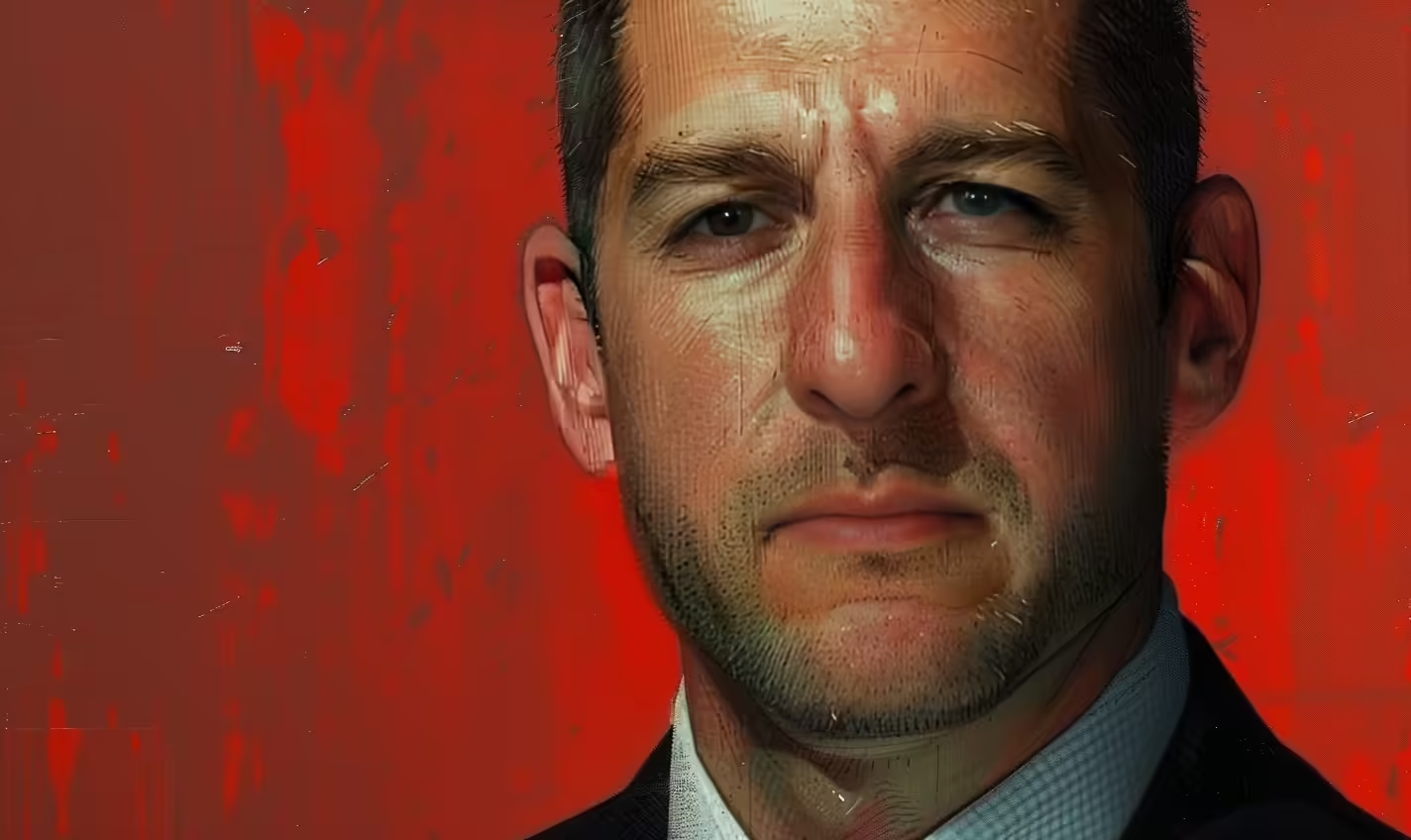
Gray Hair, Don’t Care: Judy Shapiro’s Stormy Path Through Ad Tech’s Boys’ Club

In the ever-evolving world of ad tech, where buzzwords often outshine real innovation, Judy Shapiro stands out as a voice of reason—and rebellion. As the CEO of Topic Intelligence, Judy is not just another figure in the ad tech landscape; she’s a disruptor, challenging the status quo with a blend of experience, wit, and a relentless pursuit of what she calls “real marketing.”

We had the pleasure of sitting down with Judy for The ADOTAT Show’s Mad Women Series, where she offered us an unfiltered glimpse into the realities of the industry, the challenges she’s faced, and the bold ideas she’s championing to push ad tech beyond its current limitations.

The Cookie Conundrum: Google’s Big “Never Mind”

When Judy Shapiro gets started, she doesn’t just dip her toes into the conversation—she cannonballs right in, splashing cold water on the tech giants that many are too timid to criticize. Case in point: Google’s recent cookie fiasco. “I am shocked,” Judy said, and you could almost hear the collective nod of agreement from everyone who’s been watching this slow-motion car crash. Google’s dithering over cookie deprecation isn’t some noble stand for consumer privacy; no, it’s regulatory appeasement dressed up in a cheap tuxedo. Judy, with her razor-sharp wit, likened Google’s backtracking to Gilda Radner’s classic “Never mind” moments on Saturday Night Live. It’s the perfect comparison for a company that, when faced with real heat, throws its hands up and says, “Oops, just kidding!”

But let’s not forget who really gets left out in the cold here—consumers. While Google plays its corporate chess game with regulators, consumers are the pawns, moved around with little regard for their privacy or autonomy. “They have no control or power in this entire world that revolves around them,” Judy lamented, cutting to the heart of the matter with her trademark directness. It’s a harsh reality: while the industry’s big players, from DSPs to retargeting firms, pop champagne bottles to celebrate their newfound lease on cookie-based tracking, the average user is left grappling with the implications of their data being up for grabs.

The irony isn’t lost on Judy. Here’s a tech behemoth that once promised to make the world’s information accessible to everyone, now spinning on a dime to protect its bottom line while consumers get stuck with the bill. It’s like watching a magic trick where the audience knows exactly how the illusion works, but they’re still somehow mesmerized by the sleight of hand. The grand reveal? Consumers realize they’re the ones being sawed in half, privacy sliced away while the industry applauds the act.

In the end, Judy’s critique is more than just a scathing indictment of Google’s flip-flopping; it’s a call to action. She’s pointing out the elephant in the room that everyone else seems to be ignoring: the consumer, the very lifeblood of this entire ecosystem, is being treated as an afterthought. And until that changes, until consumers are given the power and control they deserve, Judy’s “shock” is likely to resonate across the industry—because, really, who isn’t tired of being the one left holding the bag?

Scale and Surveillance: The False Gods of Ad Tech

Judy is not one to shy away from controversy. Her critique of ad tech’s obsession with scale and surveillance is biting and, frankly, spot on. “The scale business is a business that is detached from reality,” she asserted, pointing out that the endless quest for impressions often leads to a complete disconnect between ads and actual people. This isn’t just a flaw in the system—it’s a design feature that serves the industry’s bottom line at the expense of meaningful engagement.

Verification, Judy notes, is another area where the industry has willfully turned a blind eye. Despite the sophisticated tools available, the verification of ad placements remains frustratingly inadequate. “They don’t want to really check whether fraud was a problem,” she said, a startling revelation that underscores the ethical lapses that plague ad tech.

A New Paradigm: Topic Intelligence

If Judy sounds angry, it’s because she is—righteously so. But that anger has been the driving force behind Topic Intelligence, the company she founded out of sheer frustration with the industry’s refusal to innovate in meaningful ways. Topic Intelligence isn’t about scale for the sake of scale; it’s about relevance. By focusing on topics rather than broad keywords, Judy’s approach ensures that ads are not just seen but are seen by the right people, in the right context.

Her company’s AI-driven contextual model, developed over three years, is designed to understand the nuances of language—ensuring that a financial ad doesn’t end up next to content about blood banks, for instance. It’s a labor-intensive approach, but one that promises to deliver far better results for advertisers and a more pleasant experience for consumers.

The Gendered Battlefield of Ad Tech

In the male-dominated world of ad tech, being a woman is no small feat. Judy Shapiro, a seasoned veteran of the industry, describes it as “playing chess in a hurricane.” It’s a vivid metaphor that captures the relentless challenges women face, not just in keeping up with the fast-paced, ever-changing dynamics of the industry but in overcoming the entrenched gender biases that still prevail. Judy’s experiences highlight a fundamental issue that many women in tech continue to grapple with—casual sexism that, though subtle at times, can be as destructive as a hurricane in its ability to undermine and belittle.

One of the most striking examples Judy shared with us was a meeting with a major venture capitalist (VC). She had gone into the meeting prepared to discuss her innovative work and the future of ad tech, only to find herself derailed by an entirely different conversation. For the entire 15-minute meeting, the VC fixated on her gray hair, a superficial detail that had nothing to do with her expertise or the business at hand. “Have you always had gray hair?” he asked, as if this were the most pressing issue in the room. The experience was not just bizarre but emblematic of the casual sexism that often reduces women to their appearance rather than acknowledging their professional accomplishments.

This encounter, while infuriating, is just one of many that Judy has faced throughout her career. Yet, rather than let these experiences deter her, they have only strengthened her resolve. Judy’s resilience, she explains, is fueled by a combination of anger and stubbornness—traits that have become her greatest assets in an industry that often tries to sideline women. “Stay angry,” she advises, because that anger is what propels her forward, pushing her to challenge the status quo and demand the respect that she and other women in the field deserve. It’s this refusal to be cowed by the systemic biases of the industry that has made Judy not just a survivor, but a force to be reckoned with.

Judy’s approach to business, particularly her passion for client outcomes, is another area where she has faced criticism—but this time, for being “too invested.” In an industry that often prioritizes quick exits and rapid returns, Judy’s commitment to long-term relationships and real value is seen as unconventional. But it’s this very commitment that sets her apart. Where others are content to chase the next big payday, Judy is focused on creating sustainable, mutually beneficial relationships with her clients. “If you do it right, performance marketers line up,” she says, underscoring her belief that real success in ad tech isn’t about short-term gains but about building something that lasts.

This philosophy hasn’t always been easy to maintain, especially in a sector where the pressure to deliver immediate results can be overwhelming. But Judy’s insistence on prioritizing client outcomes over everything else has not only differentiated her from her peers but has also attracted a loyal following. Her clients know that when they work with Judy, they’re getting more than just a service provider—they’re getting a partner who is deeply invested in their success. This level of dedication is rare in an industry often characterized by transactional relationships, and it’s one of the reasons why Judy’s approach is resonating with so many.

Trust: The Future of Ad Tech Leadership

Looking ahead, Judy believes that trust will be the defining trait of the next generation of ad tech leaders. In an industry riddled with manipulation and half-truths, those who can build genuine trust—between advertisers, consumers, and platforms—will lead the way. “Trust is going to be the next 20 years of the internet,” she predicted, and it’s hard to argue with her logic. The tools that enable users to create their own trusted web experiences will be the ones that thrive, leaving behind the hollow promises of today’s ad tech giants.

Final Thoughts: A Message to Her Younger Self

If Judy could send a message back to her younger self, it would be simple: trust your instincts. Early in her career, she admitted, she often deferred to the technical experts around her, assuming they knew best. But with the benefit of hindsight, she realizes that her marketing instincts were often spot on. “Most marketers never start ad tech firms,” she said, but perhaps they should. Judy’s journey is a testament to what can happen when you combine deep industry knowledge with a willingness to challenge the status quo.

Judy Shapiro isn’t just navigating the turbulent waters of ad tech; she’s charting a new course, one that prioritizes relevance over scale, ethics over shortcuts, and trust over manipulation. It’s a path that may not be easy, but as Judy herself would tell you, it’s the only one worth taking.

How Jon Walsh Built Adtech’s Largest Chat Empire (and Shook Up the Job Market)

Jon Walsh isn’t just a name in adtech; he’s a phenomenon. A legend. The kind of figure who has not only witnessed the wild, often chaotic evolution of digital advertising but has also been one of its most influential architects. With over two decades in the trenches, Jon’s career reads like an adtech epic—a narrative filled with exhilarating highs, crushing lows, and a relentless drive to push the boundaries of what’s possible in an industry notorious for its volatility.

Let’s start at the beginning. Selling his first company at 31 was no small feat, but it was just the opening act in what would become a career full of audacious moves. Picture this: a young, ambitious entrepreneur navigating the shark-infested waters of acquisitions. The experience left him a bit battered but far from broken. Instead, it set the stage for what would become a series of ventures where Jon didn’t just survive—he thrived. He was like a master chess player, always thinking several moves ahead, even when the board was a swirling mess of shifting trends and fleeting innovations.

But Jon’s story isn’t just about personal success; it’s about his uncanny ability to build communities and foster connections in an industry where isolation and competition are often the norms. Enter the adtech chat community on WhatsApp. What started as a humble attempt to stave off boredom during the pandemic morphed into the largest adtech chat network in the world. Imagine trying to corral thousands of adtech professionals from every corner of the globe into a single, coherent conversation. It’s like herding cats, if the cats were also constantly arguing about blockchain, CTV, and the latest SSP developments. And yet, Jon managed to do it—not by force, but by creating a space where genuine, unfiltered dialogue could thrive. This isn’t your typical LinkedIn group filled with self-promotion and corporate jargon; it’s a living, breathing organism where ideas are exchanged, friendships are forged, and yes, sometimes digital bar fights break out.

Jon’s involvement in blockchain is another chapter worth delving into. Here’s a guy who didn’t just dip his toes into the world of decentralized tech—he plunged in headfirst, clocking in thousands of hours of research and study. He was so deep into the blockchain rabbit hole that he could’ve written a dissertation on it. But unlike many who were blinded by the hype, Jon emerged from this journey with a clear-eyed perspective. His verdict? Blockchain, for all its promises, might just be more sizzle than steak, especially in an industry like adtech that thrives on centralization and control. Yet, even as he moved away from the blockchain evangelism, Jon’s curiosity didn’t wane. Instead, it shifted towards more practical, grounded innovations—like Bitcoin—where he saw a genuine opportunity to bridge the gap between digital currency and digital products.

But let’s talk about the crown jewel of Jon’s endeavors: the adtech chat community. The WhatsApp groups he founded have grown into something far beyond a casual chat room. These are global epicenters of industry conversation, where the latest trends, controversies, and innovations are dissected by some of the sharpest minds in the field. And it’s not just about the tech talk. These groups are a lifeline for professionals who often find themselves in the isolating trenches of a fast-paced, high-stakes industry. Jon’s groups offer a rare blend of professional discourse and personal connection—a virtual water cooler where everyone from seasoned veterans to fresh-faced newcomers can share insights, vent frustrations, and maybe even crack a joke or two.

One of the most remarkable aspects of these groups is how they’ve organically grown from a few dozen participants to thousands of active members. WhatsApp’s initial cap of 256 participants didn’t stand a chance against the demand for inclusion. When the limit was raised to 512, and later to 1024, 

Jon’s groups quickly maxed out, proving that there was a real hunger for this kind of community. And Jon, ever the savvy operator, didn’t just sit back and let it ride. He expanded the network into multiple groups, each focused on different aspects of adtech—from CTV to programmatic to the intricacies of data privacy. It’s like a sprawling digital metropolis, with Jon as the mayor, ensuring that the trains run on time and that everyone’s voice gets heard.

Yet, despite the success, Jon’s not one to rest on his laurels. He’s constantly iterating, looking for ways to improve the experience for his community. Whether it’s creating spin-off groups to dive deeper into niche topics or stepping in to quell the occasional digital dust-up, Jon’s hands-on approach is a big reason why these groups have thrived. And let’s not forget the fun stuff—like the football group, where the banter flies as fast as the goals, and the occasional political chat, where Jon wisely created a separate space to keep the peace in the main groups. It’s a delicate balance, managing the egos and opinions of thousands of adtech professionals, but Jon does it with a mix of diplomacy, humor, and a no-nonsense attitude that’s earned him the respect and admiration of his peers.

Then there’s JobsInAdTech, Jon Walsh’s latest brainchild, which is turning the adtech job market on its head. In an industry where LinkedIn often feels like an overcrowded flea market—swarming with irrelevant job postings and recruiters who spam your inbox with positions that don’t even come close to matching your skills—JobsInAdTech is like finding an oasis in a desert of chaos. It’s precise, it’s streamlined, and above all, it’s built with people in mind. Jon recognized early on that the traditional job board model was outdated and, frankly, broken. It was drowning in noise, cluttered with jobs that had nothing to do with the seekers’ real expertise, and lacking any real sense of community or connection. Job seekers were treated like cattle, herded into generic roles by algorithms that couldn’t distinguish between a data scientist and a social media manager. Jon saw this for the mess it was and decided it was time to flip the script entirely.

So, he created JobsInAdTech, a platform that tosses the old model out the window. Instead of quantity, Jon chose to prioritize quality. It’s a platform where every job listing is carefully curated, every connection meaningful, and every interaction designed to respect the time and effort of both job seekers and employers. By launching the site with a free-for-all approach in its initial months, Jon didn’t just gain a user base—he built a community. People came not just because it was free, but because it was different, better, and—most importantly—trusted. This wasn’t just another job board; it was a resource, a hub for the adtech community where professionals could find real, relevant opportunities without wading through the usual muck and mire of the online job market. Jon knew that trust is hard to earn and easy to lose, so he made sure that every aspect of JobsInAdTech was designed with integrity and transparency at its core.

The success of JobsInAdTech is more than just a feather in Jon’s cap; it’s a clear reflection of his deep, almost instinctual understanding of the adtech ecosystem. Jon knows the adtech industry inside and out, not just from a technical standpoint, but from a human one. He’s acutely aware of the pain points that plague both job seekers and employers—the frustrations of endless applications, the wasted time sifting through irrelevant candidates, the disconnect between what companies need and what traditional job boards provide. Where others saw these problems as just part of the landscape, Jon saw opportunities for innovation. His approach to building JobsInAdTech was as meticulous as it was visionary. He didn’t just want to create a job board; he wanted to solve the fundamental issues that make job hunting such a soul-crushing experience for so many people.

And while Jon might not be one to toot his own horn, the results speak for themselves. The testimonials from companies and candidates alike are glowing, filled with stories of how JobsInAdTech connected them with roles they’d been dreaming of but couldn’t find anywhere else. It’s not just about filling positions; it’s about matching the right people with the right opportunities, in a way that feels almost effortless. Jon has managed to take something as mundane as a job search and turn it into an experience that’s not only effective but also, dare we say, enjoyable. People aren’t just landing jobs; they’re finding careers that align with their passions and skills, all without the usual stress and frustration.

In a world where job boards are often synonymous with disappointment, JobsInAdTech stands out as a beacon of what’s possible when someone takes the time to truly understand the needs of their industry and acts on it with integrity and insight. Jon Walsh has not just created a platform; he’s set a new standard for what job searching in adtech can and should be.

Of course, it hasn’t all been smooth sailing. Jon’s had his share of stumbles along the way—like the time he lost a major deal with YouTube to a competitor. But instead of wallowing in defeat, he used the experience to fuel his next big win. It’s this resilience, this ability to learn from mistakes and come back stronger, that defines Jon’s career. He’s not just a survivor in the cutthroat world of adtech; he’s a pioneer, constantly pushing the envelope and redefining what’s possible.

Jon’s impact on the adtech industry is undeniable, but what sets him apart is his commitment to making the industry better for everyone—not just the big players with deep pockets, but the up-and-comers, the underdogs, and the everyday professionals who make this industry what it is. Through his community-building efforts, his thought leadership, and his innovative platforms, Jon has created spaces where people can connect, grow, and thrive. He’s not just shaping the future of adtech; he’s creating a legacy that will last long after the latest tech fad has come and gone.

In a world where digital interactions often feel impersonal and disconnected, Jon Walsh is a reminder that technology can be a force for good. That it can bring people together, foster real connections, and create opportunities that might otherwise be out of reach. His story is a testament to the power of community, the importance of resilience, and the impact that one person can have when they refuse to settle for the status quo.

So, what’s next for Jon Walsh?

 If his track record is anything to go by, it’s safe to say that whatever it is, it’ll be big, bold, and way ahead of the curve. Whether he’s launching the next big platform, spearheading a new initiative in the adtech community, or simply continuing to build on the success of his existing ventures, you can bet that Jon will approach it with the same mix of vision, passion, and relentless drive that has defined his career. Because for Jon Walsh, the journey is far from over—it’s only just beginning.

The Unfiltered Genius of Terence Kawaja: How Adtech’s Peter Pan Refuses to Grow Up

If you’ve been anywhere near the ad tech world in the last decade, you’ve probably tripped over a LumaScape—or at least heard someone throw around the term like it’s a religious text. That sacred scroll of chaos, mapping out the sprawling, byzantine world of digital advertising, is the brainchild of Terence Kawaja, or Terry, if you’re on first-name terms with him. But while most of us are still trying to figure out if that mess of logos is a blessing or a curse, Terry’s moved on to bigger and bolder things. After all, he’s the guy who’s been navigating the labyrinth of cookies, AI, and billion-dollar M&A deals with a wit as sharp as a scalpel and the guts to say what everyone else is only thinking.

Let’s get one thing straight: Terry isn’t just another suit in a sea of ad tech wannabes. He’s the guy who’s been pulling the strings behind the scenes for years, orchestrating over $300 billion in transactions with the kind of ease most of us reserve for online shopping sprees. But despite his towering influence, Terry remains refreshingly down-to-earth—cracking jokes about power washing his patio and binge-listening to 70s workout playlists while casually discussing the intricacies of antitrust cases and the impending death of cookies.

Terry’s journey into ad tech royalty wasn’t a straight shot. He started out in investment banking, where he cut his teeth on some of the biggest deals of the early 2000s, including the colossal AOL-Time Warner merger. It was the largest deal in the world at the time, a $183 billion behemoth that made headlines for all the wrong reasons. But for Terry, it was more than just a notch on his belt—it was a turning point. “I negotiated the largest M&A fee in history at the time, $60 million,” Terry recalls. But instead of riding that wave to Wall Street immortality, he did something that left his colleagues scratching their heads: he quit. “Three months after announcing AOL-Time Warner, I announced my resignation from the firm,” he says. “Everyone said, are you smoking crack? Like, dude, you’re set up for life now. But I was bored.”

Boredom is a dangerous thing for a guy like Terry. It’s what drives him to take risks, like jumping into the chaotic world of startups at the turn of the millennium. “I joined a company as a CFO, took it public, and that was great for a while,” he says. But then the dot-com bubble burst, and Terry’s new venture came crashing down with it. “I had to become a public company CFO. I had to write all the analyst presentations. Then I had to restructure the business. I had to fire one of the co-founders, who later turns out was sexually abusing four different women at the company.” It was a brutal learning experience, but one that Terry doesn’t regret. “What I’ve decided doesn’t work for me is passing on an opportunity and watching someone else less qualified make a quarter of a billion dollars. That is razor blade and sleeping pill time.”

Terry Kawaja’s ability to see the big picture in the tumultuous ad tech landscape is what makes him a formidable force. He’s not just navigating the game; he’s often the one drawing the map. Back in 2009, he didn’t just create the LumaScape as a marketing gimmick—it was a lifeline for an industry drowning in its own complexity. “The LumaScape in its current manifestation was 2009,” Terry recalled, noting that he had been charting companies since 2005. But the turning point came in 2011 when the Wall Street Journal came knocking. “I had this light bulb idea: Landscape, LumaScape, I’ll put my brand in it. It’s going to be awfully hard for others to copy if my company’s name is actually the name of the product,” Terry explained. That single decision not only cemented the LumaScape’s role in the industry but also made it inseparable from his brand.

The LumaScape wasn’t just about slapping a name on a chaotic industry—it was about bringing order to the chaos. But for Terry, this was just the beginning. Over the years, he’s watched ad tech balloon into a beast of its own, not always in ways he might have hoped. “This industry is like Peter Pan,” Terry remarked, pointing out its refusal to grow up. The frustration in his voice is clear as he talks about the endless fragmentation and the numerous middlemen who siphon off profits without contributing real value. “When an SSP has a 20% margin, and DSP has a 20% margin, and a verification company has a 20% margin… it’s no wonder the ad tech tax exists,” he said, cutting right to the heart of the issue.

Terry’s critiques are sharp, and they don’t stop at surface-level observations. He’s acutely aware of the industry’s reluctance to face reality. The complex ecosystem, with its layers upon layers of players each taking their cut, has led to the much-discussed ad tech tax—a burden that falls squarely on the shoulders of brands and publishers. The numbers don’t lie, and Terry knows that unless the industry grows up and starts addressing these inefficiencies, the cost of doing business in ad tech will only keep rising.

Despite the challenges, Terry remains an influential figure, one who is not afraid to speak truth to power. His vision has always been ahead of the curve, and he’s not one to back down from challenging the status quo. The LumaScape, for all its notoriety, was never just about mapping the industry; it was about forcing it to confront its own complexities and inefficiencies. Terry’s light bulb moment back in 2011 was just one example of his ability to see beyond the immediate and to shape the narrative in a way that compels the industry to take a hard look at itself.

And then there’s Google, the 800-pound gorilla in the room that Terry has been keeping a close eye on for years. Google’s cookie deprecation saga is a perfect example of the company’s power—and its ability to keep the industry on edge. “Lucy keeps pulling the football away from Charlie Brown,” Terry quips, comparing Google’s endless delays to a classic Peanuts gag. “But let’s be honest, cookies are largely going away. So all of those efforts towards data collaboration, whether it’s clean rooms or alternative identities or contextual targeting solutions, that is not wasted.”

But while Terry might seem like he’s got it all figured out, he’s not above poking fun at himself—or the industry. When asked about his wildest, craziest prediction for the future of ad tech, he doesn’t miss a beat: “Google will be found guilty of antitrust in the ad tech case commencing in September.” And if that sounds like a joke, it’s not. Terry is dead serious about the challenges the industry faces, from antitrust issues to the impending death of cookies to the rise of AI and its potential to revolutionize targeting. “At the end of the day, interest is better than demographics,” he says. “I think technology will help lead the way.”

Terry’s take on the state of the industry might seem bleak, but it’s not without hope. He believes in the power of consolidation, in the idea that fewer players doing higher volumes at lower take rates with better quality is the way forward. “I think if you think of the fact that there are over 5,000 companies in ad tech, 95% of them will go out of business,” he says, matter-of-factly. “It just takes a long time because they’re getting a piece of ad spend.”

But if you think Terry is all business, think again. The guy knows how to unwind, and he’s got some surprising guilty pleasures. “Power washing while listening either to a podcast or a 70s workout playlist is so satisfying,” he admits with a grin. “I also love creating comedy. Creating is my happy place. I love thinking about a problem and how do I ideate it? How am I going to give a message about this using that in a way that’s humorous?”

That sense of humor is a big part of what makes Terry so effective—and so beloved in the industry. He’s the kind of guy who can drop lines like, “Exit large or die trying,” and make it sound both profound and hilarious. He’s unfiltered, unapologetic, and absolutely fearless when it comes to speaking his mind. “When I’m wrong and I know I’m wrong, I’m quick to apologize,” he says, his Canadian politeness shining through. “But I don’t believe in packing the audience so they’ll laugh for you. The fuck is that? I get no signal out of that.”

Terry Kawaja isn’t just your run-of-the-mill wisecracker; he’s the kind of guy who’ll drop a joke that makes you spit out your coffee, and then, before you’ve even wiped your chin, he’s already five steps ahead, plotting the next billion-dollar deal. When he says, “I like comedians that make people laugh, but also manage to do something else. There’s some other message, usually substantive,” he’s not just talking about stand-up routines—he’s laying down the blueprint for how he lives and breathes business. For Terry, a joke without substance is like a donut without the filling—what’s the point? He’s always looking to mix the sweet with the serious, making sure every laugh is laced with a deeper message that sticks with you long after the punchline.

In the high-stakes, cutthroat world of ad tech, where most folks are just trying to stay afloat, Terry’s the guy who’s not just swimming—he’s doing laps around everyone else while reading the fine print. He’s got this knack for seeing beyond the noise, cutting through the BS, and finding that hidden gem of truth that everyone else missed. It’s like he’s playing 4D chess while everyone else is still figuring out the rules to checkers. Whether he’s ripping apart the latest industry buzzword or putting together a strategy that makes you wonder if he’s got a crystal ball stashed somewhere, Terry’s always digging deeper, searching for that extra layer of meaning that turns the ordinary into something extraordinary.

And this isn’t just some artsy-fartsy philosophy; it’s the secret sauce that’s made Terry a force to be reckoned with. While others are content with surface-level success, Terry’s the guy who’s drilling down, going for the gold buried beneath. He knows that in a world full of smoke and mirrors, it’s the substance that counts—the real meat beneath the sizzle. And that’s why he’s not just another talking head in a suit; he’s the guy who’ll make you laugh, make you think, and, just when you least expect it, make you realize he’s already won the game.

So, what’s next for Terence Kawaja? More charts? More billion-dollar deals? More power washing? Probably all of the above. But one thing’s for sure: he’s not done yet. Whether he’s cracking jokes or making bold predictions, Terry is a guy who’s always thinking, always pushing the boundaries, and always ready for whatever comes next.

In the end, Terry’s story is one of grit, intelligence, and an unshakeable belief in the power of honesty—both with himself and with the world around him. He might be ad tech’s Peter Pan, but he’s also its guiding star, leading the way through the chaos with a smile, a joke, and a mind that’s always two steps ahead.

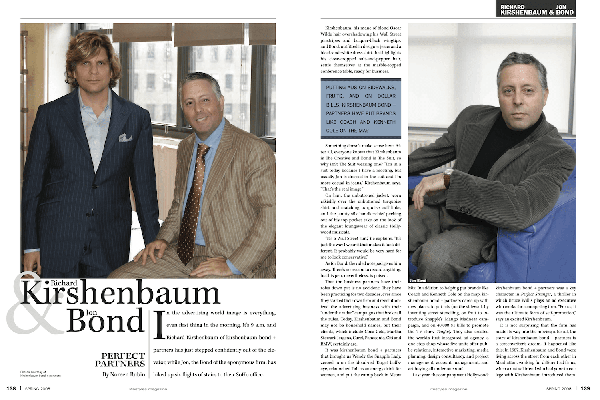
Jon Bond: The Legend Who Ditched Cookies for a Weightless World

Jon Bond isn’t just a name in advertising; it’s a blazing marquee in the hall of fame of marketing mavens. This dynamo, who forged his reputation at the helm of Kirshbaum, Bond and Partners, is now piloting the good ship Weightless through the turbulent seas of advertising, where antiquated tactics are about as useful as a pager in the age of smartphones. With the glint of a seasoned iconoclast, Jon dishes on his latest caper, “We’re steering a cookie-less AI media firm,” tossing a playful jab at the industry’s old guard clinging to data-tracking cookies like a lifeline. “Picture this,” he quips, “you’re entering a space race, but your competition is saddled with horse and buggies while you’ve already launched the rocket.”

Jon finds immense humor in the sluggish pace at which the advertising industry embraces change. He gleefully recounts an incident from a recent boardroom meeting, which illustrates this point starkly. “All the incumbents are betting on cookies. So they’re tabulating who wins—the cookies or the cookie-less brigade, except there are no cookies on our side. Their score? A resounding zero.” His laughter, rich and hearty, underscores the stark irony of the situation. Here, Jon highlights a glaring truth: the industry clings to its familiar tools and methods with a stubbornness that borders on comical, hesitant to step away from their well-worn paths and into the brisk, invigorating winds of innovation.

This episode isn’t just a funny anecdote; it’s a sharp critique of an industry that often seems to be marching in place. Jon’s amusement at the scenario comes with an edge, a pointed reminder of how slow the ad world is to drop outdated practices and adopt new, more effective technologies. “They’re like old dogs trying to learn new tricks, but they can’t get past their old habits,” Jon might say, pointing out the reluctance to shift away from what’s known and comfortable, even when it’s demonstrably ineffective. His insights aren’t just barbs thrown for the sake of amusement; they’re calculated comments meant to prod the industry into self-reflection and, hopefully, into action.

Indeed, Jon’s laughter serves a dual purpose—it amuses but also cuts through the inertia, revealing the absurdity of clinging to obsolete technologies in a fast-evolving field. He uses humor as a tool to highlight the resistance to change, suggesting that this hesitance is not just a minor hiccup but a significant obstacle to progress. “They hold on to their cookies because it’s what they know, ignoring the fact that the rest of the world is moving on,” he could quip, drawing a clear line between the past and the future. In these moments, Jon’s mirth encapsulates both a critique and a challenge: for an industry so rooted in creativity, it’s time to innovate or be left behind.

Jon Bond’s approach to success in the advertising world isn’t hidden behind curtains of mystery; it’s as visible as the neon lights of Times Square. He brings a maverick flair to the traditional corporate playbook, drawing heavily on insights gained from his New York tenure. “I look for people who’ve uprooted their lives to jump into the chaos of New York,” he admits with a grin, highlighting his preference for individuals who have willingly thrown themselves into the deep end. This strategy isn’t merely about adding new faces to the mix; it’s a calculated move to ensure his team stays on the bleeding edge, riding the wave of innovation rather than being swallowed by the sea of industry stagnation.

Jon’s philosophy stems from an essential truth about the current pace of change in business and technology—it waits for no one. His own leap from the vibrant hustle of the East Coast to the tech-saturated environment of Los Angeles exemplifies his commitment to staying ahead. “As fast as things change, you’ve got to be quicker,” he states, underscoring the need for speed in adaptation and decision-making. This mindset is not just about keeping up; it’s about leading the charge, ensuring that his operations and strategies preempt the next big trend rather than scrambling to catch up.

His method is about proactively crafting the future of advertising by choosing team members who embody flexibility and innovation. Jon’s focus on hiring individuals who have demonstrated boldness in their personal lives is a metaphor for his broader business strategy: embrace risk and reward bravery. This approach ensures that his agency doesn’t just participate in the market but actively shapes it, pushing boundaries and setting benchmarks.

He doesn’t just play the game by the rules—he writes new ones. This is evident in how he integrates the chaos of New York’s melting pot into the DNA of his company culture. He believes that those who can navigate and thrive in such a dynamic environment bring invaluable skills to his business. “These people are used to constant change; they expect it and know how to leverage it,” Jon might say, highlighting why he values this trait. His leadership style is about harnessing this perpetual motion, turning potential turbulence into powerful forward momentum.

By constantly rewriting the playbook, Jon ensures that his agency remains not just a player but a leader in the advertising arena, often dictating the pace and direction of industry innovations. His move to LA wasn’t just a change of scenery but a strategic positioning, placing himself at the heart of technological advancement and creative disruption. This geographical shift mirrors his professional ethos—always be where the future is being made, not where it has been settled.

Jon Bond’s revolutionary approach and relentless drive for innovation serve as a robust testament to his success. His career trajectory and strategic decisions provide a blueprint for navigating the rapidly evolving landscapes of advertising and technology. By staying agile, embracing change, and continually challenging the status quo, Jon exemplifies the qualities necessary to lead and succeed in today’s fast-paced business world. His story is not just about adapting to change but about being an agent of change, a crucial distinction that sets him apart in a field that’s often too content to follow rather than lead.

At the heart of Jon’s latest venture, Weightless, lies a fervent desire to declutter the labyrinthine world of marketing. He paints a vivid picture of the typical client’s plight, overwhelmed by an unwieldy arsenal of agencies. “Imagine juggling 17 agencies,” Jon says, shaking his head. “How do you cut through the red tape to focus on what truly matters—media and impact?” His solution with Weightless is disarmingly simple yet revolutionary: streamline to amplify. It’s about peeling back the layers of bureaucracy to reveal the lean muscle of effective marketing underneath.

This streamlined approach was catalyzed by what Jon describes as an ‘aha’ moment during yet another meeting echoing past frustrations about shrinking budgets. “It was like being stuck in a rerun of a bad TV show,” he laments. “Always discussing what we can’t do because the money’s run out.” That’s when the idea for Weightless took flight—to rise above the financial squeeze by reimagining how resources are allocated and used, making leanness a strategy rather than a limitation.

Reflecting on the heady days at Kirshbaum, Bond, and Partners, Jon’s face lights up as he recalls the culture that became the agency’s lifeblood. “We weren’t just creating ads; we were cultivating an ethos,” he asserts. The environment he fostered wasn’t about conforming to a stuffy corporate mold but about celebrating each individual’s quirks and creativity. This wasn’t merely a workplace; it was a dynamic playground where the best ideas thrived on the fuel of diversity and mutual respect.

Years later, the legacy of KBP’s culture is a vibrant tapestry of stories and reunions. “If there’s a gathering or, heaven forbid, a memorial, you’ll see a flash mob of former colleagues at the nearest bar, reminiscing about the golden days,” Jon shares with a mix of pride and nostalgia. It’s this enduring sense of community and belonging that many of his former team members cite as transformative, not just for their careers but for their lives. It stands as a testament to an environment where people were valued not just as employees but as integral threads in the broader tapestry of the agency’s story.

Jon’s journey from ad world titan to avant-garde leader at Weightless encapsulates more than just a career trajectory; it’s a manifesto on the power of innovation and cultural dynamism. His reflections offer a treasure trove of insights on how navigating the whirlwind of technological and market changes with agility and foresight can set the pace for leadership. In Jon’s world, adapting with a wink and a smile isn’t just advisable; it’s indispensable. It’s this blend of wisdom, humor, and relentless pursuit of transformation that keeps him at the forefront, leading the charge with the flag of innovation proudly unfurled.

From Technophobe to AI Maven: Naama Manova Twito’s Wild Ride

Ever heard of someone transforming from a tech-averse marketer to an AI trailblazer? Meet Naama Manova Twito, the co-founder of the world’s first fully autonomous AI marketing team. Fasten your seatbelts, folks; this isn’t your typical startup saga. We’re talking about a journey filled with kicking, screaming, and eventually hugging the tech beast.

First up, Naama greets the world with refreshing candor, skipping the usual PR fluff. “Startup founder and an Israeli? You’re always on,” she declares, balancing the stress of a burgeoning business with the unique pressures of Israeli life. If you don’t know, “beseder” isn’t just a word; it’s a philosophy of perpetual survival and a shrug in the face of chaos. Resilience isn’t just built here; it’s forged in the fires of constant flux.

So, how does AI play into this? It’s not just some tool Naama uses; it’s more like an unruly pet that sometimes fetches the paper and other times chews the couch. Transitioning from a technophobe, she was initially resistant to the digital revolution. Imagine someone clinging to their flip phone while the world around them adopts smartphones. It took a retail venture’s harsh realities to shove her into the digital deep end. Running a retail brand with a website while still trying to sell door-to-door was her wake-up call. If she wanted to keep up, she had to embrace the tech she once shunned.

Once she took the plunge, the surprises kept coming. AI’s rapid adoption floored her. Suddenly, everyone—from your grandma to your dog-walker—was using advanced tech. It’s one thing to see AI in a lab; it’s another to see it in everyone’s hands, shaping everyday interactions. Yet, it wasn’t all smooth sailing. Naama found that while AI can handle repetitive tasks, it doesn’t replace the need for human creativity. Think of AI as a sous-chef: great for chopping veggies, but you still need the chef’s touch to make the dish sing.

Reflecting on her career, Naama recalls the wild west days of marketing when a good budget and a catchy slogan could propel a brand to stardom. Then came the digital deluge, social media mania, and the mobile revolution. Just when she thought she had a handle on Facebook, TikTok swooped in to flip the script again. It’s like being in a never-ending game of Whac-A-Mole, where each new platform is a fresh mole to smack. Yet, she sees AI as a game-changer, not just another mole. It’s a tool to cut through the noise, provided it’s used wisely.

The most overhyped trend? People obsessing over whether AI-generated content will rank on search engines. Naama is unfazed. She sees the future of search evolving beyond traditional SEO. Search engines won’t be the gatekeepers they once were; AI-powered assistants are the new frontier. It’s less about ranking and more about relevance and reliability.

Keeping her team motivated in this fast-paced industry is another feat. Coffee, of course, fuels the fire, but Naama’s real secret is empowering her people. She’s mastered the art of stepping back and letting her team run the show. Picture a bustling office at 7 PM, everyone working like their lives depend on it because, in many ways, they do. Senior and junior developers mix, match, and mesh, driven by a shared passion for innovation.

When asked about her advice for newcomers, Naama emphasizes curiosity. In an industry where jargon can be a minefield, she advises asking questions, no matter how stupid they might seem. Better a moment of embarrassment than a lifetime of ignorance. And if you’re surrounded by smart, supportive people, those questions will only propel you forward.

Throughout her career, Naama has had her share of mentors and tormentors. From supportive parents to challenging bosses, each figure has shaped her path. She recalls leading an IPO at 24, a milestone that boosted her confidence and set the stage for future successes. These experiences, both good and bad, built her resilience and fueled her drive.

Naama’s proudest moment? A personal one. Despite the demands of startup life, she beams with pride when her daughter publicly admires her on social media. Balancing work and family is a tightrope walk, but moments like these validate the sacrifices and hard work.

Introducing AI-driven solutions to clients often evokes skepticism. But Naama’s small business clients adapt quickly, seeing AI as a lifeline rather than a threat. Larger organizations, however, face resistance from employees fearing job loss. Naama believes in rewarding tech adoption, turning potential foes into allies.

AI’s unexpected quirks provide their share of laughs. Like the time it suggested “mattress matters” for a rock-themed campaign, complete with pebbles as imagery. It’s a reminder that while AI is powerful, it still needs human oversight to stay on track.

Looking ahead, Naama envisions hybrid teams, where AI and humans work seamlessly together. She dreams of a world where AI handles the grunt work, freeing humans to focus on creativity and strategy. It’s not about replacing jobs but enhancing them, creating a partnership that pushes the boundaries of what’s possible.

Naama’s ultimate goal? To make marketing fun again. She longs for the days of Mad Men-style creativity, where brainstorming wild ideas over drinks was the norm. By offloading the mundane tasks to AI, she hopes to reclaim that joy and spontaneity in marketing.

And if she had a superpower? Forget flying or invisibility. Naama wants the foresight of Bradley Cooper in “Limitless.” For a startup founder juggling countless tasks, seeing 50 steps ahead would be a game-changer. Outside of work, her guilty pleasure is baking—an overcompensation for a history of eating disorders. It’s her way of balancing the high-stakes world of AI with something tangible and therapeutic.

If stranded on a desert island, Naama’s dream team includes her family, Gordon Ramsay for culinary delights, and Norah Jones for the soundtrack. It’s a mix of personal and professional inspiration, a blend of support and skill.

Books that changed her life? Chris Voss’s “Never Split the Difference” tops the list. It’s a masterclass in negotiation, blending FBI tactics with business acumen. Naama’s takeaway? Compromise isn’t always the best solution. Sometimes, it’s about finding the right solution.

In the marketing world, she admires Estée Lauder’s audacity. From making creams at home to breaking a bottle of perfume at a department store to grab attention, Lauder’s fearless approach resonates with Naama. It’s the kind of bold, rule-breaking spirit she aspires to embody in her career.

And the funniest business mishap? A unicorn-riding daughter crashing a serious Microsoft Zoom meeting. It’s the kind of surreal, only-during-COVID moment that breaks the ice and humanizes even the most professional settings.

Naama’s legacy in the marketing world is clear: transforming the mundane into the magical, blending AI’s efficiency with human creativity. She’s not just changing the game; she’s rewriting the rules, one innovative step at a time.

#MADWOMEN: From Catwalk Queen to Data Diva

Hold onto your spreadsheets, people, because today we’re talking about Phoenix Ha—a powerhouse who ditched the glamour of Vogue for the grit of data crunching at AdBeacon. Picture a supermodel who can strut in stilettos and then pivot to dominate a boardroom, all without smudging her lipstick. That’s Phoenix for you: a whirlwind of brains, beauty, and boundless ambition, wrapped in one fabulous package.

The Aha Moment: From Runways to ROI

Imagine Phoenix Ha in her prime, gliding down the runway with the grace of a gazelle in Gucci. Now fast forward, and there she is, not in designer duds but knee-deep in data, finessing click-through rates like they’re haute couture. So, what lured her from the catwalk to the world of conversion tracking? Was it the allure of spreadsheets? Hardly. Instead, it was a blend of necessity and sheer curiosity. Broke but not broken, Phoenix found herself interning at a creative agency during the boom of experiential marketing, rubbing elbows with giants like Nike and Modelo. The thrill of turning art into tangible ROI was intoxicating.

Phoenix didn’t just pivot; she pirouetted from modeling to media with the elegance of a ballet dancer and the tenacity of a pit bull. The “aha” moment wasn’t a spotlight epiphany but more of a creeping obsession. Media buying snagged her heart because, unlike the nebulous world of high fashion, it offered clear, quantifiable results. The real kicker came when she started working on the Brain Brixton account, facing high-powered executives who made her sweat like a nervous pageant contestant. Instead of crumbling, Phoenix rose to the challenge, becoming addicted to the adrenaline of data-driven marketing.

Channeling Creativity into Campaigns

Phoenix Ha’s creative background wasn’t left on the runway; it was just the beginning. Transitioning from the glitz and glamour of high fashion to the analytical world of media buying, she didn’t abandon her flair for the dramatic. Instead, she harnessed it, bringing a refreshing boldness to the field. Imagine her approach as a fusion of avant-garde fashion and meticulous data analysis—a blend of daring creativity and precision. While many in the industry play it safe, adhering to conventional strategies, Phoenix is the outlier. She’s the rogue artist who refuses to conform, coloring outside the lines and infusing her campaigns with a unique vibrancy that sets her apart.

In a world where most media buyers follow a script, Phoenix is constantly asking, “What if?” This question drives her to explore uncharted territories, to experiment and innovate in ways others might find too risky. Her background in modeling and experiential marketing taught her the importance of standing out and capturing attention, skills she now applies to media buying with the finesse of a seasoned artist. She sees beyond the data points and metrics, envisioning campaigns as works of art that can inspire and engage on a deeper level. This perspective allows her to push the boundaries of what’s possible in digital advertising, challenging the status quo and daring her peers to think bigger and bolder.

Phoenix’s approach is not just about being different for the sake of it; it’s about driving real results through creative innovation. By merging the audacious imagination of a top designer with the analytical precision of a Wall Street quant, she creates campaigns that are not only visually striking but also strategically sound. This rare combination of skills makes her a formidable force in the industry, capable of seeing opportunities where others see obstacles. Her willingness to take risks and think outside the box has earned her a reputation as a visionary in media buying, someone who is not afraid to disrupt the norm and set new standards for creativity and effectiveness in advertising.

AI & First-Party Data: The Crown Jewel of AdBeacon

In the post-iOS 14.5 apocalypse, where digital advertisers faced an unprecedented nosedive in tracking capabilities, many were left scrambling in the murky waters of lost data. The update’s stringent privacy measures rendered traditional tracking methods nearly obsolete, causing widespread panic across the industry. Yet, amid this chaos, Phoenix Ha saw a golden opportunity. While others floundered, she boldly navigated these treacherous waters, diving headfirst into the realm of first-party data. Her vision led to the creation of AdBeacon, a guiding light for advertisers struggling to adapt. This wasn’t just a new tool; it was a lifeline, a beacon of hope illuminating the path forward in a dark, data-deprived world.

AdBeacon emerged not merely as a product but as a labor of love, meticulously crafted with the finesse of a top-tier designer and the precision of a master jeweler. Every feature and function was designed with the end-user in mind, offering a seamless integration of creativity and analytics that transformed the media buying landscape. Phoenix envisioned AdBeacon as more than just a data tool; it was a revolution. This platform was built to empower media buyers, giving them the tools they needed to not only survive but thrive in the new era of digital advertising. With its sophisticated AI and robust first-party data capabilities, AdBeacon quickly became an indispensable asset for advertisers looking to reclaim their lost edge.

Phoenix’s ultimate goal with AdBeacon was ambitious yet profoundly impactful: to turn junior media buyers into seasoned pros. By leveraging the power of AI and first-party data, she aimed to democratize expertise in media buying, making advanced strategies accessible to all. AdBeacon’s intuitive design and powerful analytics offered a training ground where novice buyers could hone their skills and achieve results previously reserved for the industry’s elite. In this way, AdBeacon was positioned to become the Versace of the ad tech world—synonymous with excellence, innovation, and unparalleled quality. Phoenix’s vision was not just to create a tool but to set a new standard in the industry, fostering a new generation of media buying maestros equipped to navigate the complexities of the digital landscape with confidence and creativity.

Personal Life: Beyond the Boardroom

Phoenix’s ultimate goal with AdBeacon was ambitious yet profoundly impactful: to transform junior media buyers into seasoned pros. This vision was rooted in the belief that expertise in media buying should not be an exclusive club but a skill accessible to all willing to learn and adapt. By leveraging the power of AI and first-party data, AdBeacon sought to democratize the media buying process, offering tools that simplified complex strategies and provided clear, actionable insights. This approach ensured that even those new to the field could quickly grasp advanced techniques and deliver exceptional results. Phoenix understood that knowledge is power, and AdBeacon was her way of distributing that power widely.

AdBeacon’s intuitive design and powerful analytics were central to this mission. The platform was crafted to be a training ground where novice buyers could learn, experiment, and refine their skills. By providing real-time feedback and robust data analysis, AdBeacon allowed users to understand the impact of their decisions instantly, fostering a hands-on learning environment. This experiential learning model was a game-changer, enabling new media buyers to achieve results that were once thought to be the domain of the industry’s elite. Through its user-friendly interface and comprehensive features, AdBeacon bridged the gap between theory and practice, making high-level media buying both approachable and effective.

In this way, AdBeacon was positioned to become the Versace of the ad tech world—synonymous with excellence, innovation, and unparalleled quality. Phoenix’s vision extended beyond creating a useful tool; she aimed to set a new standard in the industry. By fostering a new generation of media buying maestros, AdBeacon empowered users to navigate the complexities of the digital landscape with confidence and creativity. This new standard was not about following trends but about setting them, driving the industry forward through continuous improvement and groundbreaking innovation. Phoenix’s commitment to excellence ensured that AdBeacon was not just another tool in the market but a revolution that would shape the future of media buying..

If Phoenix could text her younger self, she’d keep it simple: “Stop being so dramatic. You’re going to be fine.” And fine she is—proving every day that you can pivot from the catwalk to the data dungeon and still come out on top, heels and all.

CPAWAY and Thomas Dietzel Have it Their Way

When I heard a while back there was a new network called CPAWAY, the first thing I thought to myself was: “Another network called CPAsomething…”Over the last year I’ve gotten to know Thomas Deitzel and his company, and more importantly the way that he does business and how his company works. In a short period of time, CPAWAY has become one of the top CPA Networks and one that is spoken of in almost every group as a success story. If you’ve attended any convention, you’ve seen CPAWAY as the top sponsor at all of them. I was able to sit down with Thomas Dietzel the owner of CPAWAY this week and find out how he’s build his company, where he sees the industry going and what opportunities there are out there for affiliates.

Q. Tell us about yourself, how you got started in the industry and what makes you tick.
A. Pace, I’d like to start with thanking you for taking the time to interview me. This is one of the most difficult and uncomfortable questions for me to answer. As clumsy as it may sound, I’m not very good at tooting my own horn, mostly because talk is cheap and our industry like most others is results driven on minute to minute basis.

I’m blessed! As a 27 year old entrepreneur I have an awesome wife that provides a much needed support system and two wonderful daughters. I will admit that one of the biggest obstacles to overcome is the ability to strike that balance between business builder, husband and father. Fortunately, I’m made well aware when this balance is out of whack.

Unknowingly, I entered this industry many times over the last 10 years and can recall receiving checks in 1999 from CJ marketing band fan sites for various music artists and groups. In 2004 and 2005, I was driving traffic to various web hosting affiliate programs after selling our web hosting entity. We had over 600 dedicated servers under our label prior to us selling it and moving on. Webhosting had quickly become my passion as we were quickly able to build a company from a $19.95 reseller account to a multi-million dollar entity in 9 short months. The margins in that industry at the time were very slim and only those with VC backing them were able to take it to the next level.

In the middle of Q3 2006, I had come up with the idea to use CPA offers to provide free domain names. At the time, not being a developer, we quickly hired one on script lance to help build out a platform that would allow us to track this. We joined two affiliate networks and were off to the races. Within 4 months we branched out and started providing multiple items for free, from which 5 additional sites took hold and started producing hundreds of thousands of dollars on a monthly basis. But, as with anything else, the incentive space quickly grew and many competitors entered the field to take their share of a very lucrative market sector.

My focus changed heavily into creating an affiliate network in early 2009. We came up with the name CPAWay and off to the races once again with development and new ideas…. In October 2009 we officially opened up CPAWay to our affiliates and it has been a fun and rewarding climb ever since.

Q. What affiliate platforms are you using and why? If there are some features you could add to it, what would they be?
A. When we started our network and began the planning stages for it, like most others we demoed all of the off-the-shelve solutions available at the time. Not surprisingly, most of the systems offered were clunky and not very user friendly. Each solution had its own unique feature sets which were to the contrary of what we were trying to create. Our need was a solution that allowed us to run an entire business from one platform. Not having to be dependent on a separate CRM tool, separate accounting platform, fraud prevention system amongst other items was paramount. It became very clear that we would have to build our own. To get started, we purchased an open source off-the-shelf-product to quickly establish a base for everything. This off the shelfer was turned into a very power tool. Over the next 2 years an entire re-write was done and not a single line of that original code exists in our platform today. With my re-write, I also added all the features we would need to run a successful PROACTIVE business.  Today, this platform system has everything it requires to perform and deliver results (until a new idea is brought forward to make it better). To this end we are adding new features daily to make our business model more efficient. In an attempt at staying ahead of the curve, our corporate road map is set for the next 6 months from a structure and revenue standpoint.

Q. You’ve done a great job of branding – what are you trying to tell people through your ads and website?
A. We have spent a fortune in branding over the last 12 months. This effort has definitely paid off and rewarded my company with a tremendous amount of business. Our continued goal through various channels is to message confidence to both our Publishers and Advertisers alike. The picture we’ve attempted to paint and feeling we want to convey is this. We are not a fly by night network, but are here for the long haul. This fortune is in the hundreds of thousands of dollars and holding up our brand is priceless. Our Publisher base can rest easy in knowing that when it comes to their money, they will receive every penny owed them. For our Advertisers, we will build sound relationship and gain respect and trust over time so that they have confidence in allowing us to manage their most valued campaigns.

Q. If you had 10 seconds to tell a super-affiliate why they should work with you, what would you tell them?
A. CPAWay is cash flow positive with a long term business model. I own the office we work in and I’m continually investing in my company’s future. There’s a lot of pride that comes with paying on-time every time and believe it or not, if you call our office we answer the phone. (Simple enough right? But if you called 10 networks, you would probably only get 20 – 30 percent of them on the phone if that) Also, we will not hide behind a PO BOX or secured office space where you need a blood and urine sample to get buzzed in. Why Hide? Lastly, as far as we are concerned, every affiliate has the potential to become a super-affiliate and for this reason, we would never discriminate against any new comers.

Q. Why should advertisers work with CPAWAY? What makes your traffic and affiliates any different than 100 other CPA Networks?
A: We have a very strong proactive approach to conducting our business. This is a very common question received all the time. The best answer I can give is our staff. Every one of my employees completely understands what is expected of them. As a unit, we are driven to conduct ourselves with an “eye open” approach. Happen to your day before the day happens to you. Things don’t magically correct themselves, success for our customer base require proper planning followed by the execution of that plan. That said mistakes happen. A bad affiliate may get into our platform. Almost always we identify these unwanted affiliates with our pre-emptive screening of traffic before our merchants realize they existed. This allows us to mitigate potential programs before they become harmful to our merchants. Our affiliate screening process is second to none. We don’t rely solely on online tools to screen affiliates. A few of our techniques involve going back to basics which require us to think outside the box. (Merchants can inquire for full details; we can’t publish our methods online for obvious reasons) J

We do not setup merchants to fail. If they opt-in to traffic types we feel may not be a good choice for a specific offer, we tell them in advance that they should simply refuse to allow that bad experience to happen.

Q. If you could go back two years in time and tell yourself something about this industry, what would you reveal?
A. This is a very difficult question. I would suggest a lot more forward thinking to keep ahead of trends and not jumping into those trends too quickly.  I’ve seen many businesses fail from simply bouncing from trend to trend.

Q. What would you say your biggest success has been with CPAWAY?
A. My biggest success would be controlling growth while preserving cash and capital.  We have not taken on any venture capital, or partners. I’ve learned from past experience that partners typically never work and I stick to this premise. We are seeing growth month over month and will continue to do so as we release our technology and monetization tools gradually and over time.

Q. What changes would you like to see in the industry?
A. As with any industry, there are lots of changes that I’d love to see. However as with every other industry, change does not occur without a leader. Someone must always be first and the others will follow suit. We are hoping by taking proactive fraud prevention techniques others will copy and move on. The sad part is, since this costs money and doesn’t bring in real time capital, most simply ignore it. (It does bring in capital over time because you are able to build true relationship with your merchants.) Over the last 2 years turnkey software has put a damper on our industry. It allows anyone with a credit card to become a network. While this is stimulating in many ways, it gives “networks” a bad name.

Q. You’re a huge sponsor of many of the conferences. What advice can you give people when attending these conferences, and what they can take from each one?
A. Many people ask why they should attend a conference. The simple answer is relationship-building. While technology allows us to be virtually anywhere, nothing can replace what human interaction provides. I have built hundreds of relationships over the years simply by attending conferences. Most of these relationships would not be possible without conferences, as some partners require face-time to close a deal. Face-time is something you can’t put a value on. It simply supersedes any email or telephone conversation you could ever have.

My advice for those attending a show, would be is to meet with as many people as physically possible. Make the most of your time by scheduling as many meetings in advance prior to attending. While most breakout sessions are good, spend your time and money wisely. I’ve learned this value add by simply chatting with various people.  It is amazing how much information you can obtain and learn inside these types of conversations. Most are very eager to share their ideas with you, and from that, a new idea may be triggered for you. If you decide to attend a session, take action with the ideas and information you learn from them. Always read between the lines. (Is the session simply trying to sell you something? Is there a message or method you need to try and use to your company’s advantage?)

Q. What is a great new source of traffic that you’d love to tell people about to try when running CPAWAY offers?
A. While the traffic source may not be new, it is the one most frequently forgotten about. Second Tier search engines and providers allow for much lower click costs while delivering similar if not better results. Our account managers can provide examples if asked.

Q. WarriorForum seems to love CPAWAY. What advise can you give affiliates in using this forum?
A. My advice is to never buy anything with the exception of maybe the war room membership. There are many “get rich quick” offerings there which have absolutely no value to anyone other than the person selling them. Most affiliates fail because they try everything and never stick to one method. Pick a method and stick to it. Once you’ve perfected it, then bridge into additional methods.  Don’t believe everything you read. Take into account 100% inflation on figures from those who post them.

Again, pick one method and try to master it, and then grow from there.

Q. Any tools that you’d recommend for affiliates in general?
A. There are many tools out there. The best tools are free. I won’t mention any by name, as I don’t like to promote products that I have not personally used. Our affiliates can definitely hit up our account managers for specific tool ideas. J

Q. What are your goals for CPAWAY in the next 12 months?
A. We have many goals over the next 12 months. While most we can’t speak of specifically, (until they are released for obvious reasons), our most important goal is to increase revenue by 400% in 2012. We will do this by utilizing the tools we are releasing over the course of the next 6 months. These tools will become the tracking to monetization vehicles for our publishers to utilize and take full advantage of. (This is one significant example of the benefits in offering your own platform)

CPAWAY is throwing a huge party for ADTECH – RSVP Here: www.xposure2011.com

Fight Between Ryan Bukevicz and Nana Gilbert-Baffoe

The question that many affiliates keep on asking is, “What is better, Tracking202 or BevoMedia?” Both of them have an excellent team, with loyal affiliates who swear by their system. Thousands of affiliates will tell you that one of the systems is why they are doing well and that without that system in place they would never have been able to make the type of money they are currently making. Still, many affiliates switch back and forth and there are even those not using either system.

So, I decided to sit down with Ryan Bukevicz the CEO of BevoMedia and Nana Gilbert-Baffoe, the CEO of Tracking202 and see what they had to say about their products. They’ve been kind enough to answer the same questions without knowing the other’s answers, leaving the possibility one of them could reveal a little too much, or not enough to defend their product. The answers are done in the order of who replied first, no preference.

Why is your platform the best solution for affiliate marketers?
Ryan Bukevicz:
The Bevo Media Affiliate Portal is much more than just a keyword tracker. The interface acts as a central homebase for all internet marketers. Within the Bevo Media Affiliate Portal, users can completely integrate their affiliate networks, allowing Bevo members to sync their affiliate network stats, view offers, and retrieve their tracking codes for each individual offer on the Bevo Media interface. Bevo members are also able to completely manage their PPC accounts, and have access to our entire App section which includes several time-saving research tools, and much more. This is all in addition to the highly scalable and simple to use Bevo Tracker.

Nana Gilbert-Baffoe:  This is an interesting question, I’ve pondered this before and came to the conclusion that there isn’t one tracking platform that’s best for all affiliates. Because of that, we definitely don’t try to be a one fit solution for everyone. Sometimes Bevo Media or CPV Lab will be a better solution for an affiliates needs, and we are happy and comfortable with that. Since our launch in 2008, we have strived to provide solutions for the more advanced affiliate that wants to have greater control and visibility into everything. Our open source solution allows marketers of all sizes to take advantage of the freedom to fully customize everything in the software to suit their exact business needs. In fact, it’s not unusual to find high volume advertisers using Prosper202 to track millions of clicks a month.

What do you think that other tracking consolidating platforms are missing that you have that is essential to using your platform?
Ryan Bukevicz:
When developing the Bevo Media platform, we really made it a point to program the interface the correct way. We didn’t cut corners and worked hard to ensure the best experience possible for our users from a scalability perspective. We now have an entire full time tech team on staff that works non-stop at furthering the development of Bevo Media and staying innovative in the industry.  On top of this, we really made it a point to create transparency between affiliates and networks. This inspired the development of our network platform. To get a good idea of our offerings as a whole, see our Bevo Media Exchange corporate website at http://exchange.bevomedia.com

Nana Gilbert-Baffoe:  As I mentioned earlier, one of our strongest offerings to marketers is our fully configurable open source software. Many marketers use it right out of the box, but there are many advanced marketers who have totally modded and tweaked our Prosper202 software in their own unique ways. Just google “Prosper202 Mod” to see what I’m talking about. I believe this is one of the reasons why we’ve had such an enormous impact in the industry and garnered continuing wide spread support by everyone. We’ve never really publicly stated our numbers, but we’ve had a little over 55,000 downloads of our software over the years, and in an average month we see 1000-2000 downloads a month. We estimate close to half our users actively use our software every month. We currently have little over 49,000 user accounts and growing. Overall, we conservatively believe we power tens of millions of dollars worth of affiliate transactions every month. This was all achieved with word of mouth referrals from our users and many of the networks they drive traffic to.

Why do you think that it’s a good idea for marketers to try different CPA Networks?
Ryan Bukevicz:
 It’s important for affiliates to see their relationships with networks as a partnership rather than just the person who cuts you a check. Strong networks should assist you in improving your campaigns, getting your ROI as high as possible, and outsource the monetary risk of nonpaying advertisers. In exchange, the network receives their margin. With this being said, it is also important to have a few close network relationships established in order to ensure you have multiple options in case one network does not live up to their side of this ‘partnership’. It is also valuable to have a wide variety of choices available for you to leverage the best payouts and highest converting offers for your own campaigns. As an affiliate, your time is limited and every little bit of help can be the difference maker in your campaign.

Nana Gilbert-Baffoe:  Every network is different and once you start to test how the same offer performs on different networks, you will see that these offers may also end up performing better. But don’t spread this out too much, the more traffic you run with a network the more opportunities open up to you for exclusive offers, better and more frequent payouts etc, so keep that in mind when trying out multiple networks.

What is a feature that you are going to add to your platform that you’d like to announce now?
Ryan Bukevicz:
Since the beginning stages of Bevo Media, we have been building up our interface for one massive automated feature. We are proud to announce that this upcoming quarter, Bevo Media is set to make this plan public and launch it with a completely new version of our Affiliate Portal interface. The new version will include several highly requested features from our memberbase, as well as increased usability. You can stay updated with this announcement on the Bevo Media Blog http://blog.bevomedia.com/

Nana Gilbert-Baffoe:  In a few days our newest version of Prosper202, version 1.7 will be released. This is not a major upgrade when it comes to the look and feel, however we’ve spent an extensive amount of engineering time optimizing the performance, speed and user experience of our software.  For example, the new Prosper202 1.7 is blazing fast! We put a ton of engineering time into speeding up the core architecture of our engine to provide much faster redirects and pixel fires. In a test Amazon conducted, they reported that every 100ms of latency (delay) cost them 1% in sales. That means a potential 10% loss in sales for every second of latency. Our benchmarks show a whopping 2-5x improvement in redirect speeds, and this means affiliates will benefit from more sales, conversions and accurate stats just by upgrading to the new version. This is especially important for mobile where speed is crucial.

Talking about mobile, we are focusing a lot of resources into mobile as well. Mobile ad spending this year is expected to top $1.2 billion and grow by 47% next year to top 1.8 billion. Apart from the speed we talked about earlier, we also enhanced our ability to detect more mobile handsets and tablets. We are pioneering innovative research into QR codes, and carrier detection functionality to provide marketers the ability to dominate this space. We did the same for PPC and social when we first launched.

Other new features include our universal smart pixel that fires 3rd party pixels when the Prosper202 pixel is fired. Our system is smart enough to know which traffic source the conversion came from and will dynamically select and fire just the pixel associated with that traffic source. Using this universal smart pixel, our users can now benefit from some of the optimizations that are possible at the traffic source level as well as gather data in Prosper202 for further optimizations.

Finally we’ve made slight updates to our user interface to improve work flow, expect more changes in subsequent updates. Our aim here is to save users time when setting up massive campaigns, and we have solutions in development to enable more automation.  Finally we recently launched http://www.Conversion202.com this is our simple but powerful A/B and multivariate testing suite of software designed to help our users split test landing pages and boost conversions. We were able to use it to increase sign-ups on our site by 35.6%

As for what’s coming after this, we have noticed display advertising is heating up on both mobile and desktop and believe we can offer powerful open-source and self hosted solutions for that as well. Further more we see room for improvement in our social tracking offerings and continue to explore ways to enhance that too. Finally, we strongly believe good tracking should not only be in the hands of affiliates and look to expand into other markets soon.

On a totally different subject, if you could sell yourself (you personally) how would you describe yourself and your style? What makes you different and interesting?
Ryan Bukevicz: I am a 100% entrepreneur to the max. I started my first company when I was just 14, and would definitely consider myself an ideas man and extremely passionate about my work. My whole life, I was really into athletics and used internet marketing as a hobby. Athletics played a big role in my development as an entrepreneur. In college, I played football and ran track for Syracuse University.

My biggest turning point was in college when I realized that I wasn’t always the biggest, fastest or strongest guy when it came to sports, but I was succeeding at whatever I was truly passionate about and revolved my goals around it. I believe mindset is hands down the most important factor in succeeding at anything in life. I decided to go full time in the affiliate marketing, and acquired enough money and knowledge to see a clear need in the industry, and self funded a company that would normally take a large amount of funding from investors. After close to 4 years of development, Bevo Media now has thousands of users and is among one of the most heavily used platforms for affiliates to manage their campaigns.

My experience with Bevo Media has opened new doors and I am now a partner in 4 other companies, and actively engage and consult other aspiring entrepreneurs through startup process.

Nana Gilbert-Baffoe:  I’ll keep this part the shortest and simply say I’m a real, no nonsense and genuine person who still believes in the goodness of mankind. This may make me seems like a fish out of water in this often cut-throat world of online marketing.

You can visit
Tracking202 at http://www.tracking202.com

BevoMedia at http://www.bevomedia.com

Here’s our celebratory poster of this event:


Peter Bordes Leads the Industry

Peter Bordes is not shy for words. He’s become one of the most outspoken members of the Performance Marketing Industry, and has made it clear to anyone who is listening that he wants to clean up the industry. As the CEO of MediaTrust, he’s taken the industry to new levels, and has introduced the first performance marketing exchange of its kind. Most recently he was elected as the new President of the Performance Marketing Association and plans to use the PMA to make changes in the industry, make it more professional and help combat fraud.

First of all, how did you get into this interesting industry?
I was running Empire Media in NYC, post Internet bubble. We were incubating and acquiring assets from companies that survived the crash. My two co-founders, Jivan Manhas and Matt Wise, whom were at Azoogle, approached me about incubating an affiliate network.  I did some research and was very intrigued with what I found. This emerging industry segment was growing very rapidly and was like the wild-west with a hint of boiler room. It was marked with incredible growth rates with very little technology and business culture; high turn, high volume traffic in, high volume traffic out, and no brands. There were many problems to be solved, big and small. Most importantly, it was a logical place to focus on building a business and brand. The CPM business had just tanked and Adsense and CPC, which was the beginning of performance marketing, were taking off. There was one stop before “free” which was transactional performance driven advertising. This, therefore, seemed like a logical place to invest in building an enterprise. The market would eventually move deeper into performance marketing models.

MediaTrust came out of nowhere after being launched as AdValiant in 2005(?) What was the key to MediaTrust’s success?
MediaTrust’s key to success was its solid foundation. Our brand and business culture’s foundation was built around trusted long-term and deep partnerships, all driven by technology. We found that the industry was so high volume and transactional driven that its culture was built upon an “all for me, more for me” mentality. This created a significant amount of paranoia and lack of trust between affiliates, advertisers and networks. No one was doing any kind of financial modeling or thinking about building long-term enterprise value. It was high- turn “make as much money as fast as you can because who knows what will happen tomorrow” type of mentality that plagued the industry. We felt that there was a need for a brand whose foundation emphasized a proactive collaborative partner-centric organizational culture, supported by great technology. “The better our partners and industry do, the better we do” was, and still is, the base of our core values. That kind of ethics and integrity are what drive trusted and long-term partnerships.

Regarding the transition from AdValiant to MediaTrust, we decided that AdValiant was the name of a network; we felt the future was about platforms. MediaTrust reflected the vision of what we wanted to build and where we thought the industry could head. We were very fortunate to create the brand MediaTrust and that the two words that were not synonymous with each other in digital media and marketing can now stand true.

You’ve been one of the most outspoken members of the community when it comes to compliance: what do you see one of the biggest issues regarding compliance now?
If we wish to become a significant segment of the Internet marketing industry, we have to become more proactive and work together. We have a legacy of always being reactive and moving from one high volume campaign to another, like hamsters on a hamster wheel. This is just not sustainable. In order to gain enough critical mass and create a single unified voice, we have to break this cycle of short-term thinking and move away from being a highly-fragmented black box. This is how industries are made or not. We are so under the radar screen that it makes it next to impossible to have any research or meaningful data about how large performance affiliate marketing really is, and it’s very large. Regulation is inevitable. The FTC has left a 12 lane super highway of grey for marketers to run around in, which is starting to change rapidly.  The consumer is now behind the driver’s seat; the consumer is king. Compliance, standards and regulation are critical. We need to take control of our own destiny by proactively driving compliance standards and guidelines. This is the key to our future, and the biggest challenge for affiliate performance marketing. We can either make it happen ourselves and make sure it makes sense, or have someone make it happen for us who doesn’t understand our industry. I personally don’t want to have legislators who don’t understand us do it for us. It can be catastrophic if not done correctly as evidenced by the Nexus Tax, which has proven to be is a serious threat if not managed properly with the right knowledge.

How do you see this industry changing? Is it less about “affiliates” and more about relationships? Do you use the word affiliate marketing, or is it more “performance marketing?”
We think it’s about “performance marketing.”Affiliate marketing is now becoming one of the channels in the “performance marketing industry”. As we move from being network-centric to platforms that are open modular and agnostic,  its all about relationships. Understanding and building great relationships are part of the foundation of any great business and industry. The legacy of affiliate marketing is about being advertiser or affiliate centric, and never the consumer. The future is about being agnostic and holistic about triangulating the relationship between consumer, advertiser and publisher/affiliate and creating value by driving quality relationships. That “relationship” between them is the future of ALL Internet marketing. We are in the middle of a significant shift from the age of “MASS marketing & media” to “ME marketing & media”. The consumer no longer sits at the bottom of the pyramid being told what and how they will consume. They are at the top and know what they want, = and how they want to interact. By empowering that relationship with tools and technology, we create a much higher ROI for all 3 constituencies.  Web 3.0 is not the semantic web. It’s the relevant web, and relevance is driven by understanding these relationships.

What is your opinion on incentive based marketing? Is there any room for content-portals (ie, places that reward you for filling out forms etc) or is it just a bad idea? “Garbage in … garbage out” that’s my view point of incent paths. Its mass marketing that tricks the consumer into giving up as much info as possible with the promise of getting something “FREE”. Free is the killer of all good marketing and has been beyond abused, as well as used, to destroy great business models like the “continuity” marketing model. Free iPod, free ring tone, free trial, free $1000 Home Depot card. This is just another easy money low hanging fruit channel that basically produces low level data and garbage results for most advertisers. Its noise vs quality, and one of the biggest problems here is that most advertisers don’t measure life-time value. So, they keep buying because they can’t measure how effective this form of marketing really impacts them (this is changing rapidly as advertisers are getting smarter in measuring life-time value). There are other forms of incent marketing such as the portals that offer rebates and shopping points that are valuable assets because they care about building a brand and relationship with the consumer based on value. This is completely different from paths which don’t care about brand and users returning as a destination. These one hit wonders will have to evolve or will become relegated to the low end dregs of the industry. I don’t know of any single shining star example of great success for advertisers in incent path marketing. Its turn and burn.

What is MediaTrust’s main push revenue wise for 2011?
We have moved our entire business model from the MediaTrust performance marketing platform to the PerformanceExchange. The MTPX is the future of performance marketing as we push to innovate into being a highly scalable technology & quality driven company for direct response marketing.

Tell me a bit about the MT Performance Exchange? The PerformanceExchange is the next generation of highly scalable real-time platforms that’s focused on “connecting quality clicks to conversions” for the performance marketing industry. It’s a hybrid CPC bid platform /ad-exchange that empowers direct response marketers, advertiser and publishers with the best tools and technology to maximize their inventory yield and campaign conversion ROI. Similar to the concept of the eBay’s quality clicks program which is still CPA marketing, but paying in a CPC currency based on the quality of the click to conversion and life time value. The MTPX creates tremendous “right price” efficiency by connecting the value chain together from the click to the conversion in real-time (to the minute). All traffic and all clicks are not created equal and have a value when driving conversions. It’s not black and white in that there is only good traffic and bad traffic. The MTPX allows publishers who generate low volume high quality traffic to get the right value for their inventory as well as the high volume lower converting traffic sources. What we have found is that all traffic has a value based on the transactions it drives, and that performance marketing pricing in a pure CPA/CPL model isn’t dynamic enough to be able to give traffic sources the appropriate value based on quality. The MTPX lets partners trade CPC currency (and in the future CPM) in different markets such as email and contentvs lumping all the traffic sources into one single channel. Think of it like a Bloomberg financial markets trading terminal for direct response marketing. Its core tenants solve many small and larger problems in the performance marketing industry by being a transparent environment that drives consistent value based pricing driven by quality. Transparency creates great efficiency that enables our partners by empowering them with knowledge to better understand their markets and get more out of them. Performance marketing has a history of being a black box and we feel that needs to change if we are going to evolve and grow as an industry. Especially with the new compliance and regulation that’s beginning to happen across the entire digital marketing ecosystem.

We have not even gotten started yet and we are already seeing tremendous results due to all the proprietary performance algorithms we have developed into the MTPX with 7to 13.7 % conversion rates in the email channel with little to no fraud. We are launching the “content channel” soon and have a ton of tools and technology in our product pipeline that is game changing for our partners and industry. We have flipped the switch from being 80% service/20% tech (industry standard) to 80% tech/20% service which is the future of all things direct response. We must become a product/tech centric driven industry in order to grow and work with all the brands, agencies and publishers that want to participate in performance driven marketing.

Why is MediaTrust starting to move to a PPC/CPC model, when Google founder of PPC just got into the CPA model?
Instead of opening a new channel, what we have done is merged them together. We are focused more than ever on CPA/CPL marketing. We have only evolved the model and changed the currency to paying in CPC to create greater pricing efficiency based on quality. Think of it as an auto arbitrage exchange platform that is built from the view point of a performance marketer from the back of the conversion funnel out vs from the impression or click back. It’s the same thing. Google is connecting the value chain together into an ecosystem of solutions the same way we are. We are approaching it from different points of view, relative to direct response marketing. The future of all things digital is about platform driven ecosystems that speak to each other and are driven by data.

Some people would say that MediaTrust embracing this model means that you don’t trust the performance model anymore, thoughts?
Absolutely not. We are passionate believers and advocates for the performance model and industry. We think that there is a very large opportunity as more and more brands and agencies move to more accountable metrics driven advertising. The PerformanceExchange is the future of performance marketing as a highly evolved technology driven platform that will allow them to begin to participate in performance marketing. The industry must start delivering more transparency, data and analytics that are required for more sophisticated partners to feel safe and confident that they can hit their metrics and maintain their brand integrity and compliance needs.

Some people accuse you and MediaTrust as being “above” what is really happening in the affiliate community, that you personally aren’t in the “ditches”. What is your response to that?
That’s interesting to hear and something I have not heard. I have actually heard the opposite in that I “personally” am very involved in being present at every trade show, on the floor, in the booth talking to everyone about what’s working or not vs staying in the CEO tower. You can’t innovate and evolve what you don’t understand and embrace. We have always strived to understand the ditches so we can stay on the leading edge of the industry. If we don’t evolve the industry then no one wins and we all stay stagnant or contract. I would say we understand the industry extremely well and that’s what has allowed us to move from a network to a performance platform and now to a performance exchange. We have been pushing for regulation, compliance, technology innovation, helped form the first industry association, and have been very vocal advocates for the growth of performance marketing. You can’t do any of that unless you have a strong fundamental understand of every aspect of the industry.

If you could dictate any changes for the industry to make in 2011, what would it be?
That every person in the industry come together as a unified voice and get behind the Performance Marketing Association so we can become a strong, unified and viable segment of the internet marketing industry. We must evolve in order to move away from the past “red headed step child “ legacy reputation of affiliate marketing. We need to stop being a fragmented black box and move from being reactive and always running to the next fast money thing. To being a unified proactive group that solves problems and takes issues such as standards, compliance and regulation head on. This is how we build industry value and enterprise value for our companies and business partners vs. making another fast buck and moving on. Aren’t people tired of being hamsters on a hamster wheel going in circles by playing a constant game of musical chairs? The FTC and new technologies are not going to allow this behavior to continue. There will be a divide between the compliant and the non-compliant. We are not an industry until we have an Association to represent and help make sure the right laws, taxes and more are created to help us flourish. Not contract. Now we have an association and its essential everyone participate so we can take control in shaping the future of our industry vs running around in the shadows trying not to get caught.

What’s going to happen with email marketing? Are spammers still going to “Control” parts of the industry?
There will always be the dark dirty side of every segment in the market. But it will start to become smaller and less predominant based on better technologies and systems to prevent it. There are very good systems now that create significant transparency in email. Email done right is a very effective channel that can drive meaningful value to the consumer, advertiser and email publisher. In order to do that mailers need to think about how to create better one on one relationship with consumers. We are in a meaningful shift from “mass marketing” to “me marketing”. Mailers who are evolving are seeing tremendous results from their data. That being said there will always be the noise of spam in the inbox. Its just going to become a smaller segment of the consumer experience.

What does MediaTrust look for in (affiliate) partners to work with? We look for publishers who want to build a long term proactive and collaborative partnership who share the same core values that are based on the success of our partners “first”. We want to work with partners who believe that transparency creates greater efficiency in a partnership which creates greater trust. This is how you grow serious long term and stable business partnerships and value.

How do you see the industry contracting in 2011? What type of companies do you see succeeding, and what type of companies do you see disappearing? We are at a critical inflection point in the performance marketing industry. One segment of the industry is already contracting which is the non-compliant companies who keep doing the same next hot thing get rich quick schemes and run around in the shadows. The companies that are embracing regulation and compliance will be the ones who are able to evolve and build significant businesses while the rest cannibalize the lower end of the market with no name fast money low margin business. That’s just not sustainable or scalable. The consumer is becoming so much smarter and companies need to understand its about creating products and campaigns that create value for the consumer. Not trick them into buying something that’s based on a breakage model or misrepresents the word “free”. Those who realize and embrace that concept will thrive.

You’ve been very active in the Performance Marketing Association, what is the reason? Don’t we already have the IAB and the DMA, why have another, less-funded association? Aren’t we just dividing our ability to work together? I would be very curious to know how many of your readers are members of the IAB or DMA. They are not the same and are not associations that have been created to specifically represent the affiliate performance marketing industry. The IAB has a leadgen committee. Do you think that properly represents us? I certainly don’t. As a matter of fact we used to be IAB members and when the tax issue came up I spoke to them about this being a great opportunity to become champions of the industry for affiliates and they said “we have a leadgen committee and we don’t think of affiliates as real publishers”. So in a nut shell they think of affiliate marketing as a dirty illegitimate industry segment. The DMA is primarily representing traditional direct response marketers and also doesn’t understand or represent affiliate performance marketing. The IAB & DMA are very good organizations. But they have not demonstrated that they understand or are champions of our industry. They have literally done literally “0” when it comes to the Nexus Tax or regulation or FTC issues in relation to performance marketing. So do you or anyone else reading this want or consider these organizations people they want representing performance marketing? We are not even considered an industry until we have an association that specifically represents us. For all the reasons I outlined in the other question. We MUST take control of our destiny as a group with a single voice that is proactively taking on issues and stop being a fragmented black box that’s reactive and running to the next best thing. The grey area is going to get smaller and smaller and smaller. Its essential that we all participate and get behind the PMA and help them to help us, and that goes for everyone in every part of the affiliate marketing ecosystem no matter how big or small. We are an enormous segment of the online advertising industry. But no one knows that because there is “0” data or research that’s meaningful enough to show how vast performance marketing is and all the areas of digital marketing we touch. As an example of this when the PMA was fighting the Nexus Tax it became very evident that none of the states had any idea what affiliate marketing was or how big it is. We tried to pull enough information together and found almost nothing. Why? Because there has never been an entity driving the need for this kind of research. We ended up creating a mash up of the LinkShare affiliate base in CA with a Google map and it was incredibly eye opening to all. Affiliate marketing in CA is gigantic, and the state legislators all of a sudden understood what they were dealing with. Colorado was the same thing. I led a panel and the legislator flat out said “we were just following NY State and had no idea how big affiliate marketing was in Colorado”. That says it all. We MUST have proper representation and data in order to be a viable and relevant segment of the online marketing industry. Neither the IAB or DMA stood up or had that info. It was the little old PMA fighting on all our behalf.

 If you could pitch Disneyland/Disneyworld on a performance marketing plan, how would you do it? How would you like becoming significantly more efficient with how you spend you advertising budget by only paying for users who sign up for your service or buy your product. If they don’t you don’t pay by leveraging 100% accountable transactional data driven advertising in a transparent trusted environment. Stop flushing you money down the toilet.

What is your dream car? 1987 Aston Martin DB8 Vantage.

Dale Carr of LeadBolt Unlocks Revenue

In our continuing our series on Content Unlocking, we present another interview, this time with Dale Carr, the owner and CEO of LeadBolt. LeadBolt is a fast growing content unlocking company that was the first company to promote mobile content unlocking, and because of that has become the “go-to” place for that side of the industry. Again, another informative interview from a CEO of a Content Unlocking company – revealing more about the industry and where it’s going.

How did you get started in the industry? Can you give me a brief Background on yourself?
I have always been involved in technology even from an early age – whether it was breaking computers, fixing them or programming them. Over the years I have been fortunate to be involved in a number of successful start-ups. My first major gig was as the CIO of a technology start-up in the UK. After the business was bought out during the dot com bubble, I moved to Australia and co-founded a mobile content and technology company which became the Fastest Growing Company in Australia and Asia Pacific.

While in that company, I was heavily involved in advertising and its products online. I saw click throughs drop massively over the years in line with the industry as a whole. I knew that rich media was going to change the face of internet advertising and content locking was going to play a major role in certain industries.

I launched LeadBolt in mid-2010. It was a very opportune time as the industry was still relatively fresh, but there were many disillusioned publishers looking for a home that would treat them fairly. We benefited from this and our growth has been beyond our expectations.

As you know, there have been accusations that content unlocking is a scummy model. What are you guys doing to prevent advertisers from showing up on your network, if they have no interest in being involved?
We were a little surprised in the early days as to the efforts some people would go to buck the system. We don’t support any kind of rogue activities and pride ourselves on being a clean network. To this end we monitor activities on the network very carefully to make sure that we have the highest quality in terms of advertisers, publishers and returns. After all we are here to keep both sides happy and make sure we deliver good leads which convert like crazy to give incredible returns to publishers.

How do you respond to the implications by Ryan Eagle that his competitors don’t care about merchant quality?
He is probably right. That is why they are coming to us – we have a network they can rely on.

What are you better than the rest of the content unlocking companies?
Our superior technology is the backbone of LeadBolt. We invest most of our resources developing solutions that will ensure our Publishers and affiliates make better returns and our advertisers receive better leads. Combine this with our customer service, publisher and advertiser management portals, our advanced ad serving technology and formulas … well, that is more the one thing we are better at.

What do you think is the biggest challenge in the incentive based Marketing industry in general? What changes would you like to see?
I think that the marketing industry still see online incent as niche because it’s potential is misunderstood. So many brands throwing money at campaigns without direct and measurable results could benefit from incentivised marketing. What do you think would be more powerful for a brand, 1 million viewers seeing their ad on TV, or 100,000 targeted viewers, seeing that ad and being incentivised to provide feedback on the ad? This is the real potential of incentive based marketing – we are just ahead of the industry.

If I was going to ask your publishers & affiliates why they work with you over another company, what would they say?
They would tell you that we deliver what we promise. We promise world class service, the best technology and incredible returns. We are a highly reputable and trust worthy network that truly values our clients. Most of all though, they will tell you they work with us because we are true to our name as we “lead” the way.

Can you tell us about your mobile content unlocking? Why did you start to focus on this?
We took the best of our web technology and content locking solutions, and in a way ported it to the mobile. This was a world first as it was not a matter of simply replicating what was there. It was a rewrite as we re-engineered things from the ground up so it would work for mobile. We started focusing on it so we could continue offering the best solution to our customers. Many had dual assets both online and on the mobile and wanted us to port things over so they could enjoy the same returns they were getting online. They asked, and we had to deliver.

What does the the LeadBolt team do on a daily basis that makes the job enjoyable?
I enjoy everything about the job, developing leading edge technology, working with an incredible team, speaking with our customers, but above all, I enjoy delivering awesome returns for our publishers. We are a dedicated team that have a single focus – to increase ecpms and ensure they remain consistently high. There is nothing more satisfying than hearing howhappy our pubs are and seeing the buzz in the forums. After all, a happy customer is a loyal one and their success means our success. We truly value them and that is one of the main reasons why they continue to flock to us.

What is your dream car?
My dream car at the moment is the Lamborghini Sesto Elemento. When you see it after it rolls off the production line late 2011 you’ll know why.

Jean Maurice Touboul Makes Video Watchers Click-Happy

Performance marketing is all about change.  While today’s buzz may be mostly about mobile marketing, tomorrow’s hot topic could easily be video. According to Borrell & Associates, “Online video spending is forecasted to account for more than 1/3rd of all online advertising in 5 years.” For marketing professionals 1/3rd of any overall advertising budget is a big number.  So when I caught up with an old colleague, Jean Maurice Touboul whose company EnContext had broken into video marketing in a big way I had a lot to ask him.

Jean, first can you tell me a bit about your professional background leading up to this current venture?

I’ve come from a background of entertainment having gone to film school, working on a dozen or so film projects and with Disney in distribution.  This is where I started using what we called New Media, video solutions in an industry where celluloid was it!  Eventually the Internet started to take shape and I always had the feeling that media such as film and video were a natural for the Internet making it possible for anyone almost anywhere to be connected in some way and enjoy similar programs and with them feelings, desire, attractions.  Today the technology has advanced so much and it is so accessible that this convergence is no longer limited by technical issue. Images, the Internet are all entwined into this new media that we watch and enjoy every day using all kinds of devices.

What was it like working at a media giant like Disney?

Disney is a household name in the US and throughout the world, and probably more so in countries like Japan or Taiwan and China so opening distribution for Disney in Asia was a blast.  We were received like liberators arriving in an occupied country.  Europe was much more challenging but overall working at Disney was like a dream and to some extent it was a dream since we were pushing the concept of a mouse that was entertaining, teaching, showing, goofing around.

How did the work you did at companies like Disney and Commission Junction help lead to the creation of your current project EnContext?

EnContext is a direct result of my experience at Disney and CJ or World Avenue for that matter, combining the ultimate form of entertainment, moving pictures, with the Internet and ultimately lead generation as well as the incredible power of knowledge that the Net can provide.  Watching films and videos all day long and viewing things that actors wore or were using or places that I was attracted to made me wonder why I could not simply click on the image and get these items or information on what I saw.  Quite a few years later, the result in EnContext.

Can you explain a bit more about what EnContext does for advertisers and marketers?
EnContext enables viewers watching videos to click on almost anything that is seen on a frame and be connected to a web page where information on that item is available and a purchase can be completed.  The system uses geo-targeting and optimization to deliver the right web page to the viewer wherever this person may be.  This in itself is a great advantage for advertisers.  However what this technology does is to turn video, a passive media that we watch for information or enjoyment purposes, into what I call a pro-active media that invites people to know more about what they are watching or getting something that they see and like.

As a lead generator I’m always inclined to look at something from the perspective of my own business.  In terms of B2C lead generation can you elaborate on how your company can help?
Videos like ads can be used (and to some extent are already used) to generate leads, however they typically contain only one link to an advertiser’s website.  EnContext enables us to put as many links as we want in a video, so you can imagine a typical city scene with someone walking in front of a store while a car is driving by.  We can link most everything this person wears such hat, shoes, suit, watch and so on as well as add a link for the store (let say Macy’s) and the car (Audi for the sake of example).  The videographer or film maker can make deals with any advertisers that fits the bill for what the on-screen person is wearing as well as make a deal with Macy’s and Audi. Leads can then be paid by one of these entities when an action at their site is recorded.  EnContext enables all this to happen from the encoding to the tracking and recording of clicks as well as action on the advertiser’s “action” page.

Do you serve mobile advertisers and marketers as well?  Are online and mobile the same as far as your technology is concerned?  If there are differences can you explain them briefly please?

EnContext is compatible with most Smart Phones and Tablets.  As far as the technology is concerned there are no differences.  However there are obvious limitations in terms of screen size with Smart Phones.  This being said, Smart phones and tablets offer a new level of targeting that is unique since their geo-location can be better defined than simply relying on IP address.  As a result, I believe that there is tremendous potential in that space for EnContext.

How well does your technology work in terms of creating sales?  Is it typical that a visitor to a video makes a decision to purchase at a later time?

We are testing various solutions to enhance sales on video that are encoded with EnContext.  For example realizing that not everyone would click on something when they see it, we are implementing an option to review/replay specific sequence of a video that features items that were offered but that may have been missed by the viewer.

Major video content owners like Disney seem like obvious fits for your technology but what about the smaller, viral video producers out there on YouTube and other video sharing sites?  Do you think your technology will spur the entry of people into affiliate marketing who previously had no experience with it for example?

Actually I believe that this technology can help the smaller and what you call viral producer much more than large conglomerates like Disney since it would provide 1) more depth to any program that wants to carry a message by linking the video to web sites that are relevant and contain information that complement the video.  As importantly and 2) it could help independent producers who struggle with distribution and, indirectly, generating returns the opportunity to create revenue streams that could last for a long time.  As a matter of fact they could also use this technology to enhance the SEO of some sites since it would be yet another way to attract traffic and links.

As far as providing this technology for entry-level affiliates, this is precisely what we are working on for the next generation of EnContext Advertising.  The technology is already in place but we have to finalize the offering to users and how far we want to go as far as connecting affiliates’ videos to affiliate networks.

You’ve made a great case for advertisers to use your technology but what other uses do you see for it outside of the marketing world?

I really believe that EnContext is an ideal solution for enhancing educational programs.  We have a perfect example on our website of an educational program explaining the discovery of the Atomic Nucleus that we linked to a many websites.  Each website enhances the video by enabling the user to know more about the scientists that discovered the Atomic Nucleus and their work.  The current research on Atomic decay and related research at the super accelerator at CERN in Switzerland, and so on.  The possibilities are endless and could truly take video learning at a new level.

Seems like social media such as Facebook could really make use of your technology.  I can imagine a Facebook user uploading a video of a wedding for example and tagging friends in the video.  Any chance we’ll see big news in the future involving your company and one of the big social media players?

Absolutely, this is something that we see as well as that we are working to implement whereby someone could tag friends, items, things to get or send, etc.

If you had to name one thing that has been your biggest inspiration as an entrepreneur what would it be?

That may sound predictable but my biggest inspiration comes from my experience at CJ as a model for working as a team focused on being the best and with a very clear purpose. I also inspire myself from Google as a model for vision and quality before profits, something that I believe is paramount to any company’s success.

How can you be reached if readers have additional questions?

I’d love to hear from anyone who has a question or comment and can be reached via email at jeantouboul@encontextadvertising.com or by phone at 415-670-9397.

You can also find out more about EnContext here.